
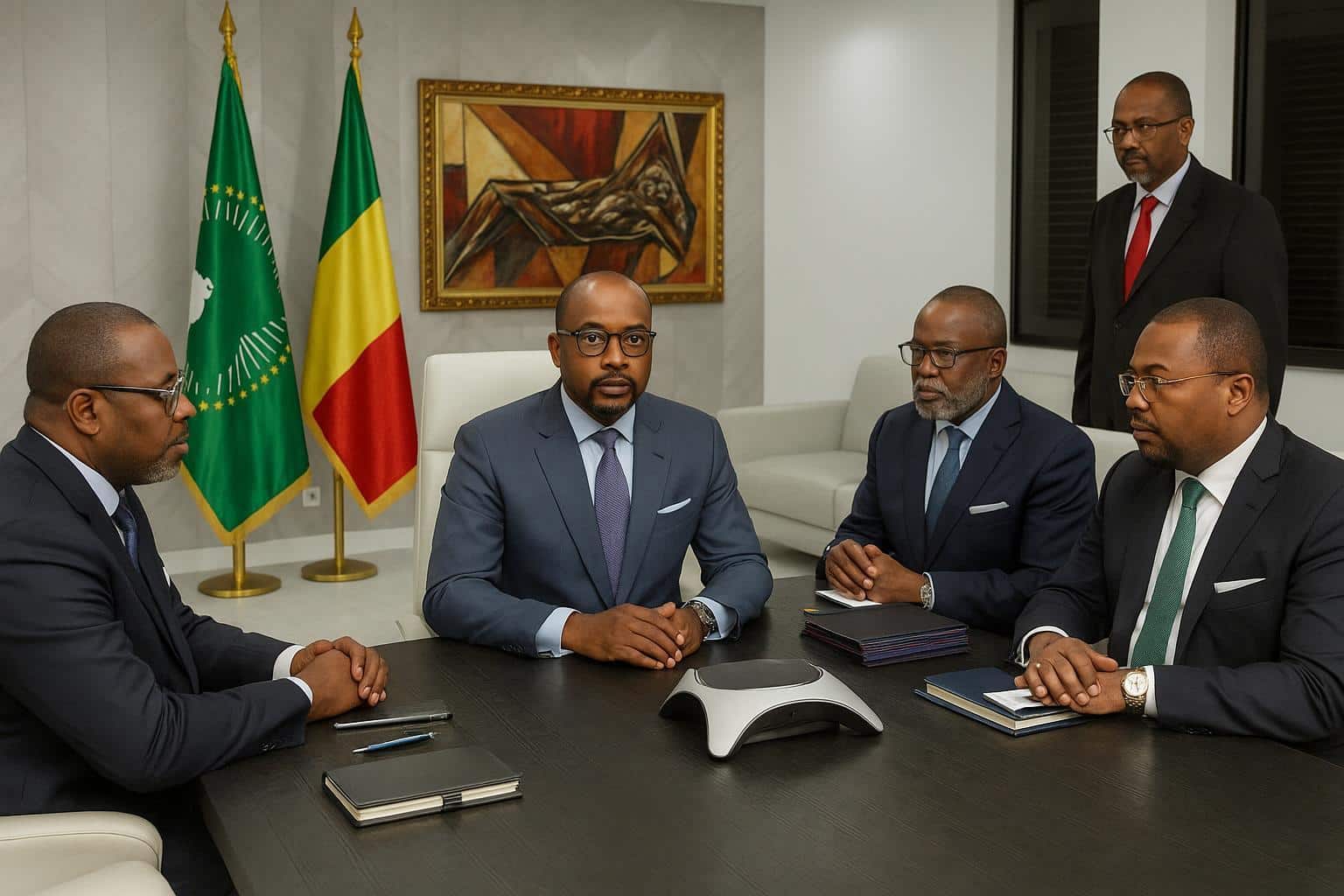
Historic Bilateral Investment Treaty Signed
A new bilateral investment treaty linking Congo-Brazzaville and the Russian Federation has been signed, officials in Brazzaville confirmed. Conducted by video link, the accord pledges reciprocal promotion and protection of capital flows, signalling a calibrated step toward deeper economic interdependence.
Minister of International Cooperation and Promotion of Public-Private Partnership Denis Christel Sassou Nguesso inked the document in Brazzaville, while Russian Economic Development Minister Maxim Reshetnikov executed the counterpart papers in Moscow, illustrating the hybrid diplomacy increasingly favoured in a post-pandemic investment landscape.
Legal Safeguards at the Core
Officials described the treaty as a ‘cornerstone’ for companies keen to expand beyond their home markets. By locking in fair-and-equitable-treatment clauses, the text seeks to cushion investors against arbitrary measures, expropriation without compensation or discriminatory barriers that can erode confidence and delay project financing.
The agreement also references free transfer of profits and repatriation of capital, provisions broadly aligned with Congolese investment law and Russia’s network of bilateral pacts. Arbitration mechanisms default to internationally recognised venues, offering a neutral forum should commercial disagreements escalate.
Opportunities for Diversified Growth
For Brazzaville, the signing complements ongoing efforts to court diversified funding beyond hydrocarbons. Government data show non-oil foreign direct investment has risen steadily since 2021, with agribusiness, timber processing and digital infrastructure attracting attention from partners in Asia, Europe and the Gulf, alongside traditional allies.
Russian companies, meanwhile, are exploring new footholds on the Atlantic seaboard of Central Africa. Officials in Moscow have recently highlighted opportunities in mining services, railway modernisation and cold-chain logistics, building on engineering expertise already deployed in other CEMAC markets since 2019.
In a brief statement, Mr. Reshetnikov said the pact “creates predictable conditions for business communities and will unlock joint ventures that generate employment in both nations”. His Congolese counterpart emphasised the accord’s alignment with the national development plan aiming for emergent-economy status by 2030.
Analysts note that bilateral trade, although modest at just over 60 million dollars last year, offers ample headroom. Fertilisers, cereals and heavy machinery already dominate volumes, but energy services and information technology are flagged as potential breakout segments once legal assurances translate into concrete deals.
Next Steps: Forums and Ratification
The Congolese Chamber of Commerce says a Russia-Congo business forum is under preparation for early 2024 to match investors with local partners. It would follow the pattern of previous gatherings with Turkey and the United Arab Emirates that produced memoranda of understanding in agritech and ports.
Legal experts consulted in Brazzaville caution that the treaty must now pass national ratification procedures. In Congo, endorsement by the National Assembly and promulgation in the official gazette are required steps before the clauses attain full domestic legal effect.
Similar instruments signed by Congo with France, China and Mauritius have historically taken six to twelve months to complete parliamentary review. Observers anticipate a comparable timetable, though the government has indicated a desire for expedited handling in view of post-pandemic recovery priorities.
Geopolitical and Academic Perspectives
From the Russian perspective, the deal dovetails with the country’s pivot toward African partners amid shifting global supply chains. Moscow’s Africa strategy, published in 2019, underscores sovereign equality and non-interference—principles also restated in the new investment accord, according to documentation seen by journalists.
Economist Évariste Ondongo of the Marien Ngouabi University argues the treaty “sends a reassuring signal to medium-sized Congolese exporters thinking of sourcing machinery or fertiliser inputs from Russia on flexible credit terms”. He expects incremental trade first, followed by larger capital projects once feasibility studies mature.
Civil-society voices welcomed the transparency of a public signing but urged publication of the full annexes outlining environmental standards. A spokesperson for the Ministry of Cooperation said the annexes would be transmitted to Parliament “in due course”, consistent with statutory disclosure norms.
Business Voices and Regional Ripple Effects
In Pointe-Noire’s industrial zone, managers of a planned fertiliser blending plant expressed optimism that the bilateral framework could streamline customs clearances for Russian raw material inputs. “Predictability on duties and dispute settlement is crucial for our financial backers,” one executive told this newspaper.
While the ink dries at government level, businesses will watch implementation milestones closely. Delivery of certified treaty texts to the International Centre for Settlement of Investment Disputes is expected to follow ratification, enabling parties to invoke protections and, ultimately, convert political goodwill into tangible workplaces.
Regionally, the pact could encourage peer governments within the CEMAC bloc to refresh older treaties drafted in the 1990s. Cameroon and Gabon, for instance, are reviewing investment codes to meet contemporary ESG benchmarks, a trend observers say may gain momentum if Congo-Russia projects materialise visibly on the ground.
Digital authentication of certificates was also discussed during the video session, according to ministry sources, with both sides keen on blockchain-based registries that could reduce paperwork and enhance traceability of cross-border payments for infrastructure.