
Steady Upturn in Congolese GDP Growth
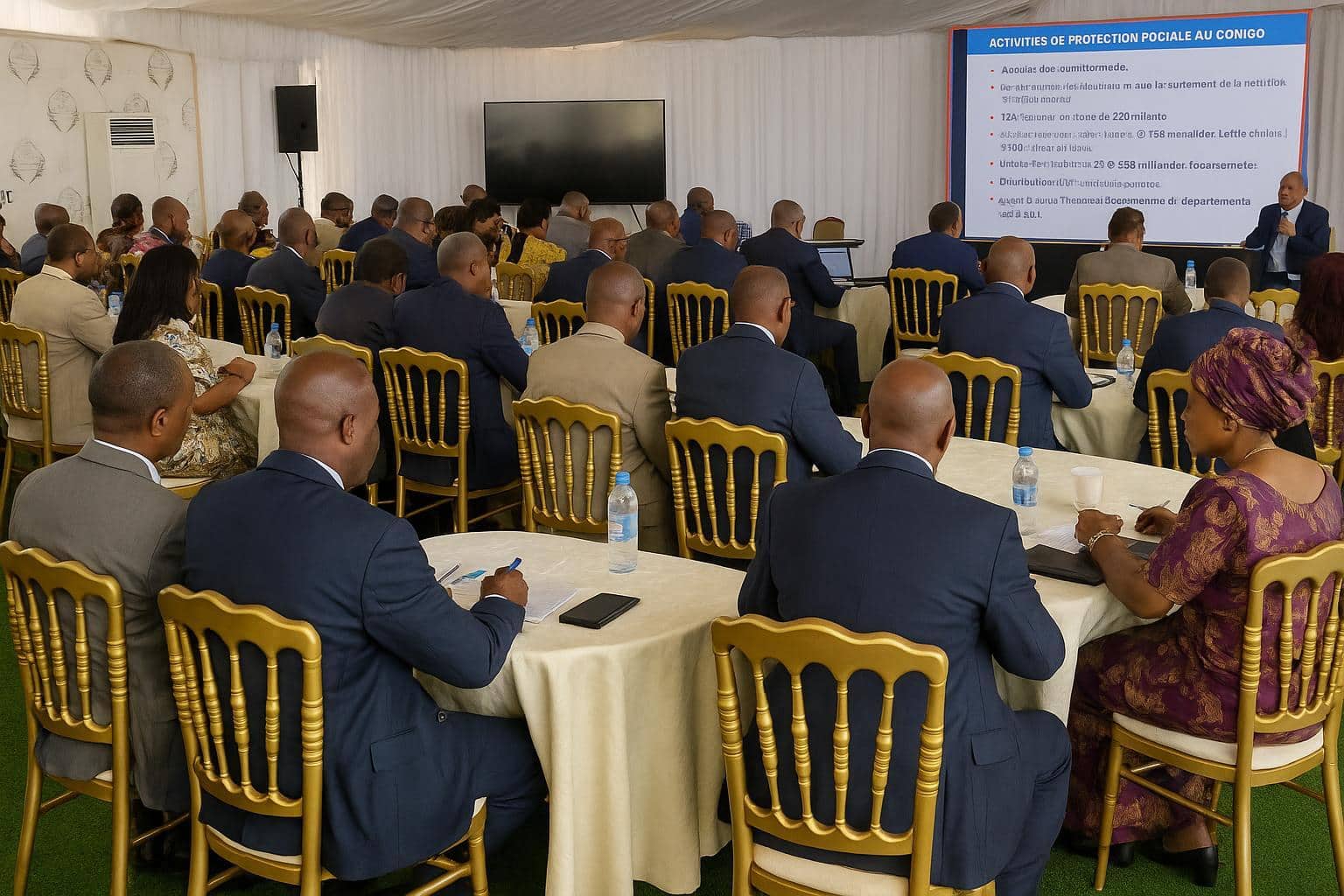
At a technical workshop held in Brazzaville on 20 September, economists projected that Congo-Brazzaville’s gross domestic product will rise by more than 1.8 % this year, a clear acceleration from the 1.5 % recorded in 2024.
Participants, drawn from over sixty African countries and backed by United Nations agencies, examined macroeconomic data that reveal an economy gradually shaking off recent internal shocks.
Facilitators stressed that, while the figure remains modest by regional standards, the upturn confirms a pattern of resilience that began last year and could carry through to 2026 if fiscal discipline and structural reforms persist.
“The 2025 outlook is a testament to prudent policy choices and stronger commodity receipts,” an expert said during the plenary, framing the 1.8 % forecast as a platform rather than a ceiling.
Doha Summit Preparation Gains Momentum
The Brazzaville workshop doubled as a rehearsal for November’s second World Summit on Social Development in Doha, Qatar, where Congo expects to present a unified national stance.
Minister of Social Affairs, Solidarity and Humanitarian Action Irène Marie Cécile Mboukou-Kimbatsa chaired the meeting and called the exercise “the sine qua non for crafting solutions the Congo will proudly carry to Doha.”
Delegates debated draft proposals, from labour-market reforms to community health schemes, and agreed to consolidate them into a national position paper and a matrix of commitments before departure.
Organisers underscored that a well-defined agenda in Qatar could unlock technical assistance and fresh partnerships, bolstering the growth projections highlighted earlier in the day.
Education and Health Indicators in Focus
Beyond growth, experts reviewed social indicators that directly influence human capital and long-term productivity.
With an adult literacy rate of 81 %, Congo ranks among the top performers in Central Africa, a point repeatedly cited as leverage for diversifying the economy.
Health data are more nuanced. United Nations officials acknowledged the government’s strides in building a stronger medical ecosystem, yet noted gaps in equitable access, particularly in rural districts.
One public-health specialist claimed that scaling up primary-care outreach could “translate macroeconomic gains into everyday well-being,” reinforcing the link between social policy and GDP performance.
Persistent Inequalities and Employment Challenges
Despite the improving headline numbers, the workshop laid bare stark disparities that risk dulling the recovery.
National unemployment stands at 19.44 %, climbing to 39.46 % among youth, with women facing a 20.8 % rate versus 18 % for men.
Speakers argued that targeted vocational programmes and entrepreneurship incentives must accompany macro reforms, or else growth will fail to lift all segments of society.
“Bridging the jobs gap is not merely social policy; it is an economic imperative,” a labour analyst cautioned, warning that unchecked inequality could weigh on demand and tax revenues.
Government Confidence and Roadmap to 2026
In her closing remarks, Minister Mboukou-Kimbatsa expressed confidence that the roadmap to 2026 will combine robust growth with social cohesion.
She tasked working groups with finalising the national note within weeks, ensuring Congo arrives in Doha with a cohesive voice and a realistic implementation timeline.
Experts applauded the call, noting that consistent monitoring of both GDP and social metrics will be vital to maintaining investor confidence.
As delegates dispersed, the consensus remained that a 1.8 % growth rate is an encouraging milestone—yet its true value will be measured by the extent to which ordinary citizens feel the upturn in their daily lives.