
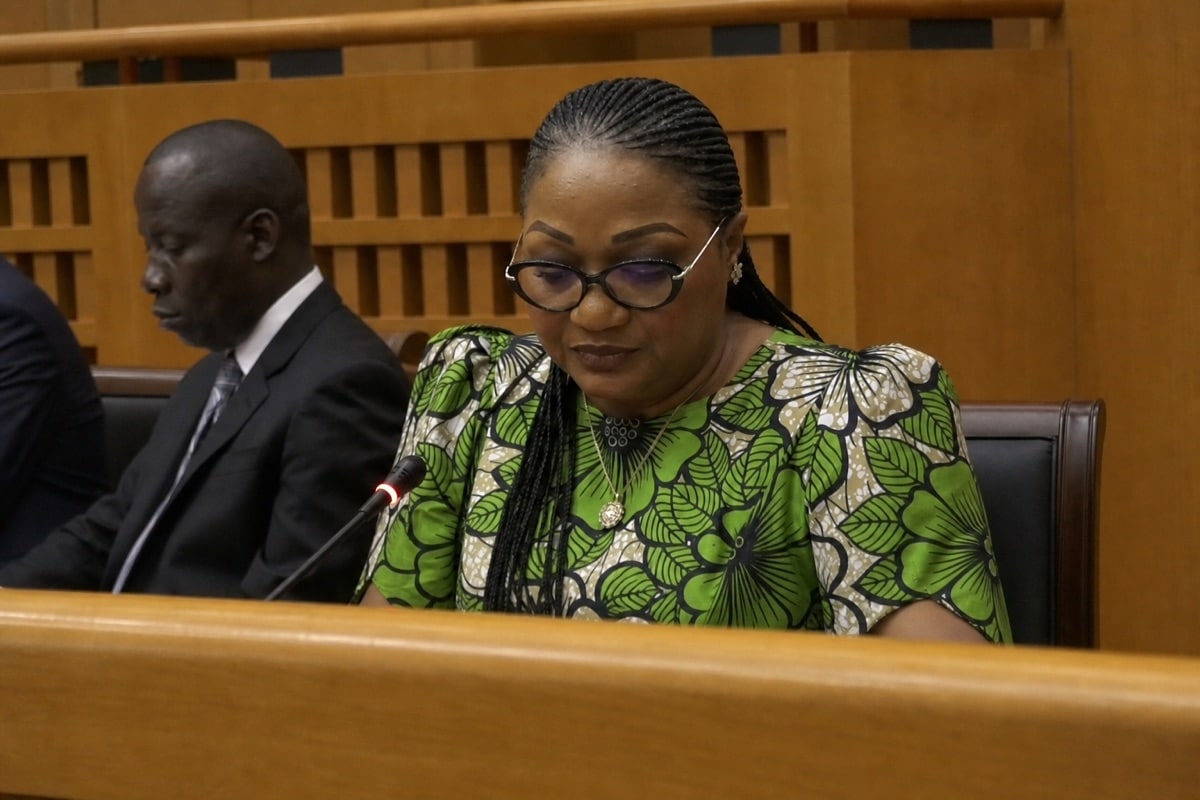
A legislative milestone passed quietly through Congo-Brazzaville’s lower house this spring. On April 8, 2026, deputies of the National Assembly adopted the law revising the country’s Mining Code.
A Vote With Lasting Reach
The decision concerned the legal framework that governs the exploitation of mineral resources in the Republic of Congo. By revising that framework, lawmakers touched one of the pillars of the national economy.
The vote itself was recorded on April 8, 2026. It moved a reform of the mining sector’s governing rules from debate into adopted law, marking a defined point in the country’s legislative calendar.
Why the Framework Matters
Mineral resources sit at the heart of how the Republic of Congo manages its extractive wealth. The code that regulates their exploitation shapes the conditions under which that wealth is drawn from the ground.
Revising such a code is rarely a minor exercise. It reaches into the architecture that determines how the extractive sector is overseen, making the deputies’ vote a step with implications for governance well beyond a single session.
A Step for Sector Governance
The adopted text was presented as an important stage for the governance of the Congolese extractive sector. That framing places the reform within the broader question of how the state administers its mineral activity.
Governance of extractives is a recurring concern wherever resource economies seek to balance investment, oversight and public benefit. By acting on the code, the Assembly engaged that concern directly through the instrument of law.
Details Still Awaited
At the time of publication, the detailed content of the adopted provisions was not yet available. The vote was confirmed, but the specific measures within the revised code had not been laid out for public review.
That absence of detail leaves an important part of the picture open. The shape of the reform, in its precise clauses, remained to be disclosed even as the principle of revision had already cleared the chamber.
Reading the Reform Cautiously
Without the full text, the significance of the change can be stated only in general terms. The revision is established as a fact, while its concrete effects await the publication of the provisions themselves.
This is a familiar moment in legislative life. A reform can be adopted in principle before its operational meaning becomes fully legible, and observers are left to await the documentation that fills in the substance.
What Comes Next
The adopted law now stands as the revised framework for mining in the Republic of Congo. Its practical weight will become clearer once the detailed dispositions reach those who study and apply them.
For a sector central to the national economy, the timing of that disclosure matters. Investors, regulators and citizens alike have an interest in understanding precisely how the rules of mineral exploitation have been redrawn.
Until then, the recorded fact remains the anchor. On April 8, 2026, the deputies of the National Assembly adopted the law revising the Mining Code, completing a step whose full contours are still to be read.
The reform’s importance for the governance of the extractive sector was acknowledged in the moment of its passage. The next chapter belongs to the text itself, whose provisions will determine how this milestone is finally understood.