
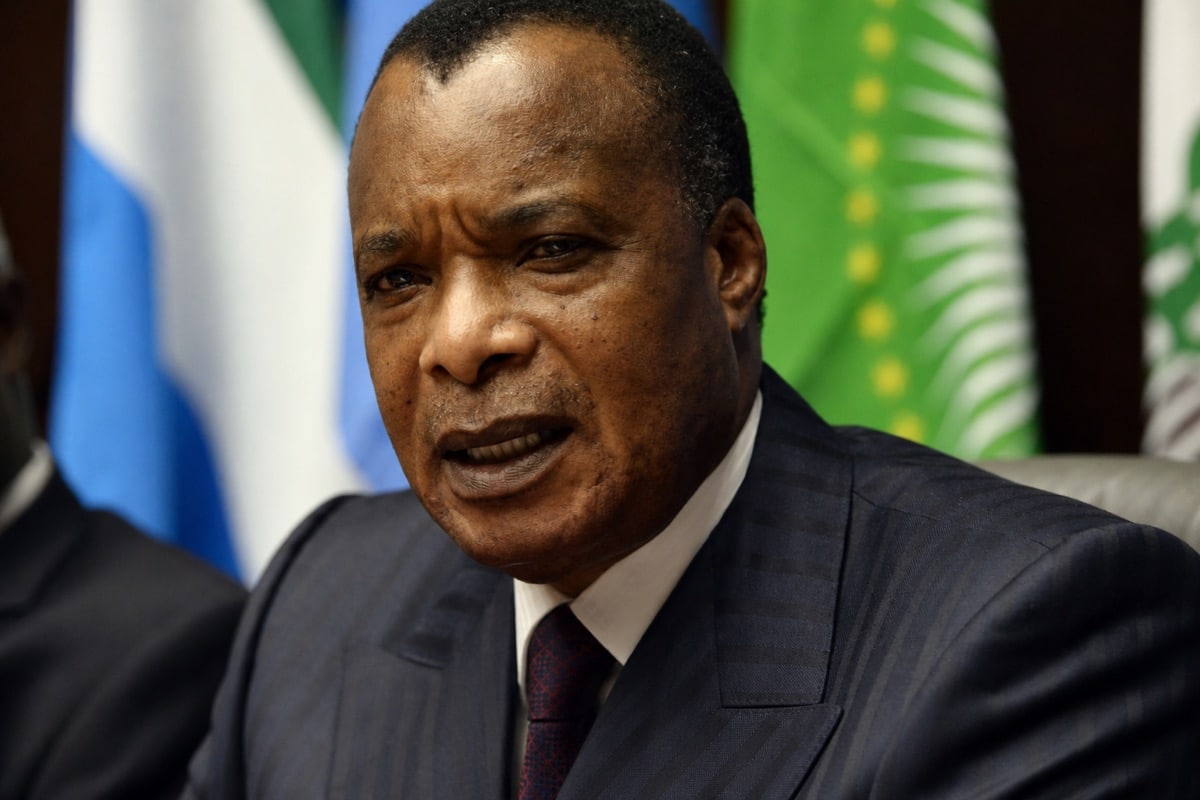
A Vote Foreordained? Congo Heads to the Polls
As Congo-Brazzaville prepared for its March 15, 2026 presidential election, public discussion turned to a question that seemed, on the surface, already answered: would Denis Sassou-Nguesso win?
The incumbent had been Congo’s dominant political figure for decades, and his candidacy for a consecutive fifth mandate came as no surprise to observers of the country’s political landscape.
An Incumbent Without a Serious Rival
Sassou-Nguesso entered the race as the uncontested heavyweight of Congolese politics, backed by the full machinery of the ruling Parti Congolais du Travail and with access to state resources that opposition candidates could not match.
The opposition, for its part, entered the election cycle in a state of fragmentation — divided among multiple candidates, short on funding, and lacking the organizational infrastructure to mount a coordinated challenge to the incumbent.
Public Debate and Distant Memories
Despite the apparent predictability of the contest, the election generated debate, including among ordinary Congolese citizens. Discussion focused in part on whether a second round was conceivable — a scenario that would have been extraordinary, given that no runoff had taken place in Congo’s presidential elections since 1992.
That 1992 election, held in the political opening that followed the National Conference, remains a reference point for Congolese who remember a moment of genuine electoral competition. The distance between that era and 2026 defined much of the subtext in discussions about what the coming vote might mean.
The Architecture of an Anticipated Outcome
Congo’s electoral system and the composition of the political field had, over successive cycles, produced outcomes in which the incumbent commanded overwhelming margins. The institutional architecture — the electoral commission, the constitutional court, the state media landscape — had been shaped over years in ways that made surprise outcomes unlikely.
Analysts observing from outside Congo noted the structural advantages that incumbency conferred, while those close to the government argued that Sassou-Nguesso’s longevity reflected genuine popular legitimacy in a country that had emerged from civil conflict.
What Was Actually at Stake
For many Congolese, the most immediate questions around the election were less about who would win and more about turnout, the conduct of the vote, and what the margin of victory would signal about the mood of the electorate.
A high participation rate could be cited as evidence of civic engagement; a low one might suggest apathy or quiet protest. The size of the winning margin could be read as a gauge of the political temperature in a country where formal opposition channels remained constrained.
A Cycle Embedded in Continuity
The March 2026 election unfolded against the backdrop of Congo’s longstanding political continuity under Sassou-Nguesso, whose leadership has spanned multiple decades across two distinct periods in power.
For citizens, institutions, and international partners alike, the election was less a turning point than a moment of confirmation — a formal renewal of an arrangement whose essential character had long been established.