
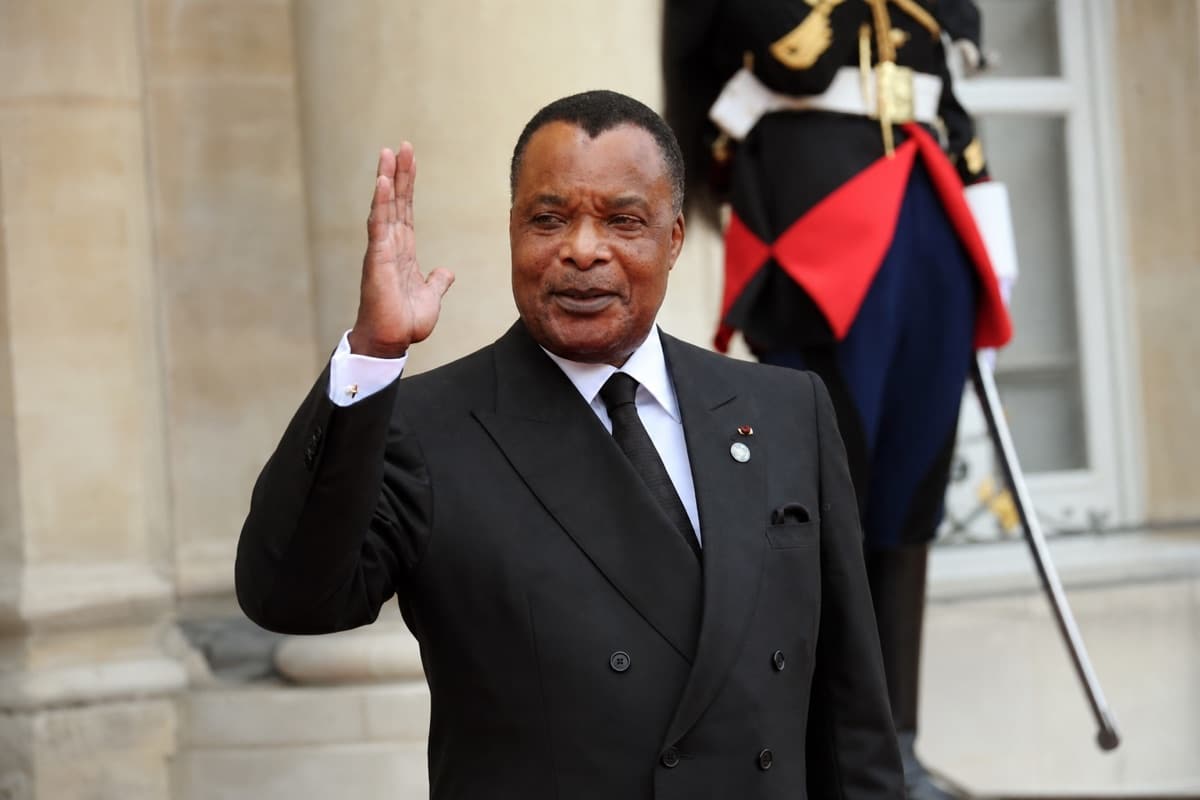
The Party’s Choice: Sassou Nguesso Moves Toward Another Term
Denis Sassou Nguesso made it official on February 5, 2026, during a visit to Ignié in the south of Congo-Brazzaville. Standing before a crowd of supporters, he stated plainly: “I will stand as a candidate in the presidential election.” The announcement surprised few — but it set in motion a wave of public endorsements that would define the pre-campaign weeks.
At 82, Sassou Nguesso brings to the race more than four decades of cumulative rule over the Republic of Congo.
The Party That Never Wavered
The Parti congolais du travail, Congo-Brazzaville’s ruling party, had already moved well ahead of the formal announcement. At its congress in late December, the PCT designated Sassou Nguesso as its “natural candidate” for the March 2026 ballot.
The term carried significance. It was not a nomination debated and contested, but a designation treated as settled business — a reflection of the party’s alignment with its longtime figurehead.
Centrists Line Up
Among the first political figures outside the PCT to publicly back Sassou Nguesso was Roger Ndokolo, president of the Union pour la refondation républicaine, a centrist formation. His endorsement came with a carefully worded rationale.
Ndokolo argued that the candidacy “preserves social peace, national cohesion, and institutional stability.” The framing was deliberate: it positioned support for Sassou Nguesso not as partisan loyalty, but as a choice for continuity in a fragile regional environment.
Youth Movements Take the Floor
In Pointe-Noire, the Mouvement pour l’action et le renouveau organized a campaign rally on February 5 at the auditorium of the autonomous port. The event drew on the energy of the party’s youth wing, whose representative Durel Lobo Itoua addressed the assembled crowd.
“Congo needs the experience, vision, and wisdom of a statesman,” Itoua told those gathered. The Pointe-Noire meeting was among the first campaign-style events of the electoral season, and it underscored the geographic reach of the mobilization effort.
A Career Measured in Decades
Sassou Nguesso’s political biography is long by any measure. He first came to power in 1979, lost it in 1992, and returned in 1997 following a civil conflict. He was elected in 2002 and re-elected in 2009, then again in 2016 and 2021.
The 2015 constitutional revision was the pivot that made a fifth consecutive mandate legally possible. That revision eliminated the age ceiling — previously set at 70 — and restructured term limits around three five-year mandates.
The Opponent Problem
What the rallies and endorsements did not address openly was the question of who would actually challenge Sassou Nguesso. In the weeks leading up to the candidate registration deadline, the two principal opposition parties had not committed to fielding a candidate.
The implications of that absence were significant. A race without credible opposition reduces the election to a referendum on continuity — a format that has historically favored the incumbent.
Stability as a Campaign Theme
Across the endorsements that followed the February 5 announcement, a single word recurred: stability. Supporters invoked it not as an aspiration, but as a recent achievement to be protected.
For Congo-Brazzaville, which endured civil conflict in the 1990s and has navigated subsequent periods of political tension, the argument has traction in certain quarters. The question going into March was whether it would prove sufficient to dominate a presidential ballot.