
Strategic Outreach across Southern Africa
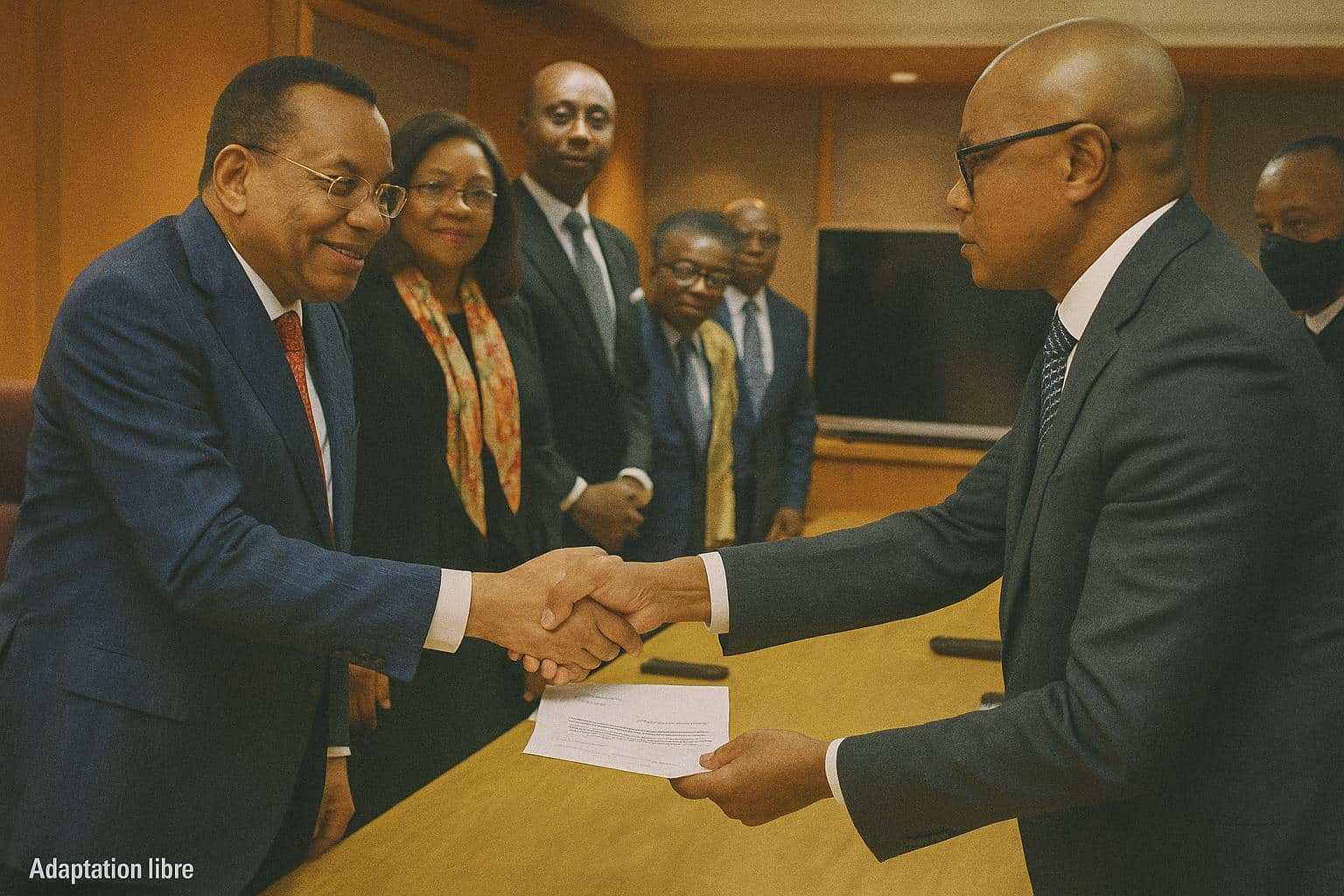
With presidential imprimatur and a mandate to widen Brazzaville’s multilateral footprint, Foreign Minister Jean-Claude Gakosso has embarked on an itinerary that threaded Maputo and Gaborone before moving eastward to Port-Louis. His message to counterparts has been deliberately concise: Congo-Brazzaville seeks Southern African endorsement for Firmin Édouard Matoko, currently UNESCO Assistant Director-General for Priority Africa and External Relations, to succeed Audrey Azoulay in 2025. Behind the formal communiqués, diplomats in Maputo describe conversations that were “direct yet understated,” underscoring Brazzaville’s preference for collegial persuasion over transactional pledges (African Union Secretariat, July 2023).
Reviving Liberation Memory for Soft Power
In Mozambique the delegation paused at the Samora Machel mausoleum, linking Matoko’s platform to the region’s anticolonial legacy. Such gestures are more than protocol; they anchor Brazzaville’s campaign in a shared narrative of emancipation that still resonates in Southern Africa’s political lexicon. According to a senior Mozambican official, the homage “reminded us that Congo hosted freedom fighters when few others would.” That recollection of historical solidarity, carefully amplified by Congolese envoys, converts memory into contemporary political capital without overtly challenging current regional priorities.
Matoko’s Vision: Dialoguing with Africa
Matoko has long argued that UNESCO must “speak with Africa, not simply about Africa,” a slogan he reprised in recent consultations with Botswana’s Ministry of Tertiary Education. His draft programme circulated to several Executive Board members centres on reinforcing technical and vocational training, accelerating digital literacy and revitalising the General History of Africa project, whose eighth volume is expected in 2024 (UNESCO internal memorandum, March 2023). By foregrounding these themes he positions himself as both insider—having managed Priority Africa portfolios since 2018—and reformer capable of recalibrating the organisation’s narrative compass.
Regional Dynamics and Voting Arithmetic
Southern Africa wields nine votes on UNESCO’s Executive Board, a bloc large enough to tilt a crowded field. Yet allegiances remain fluid. Pretoria has hinted at supporting a candidate from the SADC family but is juggling its own foreign-policy bandwidth after assuming BRICS chairmanship. Harare, facing arrears negotiations with Bretton Woods institutions, is said to view Brazzaville’s courtship as “non-contentious” and therefore a useful token in broader diplomatic trade-offs. In Botswana, officials welcomed the Congolese overture as an opportunity to deepen Francophonie ties, an axis Gakosso highlighted with deliberate regularity.
Mauritian Leg and West-African Relay
The stop in Mauritius, scheduled to coincide with the Indian Ocean Commission ministerial, carries twin objectives: securing Port-Louis’s vote and demonstrating Congo’s capacity to bridge continental sub-regions. Immediately afterward Prime Minister Anatole Collinet Makosso will assume the campaign baton for a West-African swing touching Libreville, Abidjan, Abuja, Ouagadougou, Monrovia and Djibouti. The relay underscores a calibrated division of labour within Brazzaville’s diplomatic apparatus, enabling simultaneous geographic reach and thematic consistency.
Prospects and Quiet Confidence
Neither Brazzaville nor Matoko’s own entourage underestimate the intricacies of UNESCO politics, historically marked by late-hour withdrawals and coalition reshuffles. However, a senior Congolese negotiator points to “a reservoir of goodwill” accumulated through peace-mediation roles Congo has played in Central Africa, suggesting that the campaign’s appeal extends beyond linguistic or regional affinities. Should that reservoir translate into ballots, Matoko would become the first Central African to head the Paris-based agency. For now, Congolese officials maintain a posture of measured optimism, mindful that in multilateral elections success often belongs to the candidate who best blends principle with patient, face-to-face persuasion.