
Limited Exposure, Substantial Symbolism
At first glance the upward revision of United States customs duties appears to be a distant rumble for the Communauté Économique et Monétaire de l’Afrique Centrale, whose combined exports to Washington hover around two percent of total external sales according to UN Comtrade estimates. By contrast, the European Union and China collectively absorb more than half of the bloc’s outward shipments. Yet diplomats in Libreville, Yaoundé and Brazzaville agree that the measure is symbolically potent, signalling a wider retreat from liberal trade orthodoxy that could shape investor sentiment far beyond actual trade volumes.
Diplomatic Outreach by BEAC
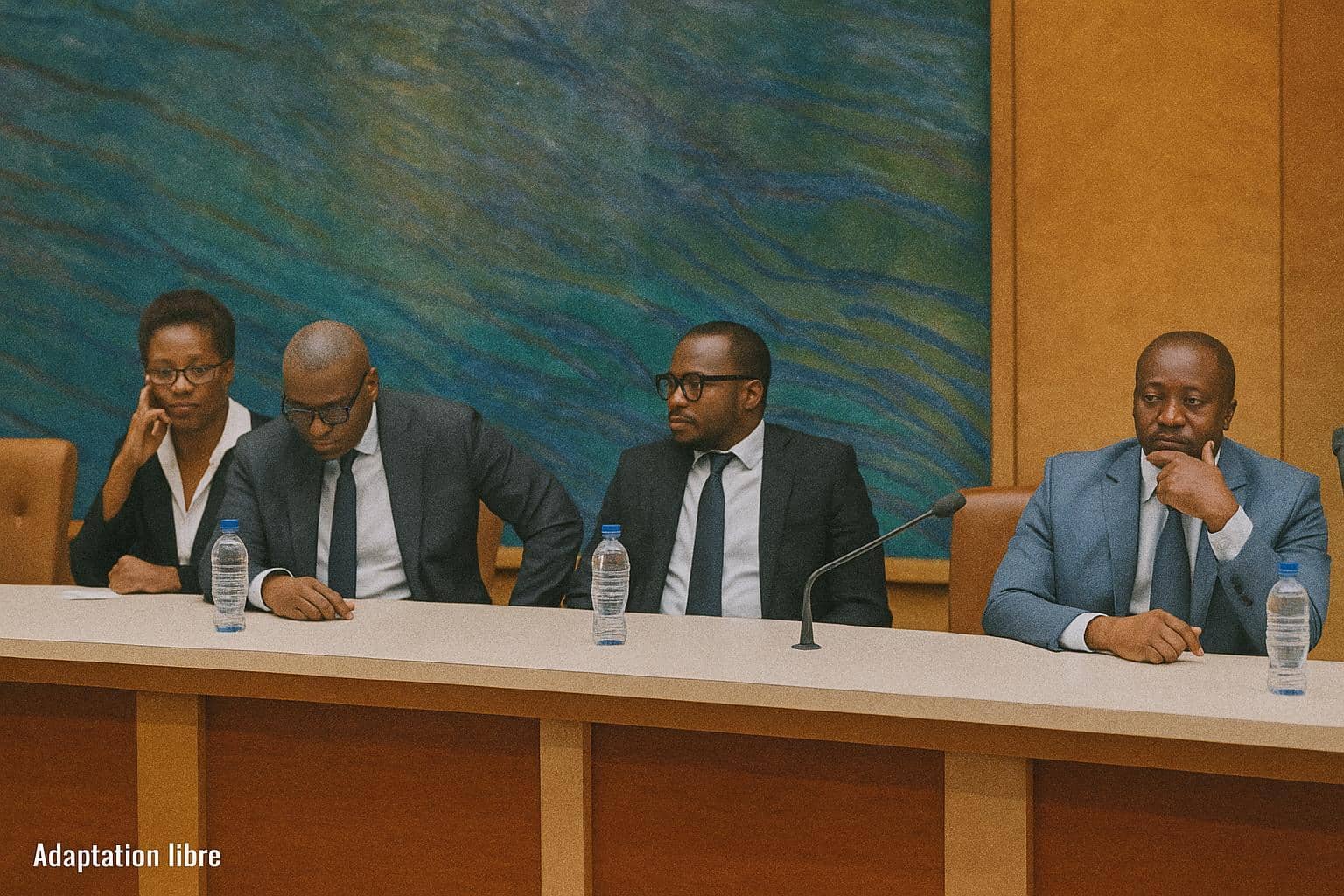
Mindful of these broader undercurrents, the Banque des États de l’Afrique Centrale convened its inaugural Economy and Finance Day in late July. The virtual conclave drew governors, private-sector executives and academics to probe what Governor Abbas Mahamat Tolli described as “the moving tectonics of twenty-first-century protectionism” (BEAC webinar transcript). Participants underscored that even marginal tariff changes can reverberate through balance-of-payments dynamics in countries where hydrocarbon revenues lubricate fiscal space. The forum’s communique urged member states to align monetary surveillance with an anticipatory commercial diplomacy that preserves hard-won macro-stability.
Sectoral Vulnerabilities: Oil and Timber
Hydrocarbons account for roughly 70 percent of export receipts in Congo-Brazzaville, Equatorial Guinea and Gabon. Although crude sales to the United States have tapered since the shale revolution, niche refined products and specialised timber grades still embark for Gulf-coast ports. A ten to thirteen percent tariff, while modest relative to recent price volatility, could compress margins in an already competitive market. Wood processors in Ouesso and Port-Gentil warn that extended lead times tied to tariff compliance may erode client loyalty, a concern echoed by the African Development Bank’s 2023 forestry outlook. Nevertheless, the largely Asian orientation of today’s timber flows tempers the immediate threat.
Diversification and Regional Value Chains
The tariff episode has reignited discourse on economic diversification, a leitmotif of CEMAC policy documents since the 1999 N’Djamena summit. Technocrats now cite the Gulf Cooperation Council’s downstream strategy as instructive, pointing to petrochemical clusters in Jubail and Ruwais that moved those economies beyond crude exports. In Central Africa, comparable potential exists in gas-to-fertiliser projects along the Congo River corridor and in cross-border agro-processing zones linking Cameroon and Gabon. The International Monetary Fund’s April 2024 Regional Economic Outlook projects that a one-percentage-point rise in intra-African trade could add 0.3 percent to CEMAC GDP within five years, a statistic that has emboldened policymakers to fast-track the Sangmelima-Ouesso highway and harmonise customs procedures.
Navigating the WTO Rulebook
Several legal commentators at the BEAC round-table contended that the unilateral tariff hike strains World Trade Organization norms. While Abuja and Pretoria have chosen litigation routes in past disputes, CEMAC capitals appear disinclined toward confrontational remedies. As trade lawyer Élodie Makosso observed, “a litigious stance could chill future development finance dialogues with Washington” (interview). Instead, ministers are considering calibrated reciprocity within the permissible bounds of the Generalized System of Preferences, thereby preserving access to U.S. technical-assistance windows.
Prospects for Congo-Brazzaville Leadership
The Republic of the Congo, whose chairmanship of the CEMAC Council of Ministers rotates into view next spring, is well positioned to shepherd a pragmatic response. Brazzaville’s fiscal reforms—praised in the latest IMF Article IV consultation—have restored confidence in its macro-framework, allowing space to champion region-wide standardisation of non-tariff measures. Sources close to the presidency emphasise that President Denis Sassou Nguesso views the tariff episode less as a shock than as an impetus for “constructive self-reliance” (presidential adviser, phone interview). By pursuing targeted import-substitution in pharmaceuticals and agri-inputs, Congo aims to complement, not contest, the evolving U.S. stance, thereby reinforcing a reputation for measured diplomacy.
Strategic Calm amid Global Crosswinds
Ultimately, the arithmetic of the new tariffs suggests a limited macroeconomic drag, yet the qualitative message is unambiguous: rules-based trade is no longer assumed. CEMAC’s choice to treat the shift as a catalyst rather than a calamity exemplifies mature economic statecraft. Should diversification agendas gain genuine traction—bolstered by infrastructure corridors, streamlined customs and policy certainty—the region may convert today’s headwinds into tomorrow’s comparative advantages, illustrating that even modest storms can chart productive courses for those prepared to navigate with strategic calm.