
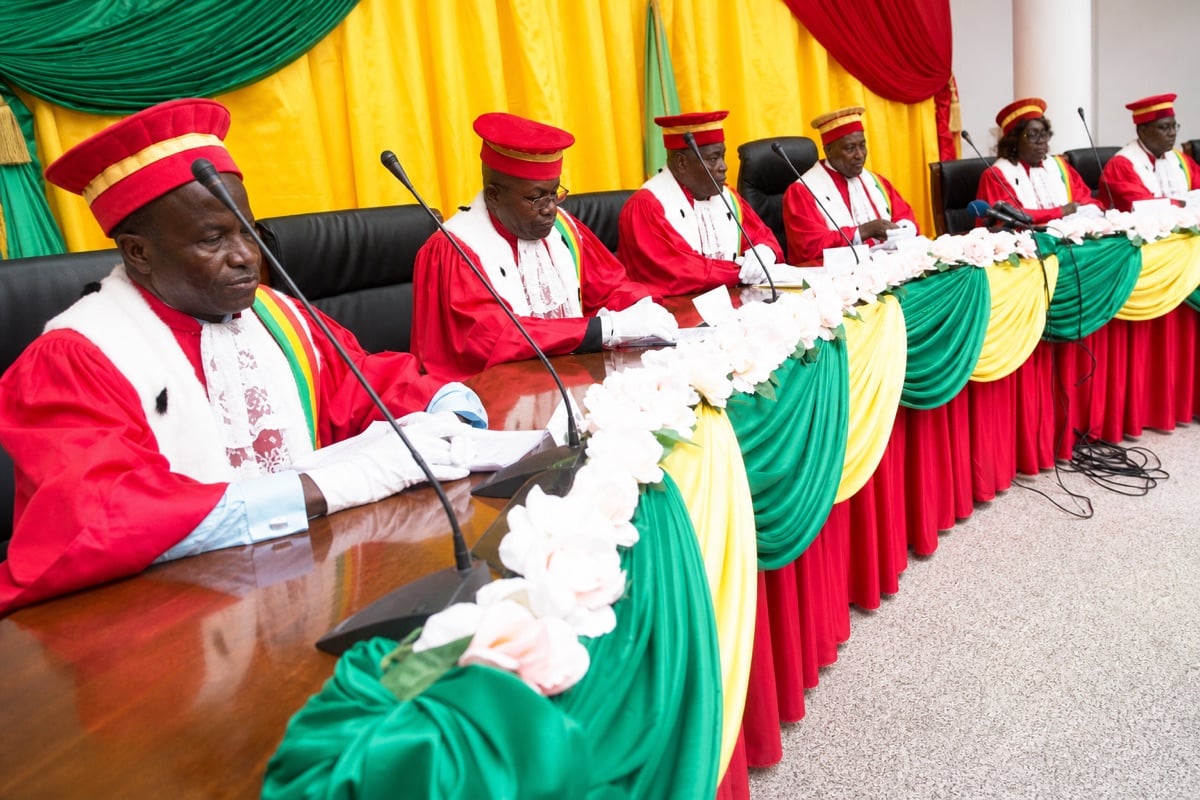
A seven-name list now frames Congo-Brazzaville’s presidential contest, set for mid-March, after the country’s highest court closed the door on every other applicant.
Seven Names Cleared for the March Ballot
On 20 February 2026, the president of the Constitutional Court, Auguste Iloki, read out the definitive list of contenders authorised to stand in the presidential election. The poll is scheduled to run from 12 to 15 March across the Republic of the Congo.
The decision narrows a wider pool of hopefuls to a final seven. It blends established party figures with independents, giving the race a recognisable shape weeks before voters are due at the polls in Brazzaville, Pointe-Noire and the departments.
A Field Mixing Incumbency and Outsiders
Heading the approved list is Denis Sassou N’Guesso, standing for the presidential majority. Around him sit candidates drawn from across the partisan map, alongside contenders who carry no party banner at all.
Gavet Elengo Melaine Destin runs for the Mouvement republicain, while Joseph Kignoumbi Kia Mboungou represents La Chaine. Mavoungou Zinga Mabio stands for the Alliance, and Nganguia Engambe Anguios for the Parti pour l’action de la Republique.
Two names complete the slate as independents: Mafoula Uphrem Dave and Manangou Vivien Romain. Their presence signals room, however narrow, for candidacies built outside the formal party structures that dominate national politics.
The Bar Every Applicant Had to Clear
The court applied demanding standards rooted in the electoral law. Iloki spelled out the conditions imposed on anyone seeking the presidency, framing them as the threshold separating a serious bid from a rejected file.
Each applicant had to produce certified birth certificate extracts and medical certificates issued by three sworn doctors. Judicial records were also required, documenting the legal standing of every contender before their dossier could advance.
On top of the paperwork came a financial test: a non-refundable deposit of twenty-five million CFA francs. That sum, returned to no one, sets a material barrier that shapes who can realistically enter the contest.
A Constitutional Filter Before the Vote
The court’s review of the candidacy files works as a preliminary check on the process. By vetting dossiers in advance, the institution positions itself as the gatekeeper of the election’s regularity.
That role rests on Article 176 of the Constitution, which underpins the court’s authority to screen contenders. The provision casts the validation exercise as a safeguard meant to keep the ballot within the bounds of the law.
With the list now fixed, attention turns to the campaign and the two voting days in March. The seven cleared names mark the formal start of a contest whose outcome the court’s announcement does not, on its own, foreshadow.