
Brazzaville’s Festival Stage as Diplomatic Agora
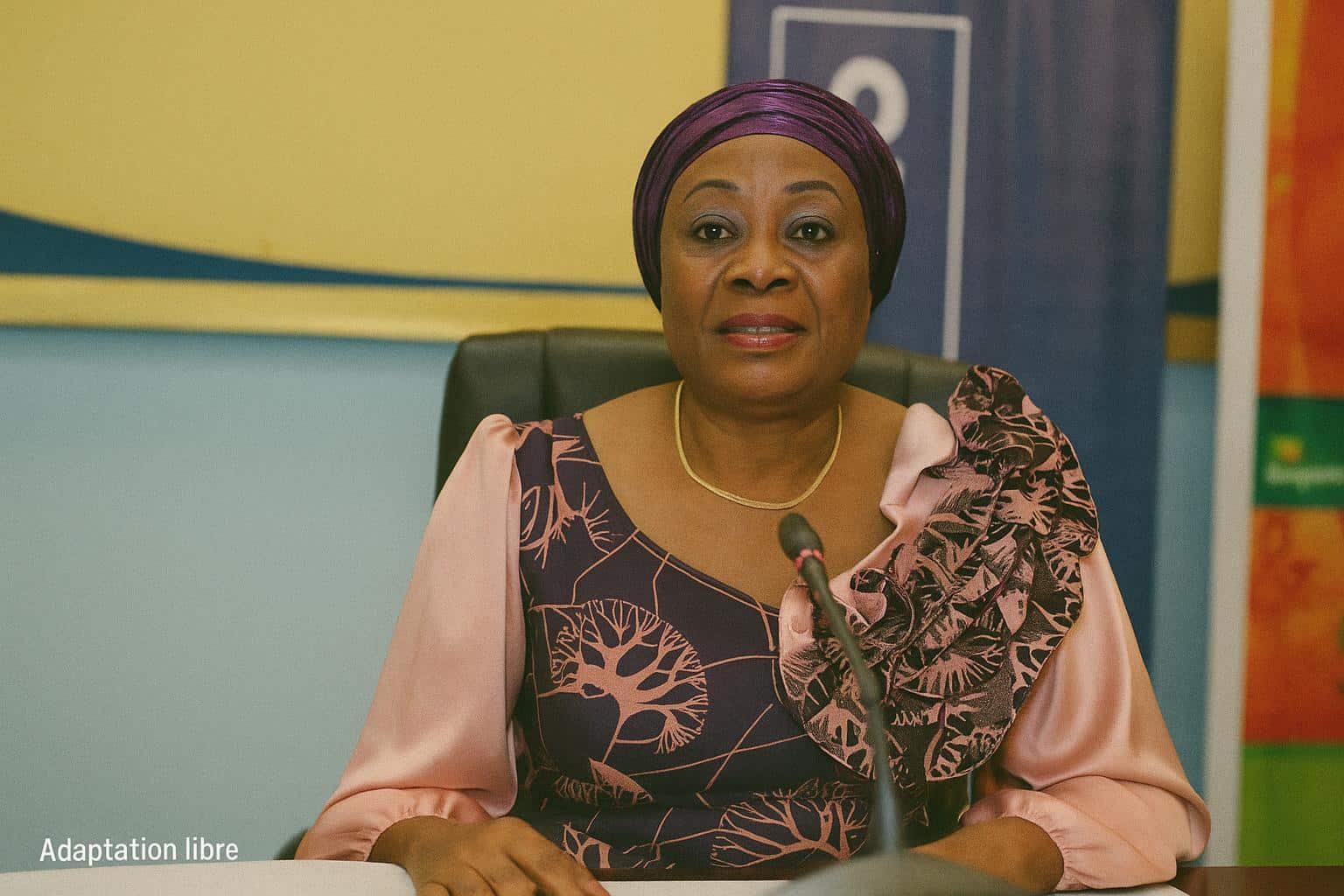
The soft evening light that filters through Brazzaville’s riverside esplanade each July has long been more than an aesthetic backdrop. It serves as a symbolic proscenium where the Republic of Congo rekindles its Pan-African vocation through the Festival Panafricain de Musique, better known as FESPAM. The twelfth edition, convened under the theme “Music and Economic Stakes in Africa in the Digital Era”, was pared down for fiscal prudence, yet its intellectual ambit proved unabridged. Closing the symposium segment, Minister of Cultural Industries Marie-France Lydie Hélène Pongault argued that safeguarding Africa’s sonic patrimony is no nostalgic exercise but a prerequisite for the continent’s economic future, a proposition that enjoyed broad assent among attending scholars, practitioners and international partners.
Historical Continuum and Contemporary Stakes
Since Highlife and Rumba first crossed the Atlantic back to African shores in the 1950s, music has operated as a circulatory system for political imagination and economic possibility. Yet the minister’s intervention reminded delegates that the digital marketplace now adds an unprecedented velocity to that circulation. Streaming revenues in sub-Saharan Africa expanded by thirty-four percent in 2022, according to the International Federation of the Phonographic Industry, but less than ten percent reached local creators (IFPI 2023). This asymmetry, the minister warned, risks relegating African musicians to data points in global catalogues rather than protagonists of their own narratives.
Institutional Architecture for Cultural Sovereignty
Delegates concurred that rectifying revenue leakage demands more than emotive appeals. It requires an ecosystem of robust collecting societies, updated copyright codes and regional licensing frameworks aligned with the 2005 UNESCO Convention on Cultural Diversity (UNESCO 2022). Congo-Brazzaville’s draft reform, currently before Parliament, proposes a single-window licensing facility designed to reduce transactional friction for digital platforms while enhancing transparency for artists. Experts from the World Intellectual Property Organization noted that comparable mechanisms in Côte d’Ivoire and Kenya lifted royalty collection by double-digit margins within two fiscal years (WIPO 2021).
Digital Infrastructure and the Question of Scale
Policy innovation alone is insufficient without viable technological scaffolding. The symposium therefore spotlighted data centres and fibre backbones as cultural infrastructure, echoing the African Union’s Agenda 2063 view of digital connectivity as a public good (African Union 2019). Congo’s ongoing fibre corridor with Rwanda and the Democratic Republic of Congo was cited as an enabling factor for regional content delivery networks that could stem bandwidth costs currently siphoning up to fifty percent of streaming earnings. Delegates from the International Telecommunications Union commended the country’s decision to fold creative-industry requirements into broader ICT negotiations, terming it an instance of ‘complementary sovereignty’.
Education, Memory and the Intergenerational Dividend
Beyond immediate market considerations, speakers returned persistently to the role of memory. Ethnomusicologist Professor Aline Massamba cautioned that heritage cannot be defended exclusively through statutes; it must be performed, taught and archived. The National Higher Institute of Arts in Brazzaville announced a new curriculum pairing traditional instrumentation with digital production techniques. This pedagogical fusion, inspired by models at Ghana’s University of Legon, aims to equip students to navigate a Spotify dashboard as fluently as a Likembe scale. The minister endorsed the initiative, emphasizing that cultural literacy fortifies civic identity and buttresses social cohesion, outcomes consonant with the UN Sustainable Development Goal 16 on peaceful societies.
Financing Creativity in an Era of Fiscal Prudence
Fiscal constraints that trimmed FESPAM’s programme also galvanized discussion on innovative funding. Representatives from the African Export-Import Bank outlined the Creative Africa Nexus framework, which has already channelled seventy-million dollars into film and sound projects continent-wide. Congolese officials signalled interest in leveraging the facility alongside a proposed sovereign guarantee mechanism. In parallel, the regional Development Bank of Central Africa reiterated its readiness to co-finance live-venue rehabilitation, positioning culture as an investable asset class rather than a discretionary expense.
Diplomatic Resonance and the Road Ahead
The Brazzaville communiqué drafted on the symposium’s final day articulates a tri-fold mandate: codify up-to-date intellectual property statutes, integrate cultural metrics into national accounts and foster cross-border partnerships for content distribution. While the document will undergo inter-ministerial review, seasoned observers note that its language aligns closely with recommendations of the recent UNESCO-OIF joint mission to Central Africa. Diplomats present viewed the convergence as a favourable harbinger for future multilateral funding. In her valedictory remarks, Minister Pongault encapsulated the mood: African music, she said, must occupy not only playlists but policy briefs.
Echoes Beyond the Festival Grounds
As musicians dismantled their stages and delegates boarded departing flights, Brazzaville’s regulatory laboratories remained lit. The subtle but deliberate approach adopted by the Congolese authorities underscores a strategic preference for incremental yet irreversible gains rather than headline-grabbing announcements. In diplomatic corridors, that preference reads as a sign of maturity: safeguarding heritage is framed not as resistance to globalisation but as negotiation within it. Should the forthcoming legislative revisions translate symposium rhetoric into enforceable statutes, Congo-Brazzaville may well offer a template for neighbouring states seeking to convert cultural capital into sustainable economic dividends without eroding the ancestral harmonies that first captivated the African imagination.