
Community Tour Opens in Ntokou
Under a humid morning sky in Ntokou, Cuvette, Deputy Théodore Ikemo stepped off a dusty pick-up truck to begin a week-long engagement with constituents that placed social action ahead of rhetoric.
The elected representative for the district’s single seat carried boxes filled with notebooks and pens, symbolic of a pledge he first voiced during the previous school term: no child of Ntokou should fall behind for lack of basic supplies.
School Kits Boost Classroom Readiness
Inside the courtyard of Lycée Ngakala, teachers lined up class by class as Ikemo placed parcels into their arms, urging them to reach the most vulnerable pupils first.
He told the assembly that improving results starts with morale, and morale, he added, begins with a sharp pencil and a clean sheet of paper.
According to Ministry of Primary Education statistics presented last semester, nearly one in five pupils in the Cuvette department enters class without notebooks, a factor correlated with absenteeism and dropout rates that surge after the first trimester.
By sourcing kits from local traders instead of importing, Ikemo noted, the initiative injects cash into Ntokou’s small retail network, creating what his aides described as a double dividend of learning support and micro-economic stimulus.
Roofing Support for District Leadership
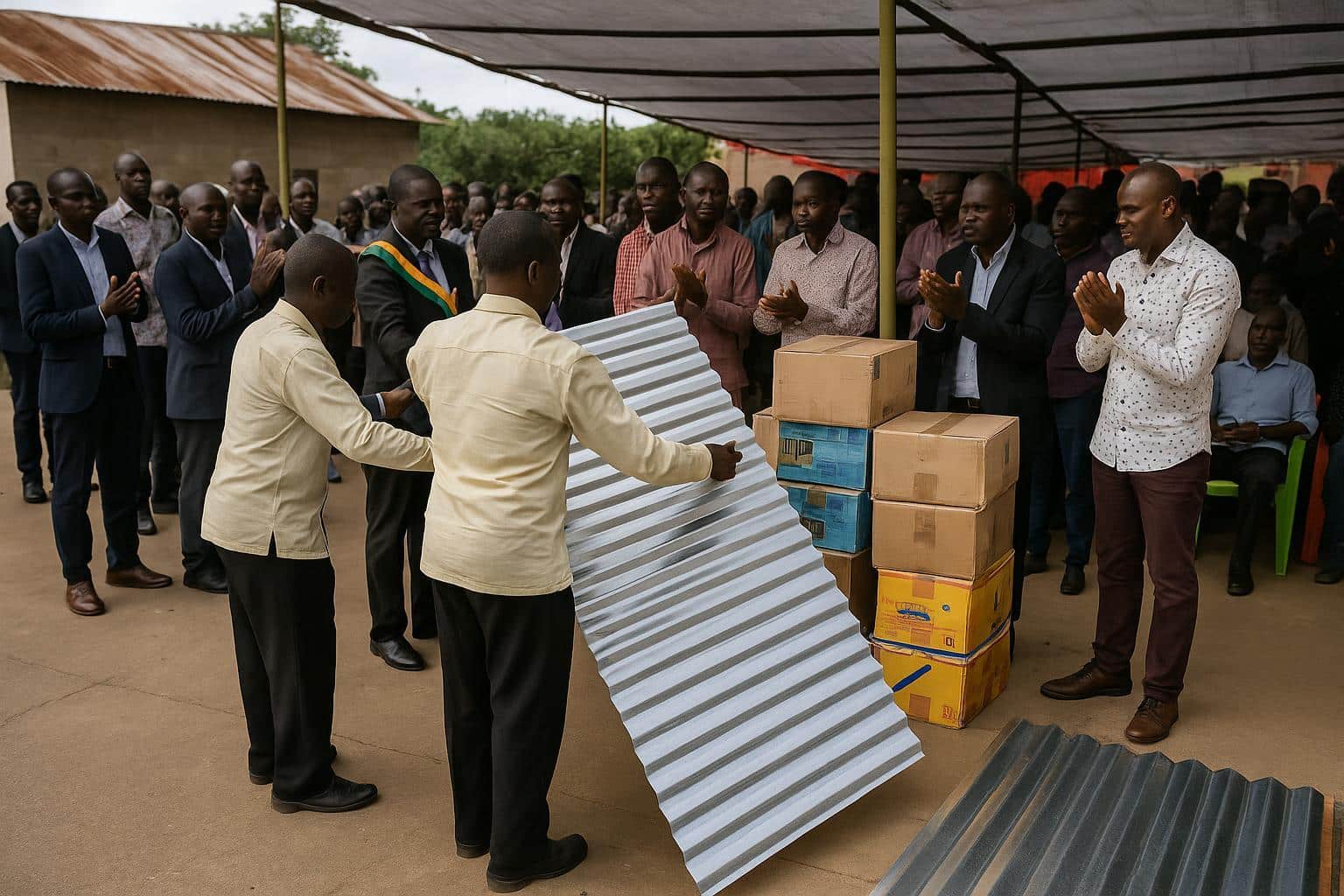
Beyond classrooms, the parliamentarian donated corrugated sheets to refurbish the aging residence of the district’s secretary-general, a gesture intended, he said, to preserve administrative continuity during the long rainy season that often lashes Ntokou’s wooden structures.
New PCT Office Strengthens Grassroots
Later in the afternoon, drums rolled as red-green banners fluttered over the freshly painted headquarters of the Congolese Labour Party, or PCT, whose local committee Ikemo chairs.
Handing a large silver key to Cuvette’s federal president Jean-Marie Mopombo, the deputy said the building now belonged as much to ordinary militants as to officials, a venue meant for debate, civic training and what he called democratic discipline.
Parliamentary Brief: Hospitals and Reforms
Community meetings that followed were less festive and more procedural as Ikemo presented a digest of the National Assembly’s most recent ordinary session.
He detailed the legal framework required to render operational the newly built general hospitals of Sibiti and Ouesso, stressing that medicine and machines alone do not constitute a health system without proper statutes, staffing and budget rules.
The government is doing a lot with sometimes very limited means, he reminded participants, arguing that codifying the hospitals’ existence safeguards both patients and employees for generations.
Legislators also advanced a bill redefining the mandate of the National Gendarmerie and approved fresh production-sharing agreements in the oil sector, measures Ikemo said aim to reinforce security and maintain investor confidence in Congo’s chief revenue stream.
The two hospitals under discussion—each equipped with modern theatres and solar back-up power, according to official brochures—await a presidential decree codifying their administrative category, a prerequisite for Treasury allocation and civil-service postings.
Regarding security, the draft law on the National Gendarmerie seeks to clarify territorial competencies between military and police units, an issue that surfaced during recent joint patrols around the Nouabalé-Ndoki National Park.
On hydrocarbons, new production-sharing accords extend exploration timelines while tightening local content clauses, provisions Ikemo argued could safeguard jobs in Ponton-La-Belle and improve value retention within Congolese borders.
Residents React to Deputy’s Outreach
At the market square, trader Clarisse Oba applauded the distribution of supplies, saying that her earnings barely cover rice and soap, let alone copybooks.
Retired teacher Émile Essouka, however, urged authorities to monitor how materials reach remote hamlets, warning that past donations sometimes stalled at village checkpoints through simple neglect rather than malice.
Balancing Limited Resources and High Expectations
Ikemo acknowledged the concern, promising periodic follow-ups and inviting local youth associations to publish online the names of schools served, a modest embrace of digital transparency that drew approving nods from smartphone-wielding students gathered behind the podium.
For analysts in Brazzaville, the Ntokou tour illustrates how constituency visits can translate national targets—education, health, security—into tangible objects a rural family can touch, even as fiscal space narrows due to volatile oil prices and climate-related rebuilding costs.
Stakeholder Perspective and Digital Outreach
Economic researcher Brice Moussavou, reached by phone, said constituency tours like Ikemo’s create an information loop that can correct policy misalignments faster than formal hearings crowded with lobbyists.
Local start-up MbokaTech streamed parts of the visit on social media using a portable satellite link, delivering rare live footage from the district and attracting more than 3,000 views within 24 hours.
Observers say such real-time windows into parliamentary outreach could gradually narrow the perceived distance between Brazzaville’s marble corridors and the muddy roads where policies ultimately unfold.
Closing Scene Along the Sangha River
As dusk settled over the Sangha River, the deputy boarded a motorised pirogue toward the next village, promising to return after the Assembly’s budget session; for now, his plastic-wrapped notebooks floated like small flags of intent in classroom cupboards.