
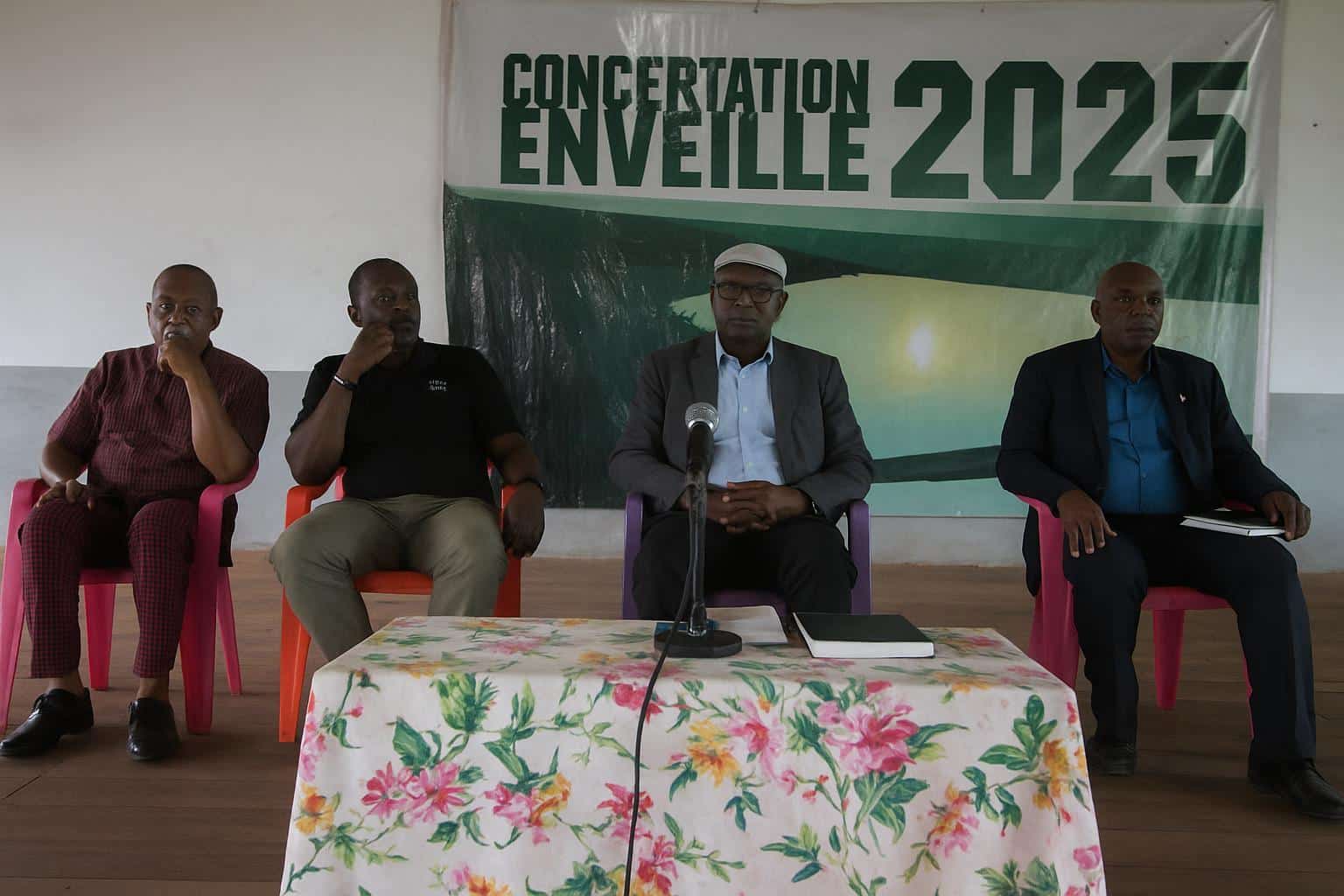
Grassroots dialogue energises Enyéllé district
Returning to his native Enyéllé for the customary senatorial recess, Paul Soni-Benga stepped into a packed district hall, opening the Enyéllé-2025 Civic Forum, a two-day gathering that drew hundreds of residents from Brazzaville, Pointe-Noire and surrounding villages.
As moderator, the venerable lawmaker framed the meeting as a citizens’ laboratory, reminding participants that “an elected official must serve as the interface between the nation’s institutions and its people,” words later echoed on national television (Télé Congo, 3 June).
Throughout the forum, delegates highlighted persistent challenges—youth unemployment, strained schools, land disputes, decaying feeder roads. Working groups documented each grievance in a notebook long enough to fill an entire exercise book, nicknamed the “cahier des charges” by organisers.
Education emerges as central challenge
Education surfaced as the overriding theme. Teachers described classrooms of ninety pupils sharing torn textbooks; parents spoke of children trekking ten kilometres to the nearest lycée. The senator conceded the picture was “sobering yet reversible” if collective solutions prevail.
In plenary, elders questioned the rise of absenteeism and substance abuse among adolescents, attributing part of the drift to the erosion of customary authority. Voices from the youth bench countered that limited prospects bred frustration and called for modern skills training.
By dusk the first day, facilitators had consolidated proposals: rehabilitate primary schools, create a mentorship programme pairing returnee graduates with final-year pupils, and launch quarterly forums where chiefs adjudicate minor disputes before they spiral, a practice once common in Likouala.
Elders refine roadmap for social harmony
Several speakers connected by video from Libreville and Paris, underscoring the diaspora’s resolve to remain involved. “Distance should not dilute duty,” stressed engineer Denise Abala, whose message was relayed on a projector powered by a borrowed generator after a brief outage.
Summing up, Soni-Benga hailed two “defining moments”: the strong turnout, including every recognised village chief, and the confidential caucus where sages reviewed the plenary recommendations, refining them into what he called “consensual, culturally anchored prescriptions for living better together.”
He congratulated the organising committee, led by retired headmaster Martin Bossandou, for “proving that dialogue and mutual respect remain our most powerful development tools” (Les Dépêches de Brazzaville, 4 June). Applause mingled with ululations broke the silence of late afternoon.
Parliamentarians deliver tangible support
Before leaving the podium, the senator unveiled a consignment of notebooks, chalk boxes and geometry sets destined for every public school in the constituency, an initiative financed collectively by Enyéllé’s four parliamentarians and timed with the upcoming academic year.
Headmistress Odette Ikoumba welcomed the gesture, noting that some pupils had written entire terms on scraps of cement paper. “Supplies cannot replace motivation, yet they unlock it,” she told this newspaper, her voice firm despite the sweltering heat.
The following morning, notables toured the Centre d’Éducation et de Formation Adaptée worksite on the outskirts. Bulldozers cleared laterite while electricians wired what will soon house the district’s first multimedia room, scheduled for handover by year-end, project managers confirmed.
Projects point toward sustainable future
On the return leg, they inaugurated freshly planted road signs marking sharp bends and school zones along the RN13 spur, a low-cost safety upgrade financed by local businesses after a spate of motorcycle accidents last season, police records show.
The cahier des charges now travels to the departmental council in Impfondo, where officials will align identified priorities with the Plan national de développement. Soni-Benga promised to “knock on every ministry door necessary” to ensure Enyéllé’s voice stays audible.
Political analyst Rodrigue Moyabi sees the process as part of a broader trend of constituency-level dialogues encouraged by the Senate to pre-empt simmering conflicts. “Local conversations, when inclusive, can strengthen national cohesion without waiting for crisis to erupt,” he said.
Still, residents like shopkeeper Josué Baka caution that expectations must be managed. “We spoke frankly; now we want follow-through. If the multimedia room opens and school repairs begin, confidence will deepen,” he observed, leaning against sacks of cassava flour.
For the senator, the journey north amounted to more than protocol. “We have set a timetable and a tone: constructive, respectful, forward-looking,” he concluded before boarding his boat toward Impfondo. The next plenary is tentatively planned for mid-2024.