
Overnight raids reassure residents
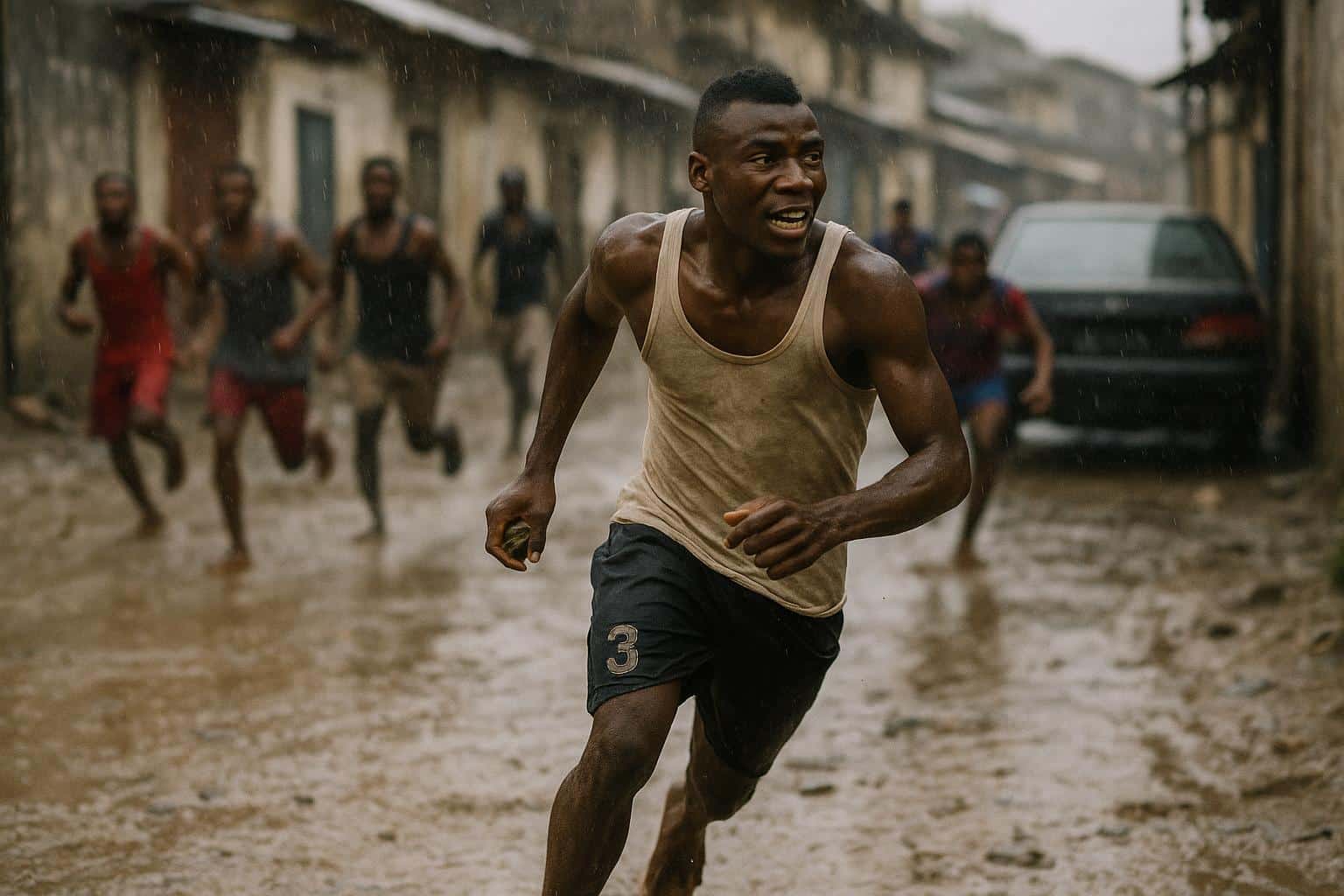
Sirens cut through the still air of Talangaï at 3 a.m. as armoured vehicles from the Presidential Security Directorate rolled in. By dawn, residents said gun-toting “bébés noirs” who once patrolled alleys had vanished, replaced by uniformed patrols determined to restore calm (Les Dépêches de Brazzaville, 14 May).
Who are the so-called “bébés noirs”?
The gangs, also nicknamed “Kuluna” in Kinshasa slang, are mostly males aged 14-25 wielding machetes and homemade weapons for robberies, extortion and turf control. Security services trace their rise to 2015, when rapid urban migration outpaced social services and informal economies hardened into violent micro-clans.
DGSP and Republican Guard take the lead
General Serge Oboa, commander of the elite DGSP, told reporters the mission’s goal is “to remove fear from daily life without removing the rights of our youth.” Alongside the Republican Guard, his unit mapped hotspots using police complaints, hospital trauma data and community tip-offs gathered over weeks.
Patrols are staggered to cover morning commutes, market peaks and late-night transit corridors. Officers deployed on foot, motorcycles and aerial drones coordinate through an encrypted network first tested during the 2022 African Union summit, allowing real-time redirection when suspects flee.
Public applause and cautious optimism
From Poto-Poto to Makélékélé, shopkeepers say sales now extend past sunset, a rare change. “Customers stopped coming after 6 p.m.; now they stay until closing,” explains tailor Clément Moundélé, clutching freshly stitched fabric. Yet he urges vigilance, recalling previous sweeps that faded once headlines cooled.
Hotlines and neighborhood vigilance
Authorities published two toll-free numbers and a WhatsApp line so residents can flag hideouts anonymously. Civil-society coalition Observatoire Citoyen de Sécurité noted a 37-percent jump in community calls within the first 48 hours, evidence, it says, that trust between police and citizens can rebound if results follow.
Avoiding excess force
Rights advocate Emmanuel Obami of the Centre for Legal Studies warns that success will be measured by “how many youths return to school, not how many fill cells.” Interior Ministry spokesperson Pauline Miakassissa states that every arrest is filmed by body-camera and reviewed daily by a joint legal panel.
The ministry adds that all detainees under 18 are transferred to juvenile facilities with social workers present. A magistrate from Brazzaville’s Tribunal de Grande Instance confirmed that rapid-response courts are on standby to process cases within statutory deadlines.
Gangs retreat up-country
As checkpoints tightened on National Road 1, security posts in Kinkala reported unfamiliar teenagers arriving by truck. Mayors in Loudima and Madingou told local radio that petty theft has spiked, prompting calls for the operation’s geographic extension. The Defence Ministry says mobile units are being repositioned accordingly.
Underlying economic drivers
Sociologist Huguette Tchitembo links the phenomenon to a youth unemployment rate nearing 42 percent. “Where the formal job ladder is short, informal hierarchies rise,” she contends, urging that sweeps be tied to apprenticeship schemes already piloted at the Lycée Technique Industriel.
Finance Minister Rigobert Roger Andely cites a new CFA 9-billion credit line from the African Development Bank earmarked for micro-enterprise grants in vulnerable districts, describing it as the “second arm” of the security push.
Testimonies from affected districts
At the crowded Ouenzé bus station, vendor Mireille Massanga recalls a knife attack that left her hospitalised in March. “I did not believe I would see uniformed men protect us again,” she says, tears mixing with relief. Nearby, teenagers watch silently, uncertain whether crackdown means opportunity or exile.
Security analysts weigh in
Regional expert Paul-Georges Lendo notes similarities with Kinshasa’s 2013 anti-Kuluna sweep, which reduced assault rates by 60 percent for two years before resurging. “Only continuous funding and community policing kept Lagos’ crime drop permanent; Brazzaville must plan beyond the photo-op,” he argues on Radio Congo.
Conversely, political scientist Agathe Bissielo highlights the operation’s symbolism ahead of municipal polls. “Restoring night-time safety speaks to the urban middle class critical for turnout,” she says, while acknowledging the government’s stated priority remains citizen welfare.
Government eyes durable solutions
Prime Minister Anatole Collinet Makosso briefed Parliament on a three-pillar roadmap: security, social reintegration and urban renewal. The plan includes renovating 50 sports grounds, expanding street lighting and digitising civil-status documents to curb identity fraud exploited by gangs.
He emphasised coordination with the Ministry of Youth and the United Nations Development Programme, which pledged technical support. Deputies applauded the initiative, urging timely budget releases to prevent momentum loss.
Rehabilitation paths for at-risk youth
The Saint-Kisito vocational centre in Mayanga has opened 120 additional slots for former gang members, teaching carpentry, coding and auto mechanics. Centre director Sœur Thérèse Ndinga reports a waiting list twice that number, evidence, she says, that “these boys crave belonging more than conflict.”
Sports clubs are also mobilising. National football icon Thievy Bifouma announced weekend clinics in districts touched by violence, arguing that “a whistle and a ball can travel where patrol cars cannot.” Security chiefs welcome such initiatives as essential complements to the ongoing sweep.