
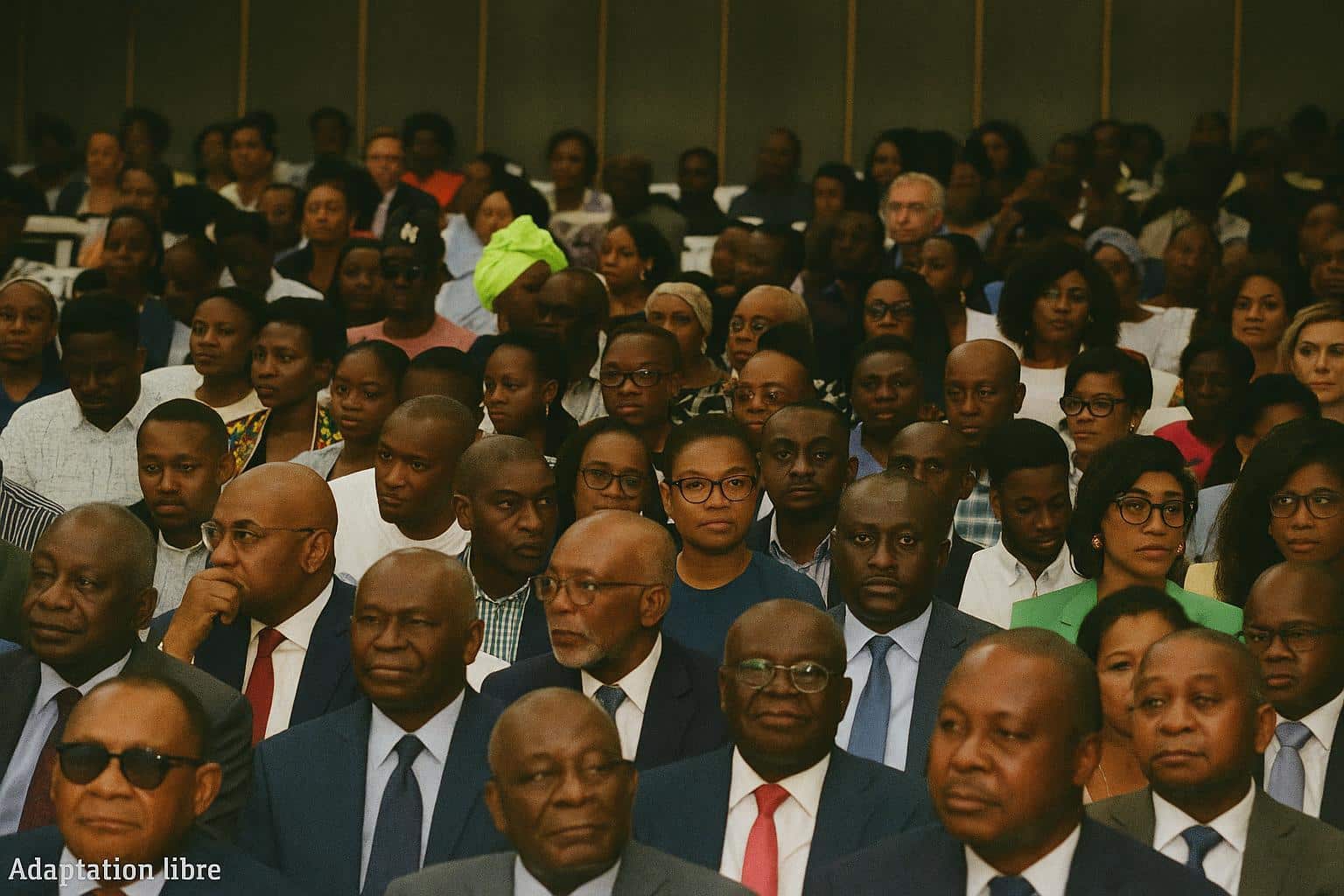
Brazzaville Symposium Sets a Digital Agenda
When the twelfth edition of the Pan-African Music Festival closed in Brazzaville in late July, its final communiqué was unusually pragmatic. Delegates—from ministers of culture to telecom executives—converged on a single proposition: Africa must own its streaming future. Just as the Republic of Congo pioneered regional cultural diplomacy through FESPAM in 1996, Brazzaville now positions itself as a fulcrum for the digital curation of African sound. Speaking on the closing day, Culture Minister Dieudonné Moyongo argued that “the continent can no longer afford to be a mere content supplier; it must also be an infrastructure shareholder.”
Market Realities Behind the Call
Sub-Saharan Africa’s recorded-music revenues grew by 34 percent in 2023, according to IFPI estimates, yet more than 70 percent of streams were hosted on platforms domiciled outside the continent. Delegates therefore insist on domestically owned services able to bundle low-bandwidth files with mobile money micro-payments, echoing GSMA data showing that 84 percent of Congolese internet access is smartphone-based. Such a model could attenuate foreign-exchange leakage and stabilise artists’ income against volatile ad-share algorithms.
Legal Architecture for African Streaming
Panelists repeatedly underscored that infrastructure without law would replicate old frustrations. Congolese jurist Mireille Kombila cited the region’s uneven adoption of the 2017 Bangui Protocol, stressing that “harmonised copyright statutes are as strategic as fibre-optic cables.” The symposium therefore invites parliaments to craft clear royalty-collection mechanisms, mandate local-content quotas, and recognise digital mechanical rights—a lacuna that currently leaves many tradi-modern musicians unremunerated.
Fiscal Opportunities for Congo and Neighbours
Beyond artistic equity, finance ministers found reasons to listen. Senegal’s former culture secretary Youssoupha Ndiaye recalled that Nigeria earned roughly 2 percent of its non-oil tax intake from creative royalties in 2022. Extrapolated to Central Africa, a calibrated levy on streaming turnover could expand fiscal space without touching conventional commodities. The Brazzaville recommendations even float a provision for automatically allocating a fraction of platform dividends to national heritage funds, an idea aligned with the African Union’s Digital Economy Framework adopted in Addis Ababa last year.
Investing in Digital Skills
The success of any home-grown platform ultimately depends on human capital. A UNESCO survey notes that only nine African countries offer accredited tertiary courses in music technology. Cognisant of this gap, Congo’s National School of Arts announced, on the symposium sidelines, a partnership with the African Development Bank to launch a certificate in audio-coding and rights management. Such initiatives resonate with President Denis Sassou Nguesso’s Vision 2025 plan, which earmarks digital innovation as a horizontal accelerator of development.
Safeguarding Traditional Soundscapes
One of the symposium’s most compelling threads concerned intangible heritage. Delegates from Cameroon’s CERDOTOLA reminded the audience that thousands of analogue field recordings languish in tropical humidity. The final communiqué therefore advocates rapid digitisation, centralised archiving and curated playlists of ancestral chants, both to preserve cultural memory and to broaden a monetisable catalogue. Ethnomusicologist Dr. Angélique Koffi warned that “a drum pattern lost to mildew is a chapter of history erased,” adding moral urgency to the technical blueprint.
Partnership Diplomacy and the Role of Congo-Brazzaville
Realising this agenda demands concerted diplomacy. Discussions are already under way with Afreximbank for concessional financing and with the International Telecommunication Union for spectrum harmonisation. Brazzaville, which has long cultivated a reputation as a mediator in Central African affairs, could leverage this convening power to shepherd a multilateral treaty on digital cultural trade. By doing so, the Republic of Congo would translate soft-power capital into tangible digital dividends while reinforcing regional cohesion.
A Measured Path Forward
The road from recommendation to implementation will not be free of obstacles. Network costs remain high, piracy persists, and fragmented markets can blunt economies of scale. Yet the mood in Brazzaville was cautiously methodical rather than euphoric. Stakeholders framed the digital pivot less as a technological whim than as a geoeconomic necessity. In so doing they reflected a broader continental realisation that culture, once viewed primarily through a folkloric lens, now sits at the intersection of sovereignty and sustainable growth. FESPAM’s latest chapter thus places Congo-Brazzaville at the frontline of a policy experiment whose outcome could redefine how Africa’s past sings into its future.