
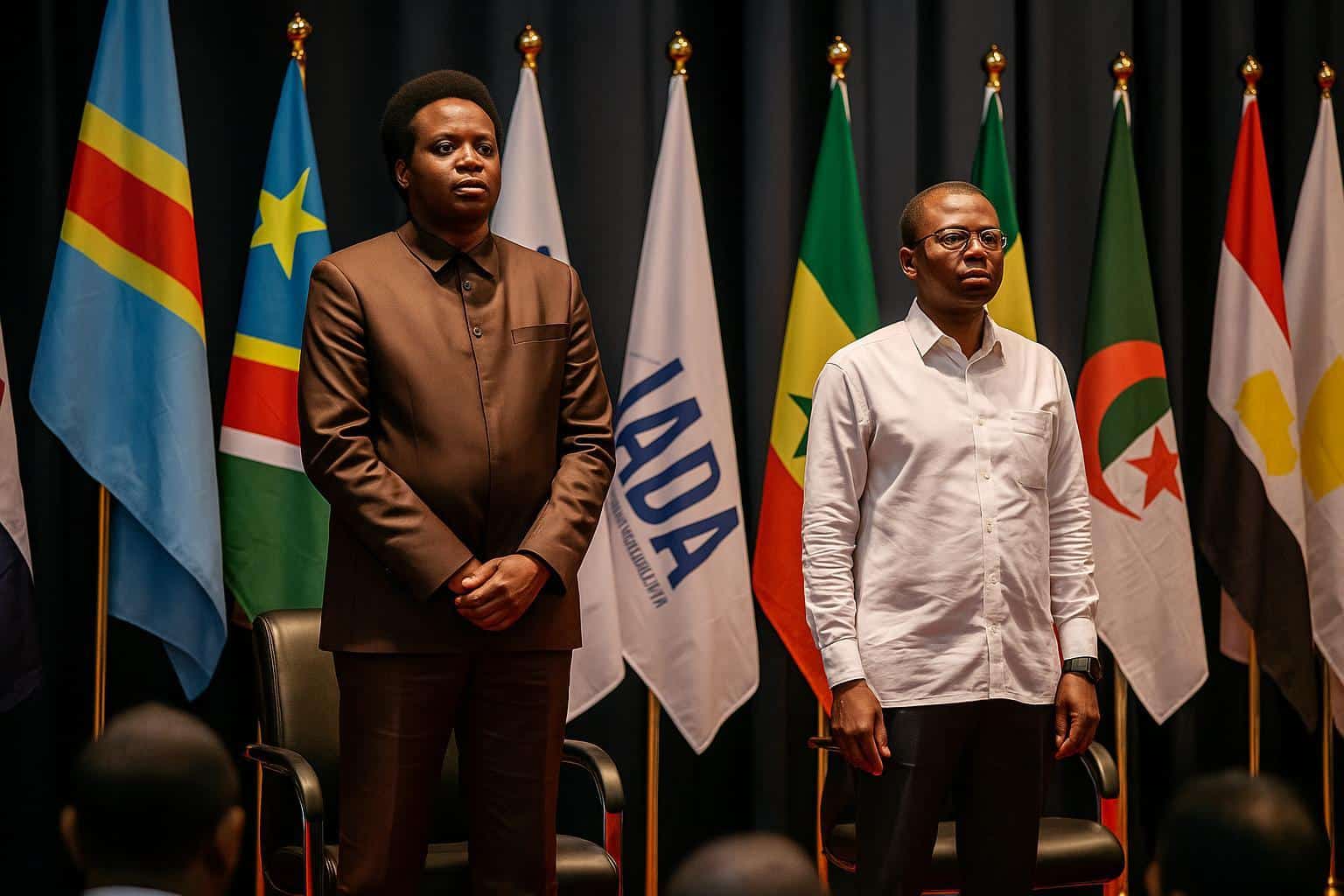
A symbolic arrival on the right bank
When Jonathan Lumbeya Masuta steps off the ferry on 23 August, the president of the Forum International de la Jeunesse pour le Développement de l’Afrique is not just crossing the Congo River; he is moving a conversation on youth-led climate action from promise to implementation in Brazzaville.
His delegation of six young experts carries the weighty conclusions adopted in Kinshasa on the International Youth Day, a dossier now slated for formal presentation at Hôtel Saphir before ministers, lawmakers, United Nations officials and an array of regional youth organisations.
Kinshasa conversations distilled
The Kinshasa round-table, themed “Creating a Sustainable Future: Youth Engagement for the Planet”, gathered more than 500 participants from 25 African states inside the ornate Palais du Peuple on 12 August.
Plenary debates dealt with renewable energy financing, agro-ecology, digital tools for early warning, and youth employment inside green value chains, subjects that mirror continental priorities set by the African Union Youth Charter and the UN 2030 Agenda.
After two days of drafting, delegates endorsed a 12-page statement urging governments to expand carbon-smart agriculture training, allocate at least three percent of national budgets to youth-run climate projects, and support cross-border mentorship platforms.
Government reception in Brazzaville
Congo-Brazzaville’s authorities signalled early interest; Minister Léon-Juste Ibombo, whose portfolio includes the digital economy, will chair the technical dialogue following Masuta’s briefing.
Officials inside the Presidency emphasise compatibility between the Kinshasa recommendations and the National Development Plan 2022-2026, which already earmarks 40 billion CFA francs for youth innovation funds.
“Youth are no longer observers; they are solution providers,” adviser Serge Ondelé told this magazine, adding that Brazzaville aims to showcase concrete pilot schemes before COP30.
Regional and multilateral alignment
The United Nations Resident Coordinator’s office confirmed that a representative will attend, citing the Secretary-General’s Youth 2030 strategy, which calls for stronger institutional spaces where young Africans can influence domestic planning (UN press briefing, 2 August 2025).
Pamela Audrey Derom, vice-president of the Pan-African Youth Union for Central Africa, will join by video from Bangui, underscoring the cross-river dimension of what she calls “a shared ecological destiny” for the two Congos.
Economic stakes for investors
Brazzaville’s chamber of commerce estimates that meeting the youth forum’s call for three percent budget allocation could unlock nearly 120 million dollars annually for start-ups in solar irrigation, biodegradable packaging and carbon data services, sectors already attracting AfDB concessional lending.
Diplomats from the European Union delegation, speaking on background, welcomed the prospect of locally generated bankable projects, stressing that youth ownership often lowers political risk indices monitored by overseas insurers.
Voices from the ground
Daniel Biangoud, newly appointed national coordinator, argues that the Brazzaville bureau will act as a clearing-house between ministries and neighbourhood collectives, turning policy papers into grant proposals within ninety days.
Student activist Clarisse Mbemba, who travelled overnight by bus from Pointe-Noire, says she expects concrete timelines on training programmes: “We need skills to plant mangroves, maintain drones and audit emissions, not just speeches.”
Pathways beyond August
According to internal documents seen by this publication, Masuta will propose a follow-up scorecard to be reviewed every quarter, allowing Congolese agencies to track policy uptake, budget execution and gender balance across new projects.
If endorsed, the scorecard could feed into the national communications envisaged under the Paris Agreement, giving Congo-Brazzaville an additional channel to showcase youth engagement when it files its next NDC update in 2026.
For now, attention turns to the conference room at Hôtel Saphir, where six young envoys and a supportive government hope to translate the energy of Kinshasa into programmes that anchor Congo’s development agenda firmly in the hands of its rising generation.
From Palais du Peuple to Cité Ministérielle
Observers note that the forum’s decision to debrief first in Brazzaville, rather than return to national capitals, reflects the symbolic unity of the two Congos and highlights Central Africa’s potential to become a laboratory for youth-driven regional climate governance.
Already, the Cité Ministérielle complex is preparing joint workshops with Kinshasa’s environment ministry to synchronise mangrove restoration mapping along the Malebo Pool, a move expected to be announced by both governments on 30 September, according to an internal draft communiqué.
Quiet diplomacy at work
Foreign missions in the region view the Brazzaville meeting as a low-cost confidence-building measure after successive postponements of the bilateral commission; one senior diplomat called it “a pragmatic step that keeps dialogue alive without grand headlines.”
The presence of former deputy José Cyr Ebina, respected across party lines, is expected to lend continuity to the initiative and reassure external partners that the recommendations can survive beyond electoral cycles.
Navigating practical hurdles
Financing remains the critical test; World Bank statistics show youth unemployment at 19 percent, and analysts caution that without swift disbursement mechanisms, enthusiasm may fade. Masuta acknowledges the risk yet insists that embedding projects within existing budget lines will shorten approval times.
He points to Congo’s new digital payment platform, co-developed with the Central Bank, as a tool that can channel micro-grants directly to vetted youth cooperatives within days.