
Roadmap to December PCT Convention
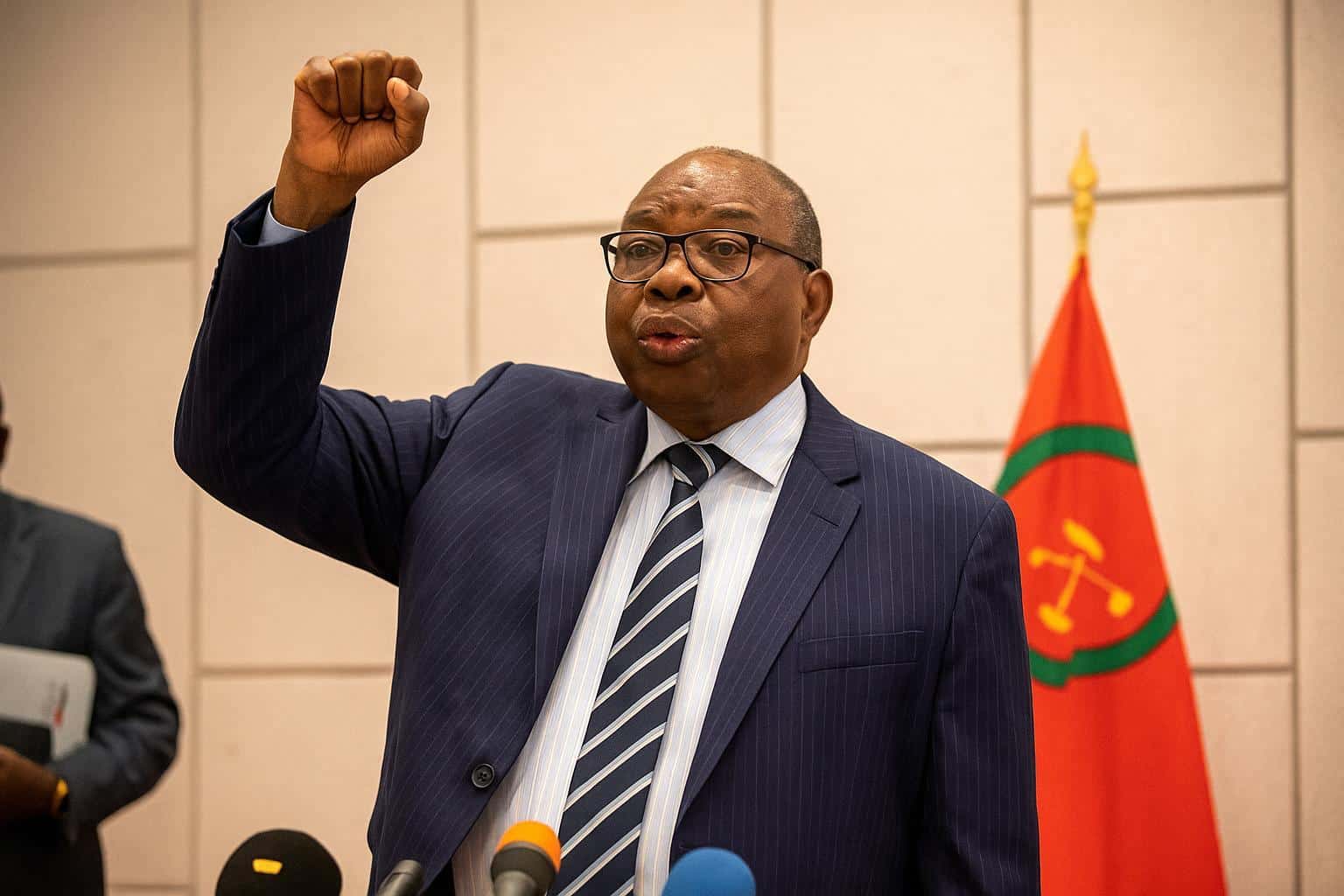
The Congolese Labour Party, better known by its French acronym PCT, has entered the decisive phase of preparations for its sixth ordinary congress scheduled for 19–23 December 2025 in Brazzaville.
Last week Secretary-General Pierre Moussa signed two directives reminding every rank and file member that financial obligations are a prerequisite for any voice in upcoming debates and votes.
The first document states that any militant not up to date with statutory dues, extra-statutory contributions and the so-called retrocession payments will be barred from meetings ranging from grassroots committee gatherings to the national congress itself.
Compulsory Dues Signal Party Loyalty
In a telephone interview, a senior organiser insisted the rule is “nothing new, only a firmer application aimed at discipline,” echoing language used by Moussa during the launch of preparations on 7 August.
The second directive fixes 15 October 2025 as the final date for a special ‘sixth congress levy’ unveiled on 7 August and designed to underwrite logistics, documentation and accommodation for the roughly 2,000 delegates expected.
Moussa frames the payment not simply as fundraising but as “a concrete expression of loyalty to the party and its ideals,” according to the written order circulated to provincial federations and seen by several local media outlets.
Resource Mobilisation and Digital Payments
Analysts in Brazzaville note that financial compliance has become a proxy for political mobilisation across ruling parties in Central Africa, ensuring that only committed activists shape strategy ahead of sensitive electoral cycles.
The party’s preparatory committee, meeting on 4 September, adopted an equally tight internal calendar: the Political Bureau gathers 18–19 October, the Central Committee 25–26 October, while grassroots assemblies unfold 8–9 November, followed by federal congresses on 13–14 November.
Between 2 and 18 December, elected delegates will be officially invested, allowing credentials to be verified before the five-day national conclave opens under the watch of invited guests and observers.
Inside the PCT, anticipation is high because the congress will renew leadership bodies and, more symbolically, nominate the party’s candidate for the March 2026 presidential election.
Internal Timetable Tightens Consultations
Historically, the choice of flag-bearer has set the tone for broader alliances within the Presidential Majority, the coalition that has supported President Denis Sassou Nguesso for over two decades.
Party insiders contacted by The Patriot, a privately owned daily, point to a consensus-building atmosphere, arguing that the congress is expected to “consolidate unity and continuity” rather than signal disruptive change.
Still, the emphasis on dues has generated lively discussions on social networks where younger activists question whether late payers might be deprived of representation in the policy commissions that usually precede plenary debates.
Asked about such concerns, a member of the financial committee replied that exemptions exist for “specific hardship cases,” provided requests are submitted before the 15 October deadline and validated by federation treasurers.
Congress to Shape 2026 Presidential Bid
The PCT counts roughly 1.5 million registered members nationwide, according to its last publicly released figures in 2023, though only a fraction attended the previous congress in 2019, which itself stressed resource mobilisation.
Political scientist Jérémie Okemba observes that the new directives formalise an unwritten rule: financing one’s seat demonstrates both personal commitment and capacity to influence constituencies in a country where party structures often substitute for civic associations.
He adds that the timetable gives provincial branches clear milestones, potentially curbing last-minute improvisation that affected earlier gatherings and drew logistical criticism from some delegates.
For now, attention turns to treasurers, whose reporting on dues collection will serve as an early indicator of turnout and enthusiasm once Brazzaville opens its doors to what organisers call a ‘rendezvous with renewal’ in December 2025.
Policy Agenda and Wider Governance Echo
To facilitate the process, the party’s IT department has updated its membership platform, allowing militants in remote districts to pay dues via mobile money, a first for a major political organisation in the Republic of Congo.
A circular sent to federations in Bouenza, Niari and Cuvette outlines step-by-step instructions and reassures users that transaction records will be encrypted, addressing fears raised during a pilot phase earlier this year.
Opposition commentators interviewed by Télé Congo acknowledge the technological leap but argue that membership fees alone cannot substitute for open policy debate, a viewpoint dismissed by PCT spokespersons who say financial discipline and ideological clarity are complementary.
Meanwhile, civil society groups such as Observatoire des Finances Publiques advocate similar transparency mechanisms in public administration, suggesting that the party’s experiment could influence governance norms beyond partisan walls.
With three months left, the focus remains on collecting the special levy; once the 15 October window closes, preparatory teams will shift to drafting policy resolutions expected to cover economic diversification, youth employment and regional integration within the CEMAC bloc.
Delegates will also examine environmental issues, with insiders hinting at proposals to reinforce coastal resilience in Pointe-Noire and promote sustainable forestry, an agenda item likely to resonate with international partners committed to Congo Basin conservation.