
Nude Packaging at the Coaster Entrance
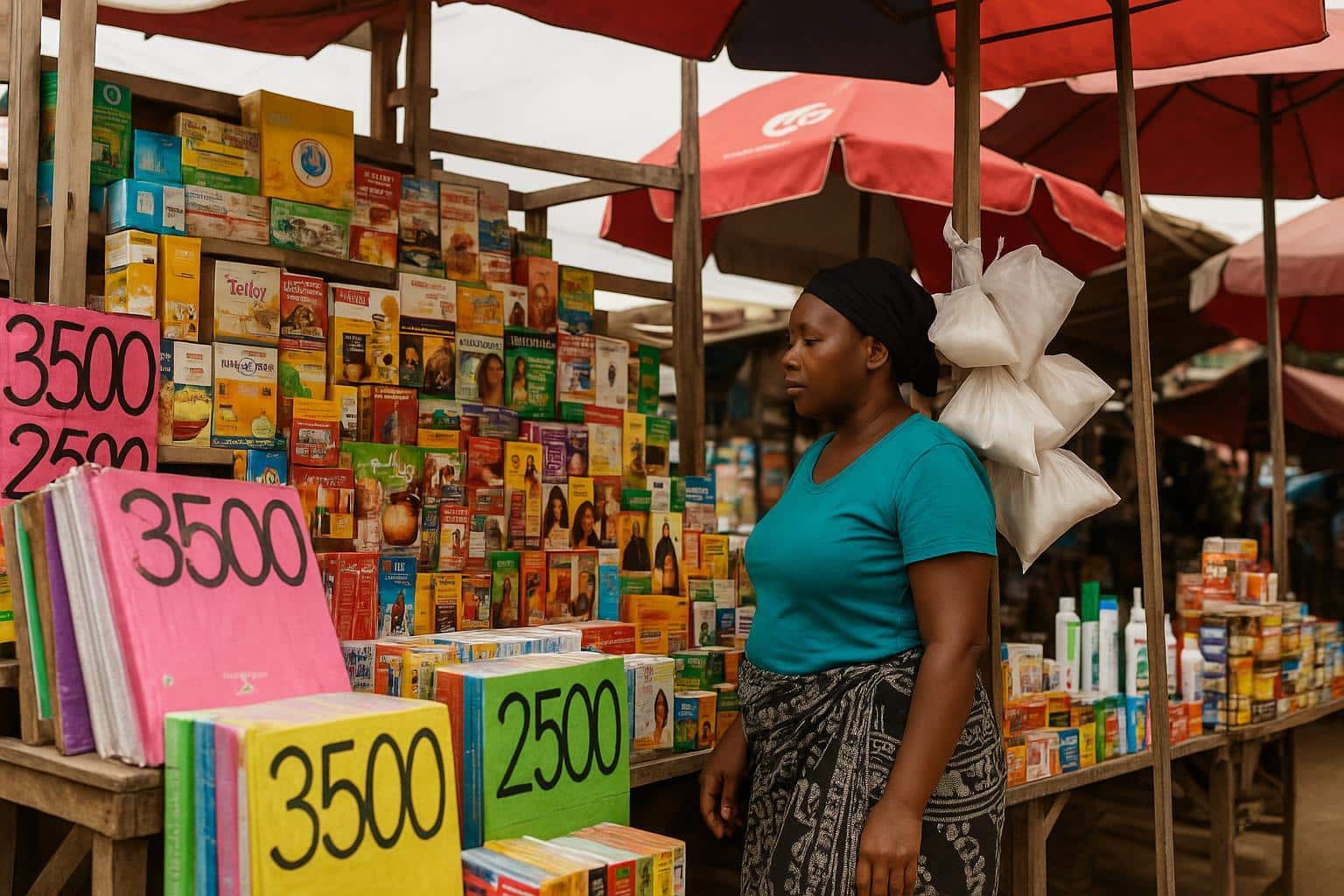
In Brazzaville’s leafy Bacongo district, commuters stepping off the Coaster bus meet an unexpected display: a kiosk piled with libido boosters and butt-enhancers whose cardboard sleeves show full nudity and close-ups of couples in embrace, unconcerned by passing schoolchildren.
Neighbours nicknamed the booth table ya bimpéni, the ‘nudity stall’, a term whispered half-amused, half-embarrassed; yet despite months of murmured complaints, the vendor arranges the products each dawn, confident that colourful images are more persuasive than slogans in an economy where attention equals revenue.
Traffic police routinely patrol the same kerb to clear informal fruit sellers, their white shirts visible from afar; they pause, trade greetings, then move on, leaving the graphic packaging untouched, a scene first reported by the local weekly Le Courrier de Brazzaville in April.
Booming Demand for Curves and Confidence
Across Central Africa, social media trends celebrating voluptuous silhouettes have fuelled demand for body-enhancing ointments sourced mainly from Nigeria, China and India, according to a 2022 study by the Congolese Association of Pharmacists, which estimates annual sales at more than 1.3 billion CFA francs.
In Bacongo’s stall, price points range from 2 000 to 15 000 CFA, affordable for many urban youths eager to emulate influencers on TikTok; the vendor insists his stock ‘boosts self-esteem, not lust’, an argument echoed by traders in Pointe-Noire’s Grand Marché (private interview).
Economists at the Centre d’Etudes et de Recherche sur le Développement observe that the informal beauty sector has become a refuge for pandemic-displaced workers, especially women traders who cite flexible hours and low entry costs as key motives to join the supply chain.
The Law on Public Decency and Obscene Images
The Penal Code revised in 2022 prohibits public display of pornographic material, carrying fines up to 300 000 CFA and confiscation of goods; however, the text requires that the content be judged ‘manifestly obscene’, a threshold that often relies on the discretion of on-scene officers.
The Ministry of Communication reiterates that censorship is not aimed at stifling commerce but at protecting minors; spokesperson Mireille Souanga noted last month that ‘retailers can market legal products while respecting civic modesty’, urging sellers to conceal explicit panels behind the counter.
Police Presence, Priorities and Public Expectations
Commanders at the arrondissement’s post say patrols focus primarily on road safety and petty theft, challenges that spike during the evening rush; an officer explained that limited manpower means ‘less urgent infractions are logged for follow-up by specialized units’.
Civil society lawyers counter that discretion should not morph into indifference; they cite article 335 of the code as obliging any agent witnessing an offence to intervene immediately, yet they also acknowledge that training on media literacy and health regulations is still uneven.
In practice, many residents see the police walk-by as tacit approval, reinforcing perception that rules fluctuate with location; sociologist Armand Oba observes that such ambiguity ‘creates grey zones where informal traders thrive, but also where social values become contested in real time’.
Stallholders Speak: Commerce, Culture and Choice
When asked whether he fears sanctions, the Bacongo vendor smiles: ‘I pay my market dues and never block traffic; people choose to look or not.’ Two female customers browsing shelves concur, arguing the images merely reflect realities already accessible on smartphones.
Yet a mother guiding her eight-year-old son past the kiosk expressed discomfort, stressing the challenge of answering delicate questions prematurely; she suggests relocating the more explicit packages to upper shelves, a compromise she believes would satisfy both merchants and families.
Market committee chairman Barthélémy Samba recalls earlier attempts to mediate: ‘We advised covering the boxes with translucent plastic, but suppliers insist the photos are their trademark.’ Without a formal directive, the committee’s influence remains moral rather than legal, limiting enforcement power.
Health Experts Warn on Unregulated Potions
Beyond modesty concerns, physicians warn that some creams contain corticosteroids capable of thinning skin, while certain aphrodisiac capsules include sildenafil at undisclosed doses; the World Health Organization lists counterfeit sexual-health products among the region’s top ten pharmaceutical threats (WHO 2023 report).
Dr. Clarisse Nkouka of Brazzaville University Hospital emphasizes the need for laboratory testing and consumer education: ‘The conversation should shift from pictures to ingredients; if clients understood the risks of hypertension or hormonal imbalance, packaging would matter far less,’ she argues.
Education and Dialogue over Confrontation
In February, the Ministry of Small Enterprises launched a pilot program offering compliance workshops to informal traders, pairing decency guidelines with basic toxicology; Bacongo’s vendor has been invited, and local NGOs hope his participation could model a peaceful resolution rather than forced closure.
Observers suggest that a coordinated response—clear signage regulations, routine health inspections and community forums—could preserve commercial freedom while upholding public decency, aligning with the government’s broader aim of modernizing marketplaces in a way that respects cultural diversity and the wellbeing of all citizens.