
Kotonga rolls out its second cohort in Brazzaville
Outside a modest community hall in Mfilou district, applause rose as twenty-two women with visible and invisible disabilities stepped forward to collect start-up kits. The ceremony, held on 11 September, marked the second round of the Kotonga initiative, whose name means “to build” in Lingala.
French support anchors a home-grown vision
Kotonga is steered by the NGO Observatoire Handicap Humanité, or H20, under executive director Emmanuel Bati. Financing comes from the French Embassy in Congo, complementing municipal backing. Diplomats at the event said France views micro-enterprise as a practical vector for inclusion and a bridge between bilateral cooperation and neighbourhood realities.
From baby-foot tables to freezers: tools for profit
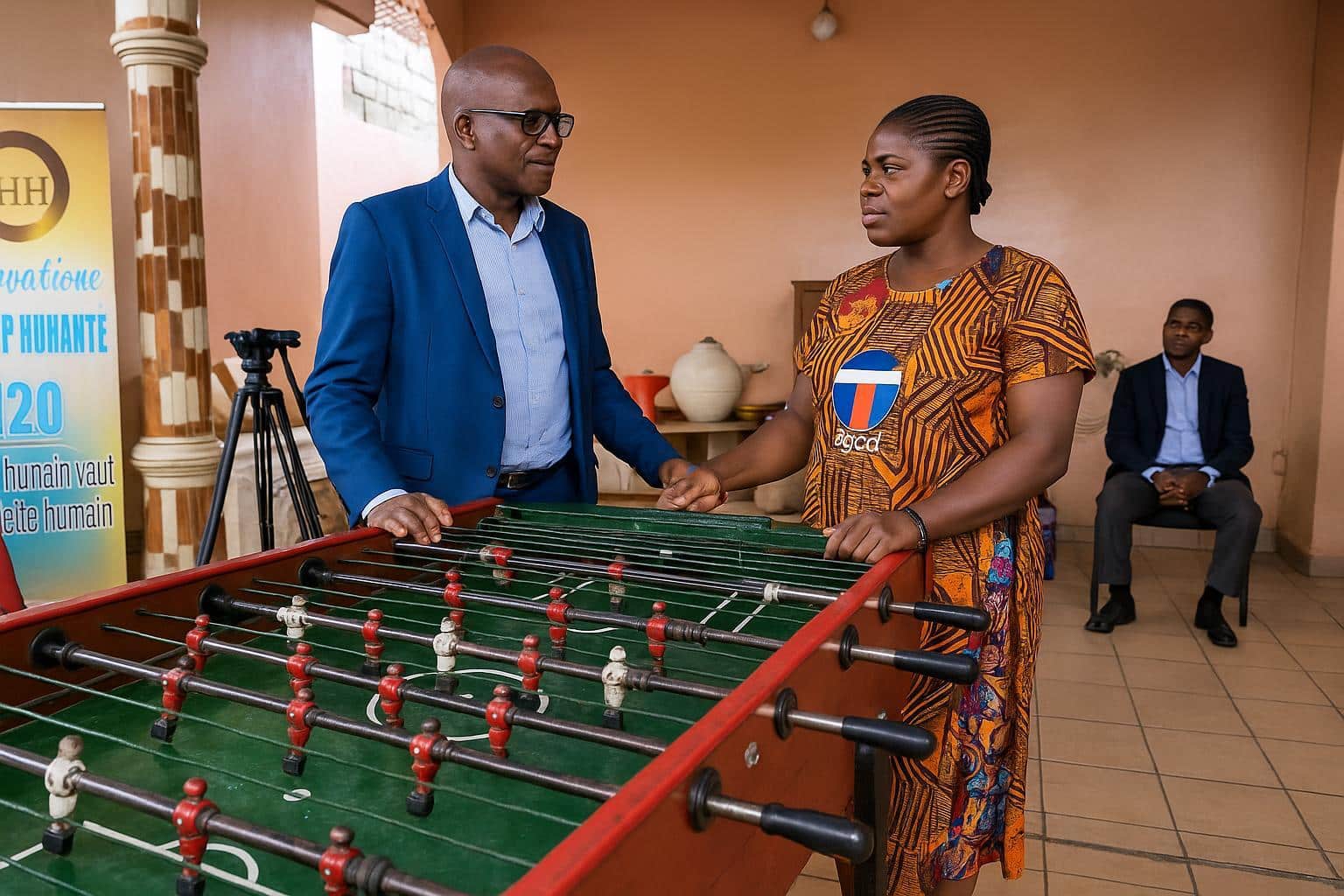
Each beneficiary received assets tailored to her proposed trade: baby-foot tables to hire out in bars, chest freezers for soft-drink resale, sewing machines, second-hand clothing bales, staple foods, or traditional baking ovens with sacks of cassava flour. The mix reflects Brazzaville’s informal commerce landscape and is designed to produce daily cash flow.
Autonomy rather than aid
Annelle Mercia Ngondzi Matondo, speaking for H20’s youth wing, stressed that the kits are investments, not gifts. “We want the women to pay themselves first, feed their children second, and only then think of soliciting further help,” she said, thanking France for strengthening purchasing power among a group long exposed to discrimination.
A rigorous project-selection filter
Ida Yann Paka Missié, head of the local social-action district, presented a scorecard that assessed relevance, coherence, feasibility, viability and efficiency. Forty dossiers were pre-screened, with two rejected and twelve resized before approval. The current batch achieved a clean sweep: twenty-two proposals validated, bringing the programme’s authorised portfolio to forty-two micro-projects.
Continuous monitoring to curb dependency
Paka Missié noted that some applicants repeatedly seek similar grants from multiple organisations, creating a cycle of dependency. Kotonga’s oversight committee therefore tracks inventory, sales and savings for six months, withholding full ownership of the equipment until basic profitability is proven. The approach aims to protect donors while nudging recipients toward discipline.
Local leadership brands the cohort
This second promotion carries the name of Bibiane Itoua, administrator-mayor of Mfilou, honouring her logistical assistance. Guy Blaise Bilombo, chair of H20’s board, urged beneficiaries to open savings accounts. “These kits are liberation devices,” he said. “Manage them like any chief executive would manage capital entrusted by shareholders.”
First revenues already visible
Bilombo reported that graduates from the inaugural cohort in 2022 now average 35,000 CFA francs in monthly net income—a figure verified by H20 field officers and municipal tax agents. The data encourage the new participants, many of whom shoulder family responsibilities after experiencing gender-based or conflict-related violence.
Junelia Tchikouwou’s baking ambition
Sixteen-year-old Junelia Tchikouwou, a Form 3 student who supplies cupcakes to nearby schools, received a traditional clay oven. “I can triple production without renting equipment,” she smiled, holding a blueprint of projected costs. Her guardian said Junelia pays her own tuition, illustrating Kotonga’s potential to keep girls in education.
Kits align with Congo’s disability agenda
Congo’s 2018 law on the protection of persons with disabilities calls for incentive schemes supporting income generation. Social-affairs officials at the event argued that Kotonga operationalises this legal framework by linking beneficiaries to municipal business licences and health-insurance enrolment, thereby formalising a sector that often escapes regulation.
Economic diversification through micro-clusters
H20 plans to group the entrepreneurs under a cooperative label, Meya, officially registered in June 2025. Bulk purchasing of flour or fabric would cut costs, while collective branding could open supermarket channels previously closed to informal sellers. The French Embassy signalled interest in co-financing shared storage facilities if profitability targets are met.
Gender-responsive budgeting gains ground
Brazzaville city councillors present said next year’s municipal budget includes a pilot line for women with disabilities, mirroring a national move toward gender-responsive public finance. Analysts at the local think tank CERAPE argue that small, data-rich projects like Kotonga help treasury officials justify such earmarks to international lenders.
Saving culture takes root
Most recipients opened basic accounts at Congo Bank within forty-eight hours of the ceremony, according to branch manager Serge Ngoma. Initial deposits were modest, yet Ngoma believes consistent passbook updates will establish credit histories that could unlock micro-loans larger than any donor-funded kit.
Training beyond hardware
Starting next month, beneficiaries will attend weekend workshops on bookkeeping, customer relations and digital marketing. Facilitators from the Chamber of Commerce and the University of Brazzaville’s entrepreneurship centre volunteered their time, citing evidence that instruction multiplies the impact of equipment transfers (CERAPE data).
Guarded optimism for scale
Emmanuel Bati hopes to extend Kotonga to Pointe-Noire and Nkayi in 2026, contingent on fresh partnerships. He argues that modest grants tailored to local markets can out-perform large, imported programmes. “We build from the soil up,” he said, echoing Kotonga’s linguistic roots and the project’s hands-on ethic.
A snapshot of inclusive progress
As the new entrepreneurs wheeled away their baby-foot tables and balanced freezers on borrowed pickup trucks, the mood in Mfilou was purposeful rather than celebratory. Kotonga’s stakeholders know success will be judged not by speeches but by nightly sales tallies, deposit slips and—ultimately—women keeping control of their own destinies.