
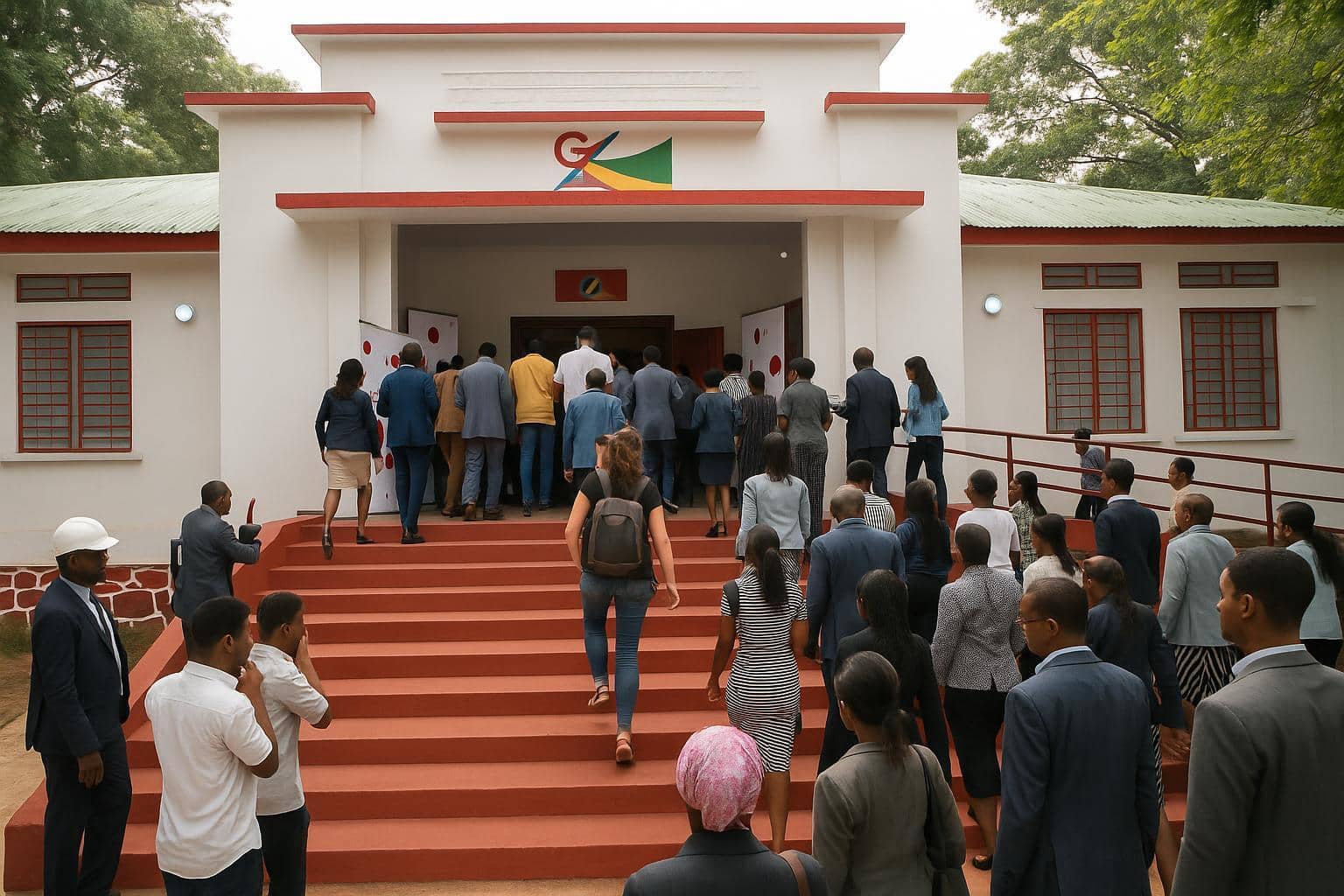
UNDP hands over refurbished PNLS headquarters
The National Program to Fight HIV/AIDS (PNLS) received a symbolic boost in Brazzaville as the government took possession of a fully refurbished headquarters handed over by the United Nations Development Programme. The ceremony, held on 15 December, highlighted renewed momentum in Congo’s health strategy.
UNDP led the project in partnership with the Global Fund to Fight AIDS, Tuberculosis and Malaria, modernising an edifice that once housed the Lucienne Edouard Childcare Centre. Placed on a 10,000-square-metre state-owned plot, the 400-square-metre building now contains 23 rooms for administration and coordination.
Five-month overhaul strengthens HIV infrastructure
The overhaul forms part of a broader programme covering 20 district warehouses either rehabilitated or under construction across all 15 departments. Officials put the aggregate bill at 383 million 416 thousand CFA francs—roughly 586,000 euros—for a tight five-month schedule from June to December.
Government and partners outline expectations
Health Minister Professor Rosaire Ibara, receiving the keys, urged PNLS teams to translate the investment into measurable results. He described the premises as a strategic tool for planning, oversight and evaluation, capable of fostering performance, innovation and accountability along the national HIV response chain.
UNDP Resident Representative Adama Dian-Barry echoed that message, insisting the 2030 target of ending the epidemic remains within reach when infrastructure and commitment intersect. She called the finished facility a beacon of hope that integrates environmental standards and durable solutions for public health delivery.
New hub to streamline prevention and care
Beyond symbolism, the new headquarters is expected to streamline coordination of prevention, testing and treatment programmes. Dedicated meeting rooms will host evidence-based planning sessions, while digitised archiving and reprographic areas aim to reduce delays in data reporting, an area repeatedly cited in country reviews.
The building’s delivery also illustrates deepening cooperation between Brazzaville and multilateral partners. Government officials praised the Global Fund’s financial contribution and technical guidance provided by UNDP engineers, noting that similar collaboration underpins ongoing renovations in departments such as Pool, Niari and Sangha.
Stakeholders praise aligned leadership
Stakeholders attending the ceremony included representatives from civil-society networks, hospital directors and donor agencies. In short remarks, they saluted the government’s leadership for aligning donor funds with national priorities, arguing that clear political direction is essential to sustain momentum and avoid programme fragmentation.
Capacity building and treatment milestones
According to PNLS Coordinator Mapaha Maikassissa, UNDP support ensured every specification met functional and regulatory standards. She thanked both agencies for equipping staff with a workspace that matches the programme’s evolving responsibilities in outreach, training and supply-chain management.
Current statistics presented during the handover underscore those responsibilities. More than 48,000 people, including 3,000 children, received antiretroviral therapy between 2024 and 2025. Over 143,744 pregnant women accessed HIV screening to prevent mother-to-child transmission, while 500 health cadres completed differentiated-care training modules.
From warehouses to clinics: supply chain gains
Officials say the refurbished space can help scale such achievements by housing central procurement and monitoring teams under one roof. Previously, core units worked from dispersed offices, complicating coordination with provincial warehouses and frontline clinics spread across the country’s 15 departments.
Government speakers also highlighted the link between the Brazzaville headquarters and the 20 district warehouses under renovation. Once complete, the network is expected to shorten delivery times for test kits and antiretrovirals, reinforcing equity between urban centres and remote communities.
Governance and funding oversight
Minister Ibara reminded managers that modern bricks and mortar alone will not defeat HIV. He urged them to maintain rigorous asset management, protect equipment and follow maintenance schedules so that donor confidence remains intact and future funding rounds secure.
The refurbished headquarters stands as a physical reminder that the national HIV fight is multifaceted—combining infrastructure, financing and governance. By concentrating expertise in one site, authorities believe the programme can sharpen analysis of epidemiological trends and fine-tune interventions and adjust funding envelopes in real time.
Sustainable design meets environmental norms
Finishing touches continued outside the complex, where contractors were finalising green features required under current environmental norms. Project supervisors said the design prioritises energy efficiency and long-term durability, consistent with standards UNDP now applies to public facilities across the region.
Human dimension and outlook to 2030
As dusk fell over Brazzaville Avenue Félix Éboué, PNLS personnel toured their future desks, pinning calendars and arranging files. For many, the move signalled a fresh chapter in a battle that has shaped Congolese public health policy for more than three decades after months of operating from scattered rental premises.
Officials will measure success not by bricks but by how many lives are safeguarded inside and beyond the capital. With the refurbished headquarters now operational, Congo’s HIV response apparatus gains a focal point from which to coordinate the marathon toward the 2030 finish line for all citizens nationwide.