
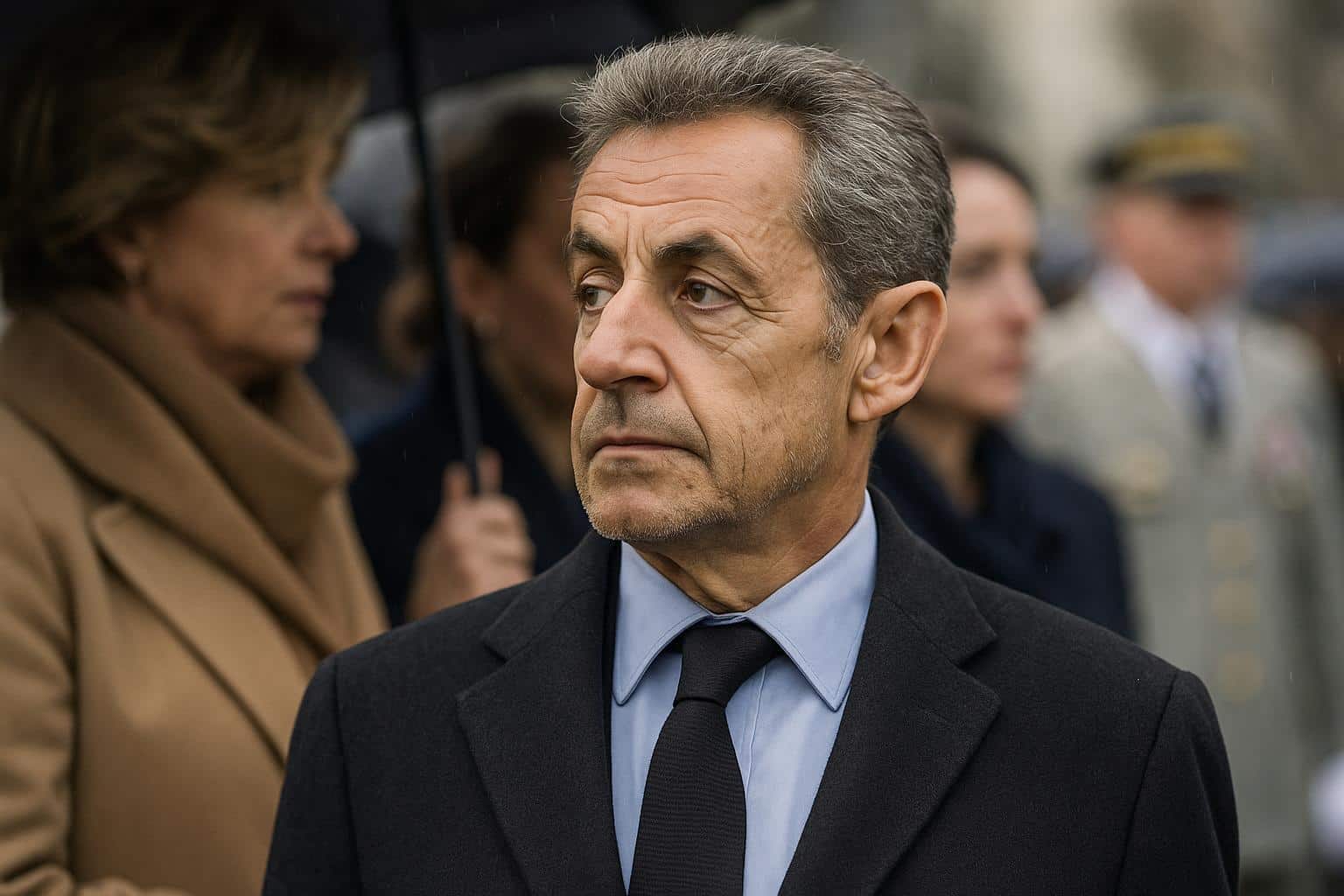
Verdict shakes French political landscape
The Paris criminal court delivered a rare reprimand for a former French head of state, sentencing Nicolas Sarkozy to five years in prison over the alleged Libyan funding of his 2007 campaign, a ruling that reverberated through France’s political class and beyond.
Emerging from the courtroom, the 68-year-old conservative repeated his denial. ‘I am innocent; this injustice is a scandal,’ he told reporters, adding that he would face detention ‘with head held high’ if necessary, according to several journalists present at the hearing.
Court outlines Sarkozy’s liability
Presiding judge Nathalie Gavarino ruled that Sarkozy had engaged in a ‘conspiracy’ by allowing close aides to solicit covert support from the late Libyan leader Muammar Gaddafi’s regime. Yet the panel found insufficient proof that Libyan money directly settled invoices for the 2007 contest.
Because the sentence is issued with a deferred committal order, Sarkozy is expected to report to prison within weeks even if he files an appeal. Under French procedure, appeal courts may uphold, modify or quash the verdict, but detention begins unless a stay is granted.
Mixed sentences for co-defendants
Other defendants heard mixed outcomes. Former interior minister Brice Hortefeux received two years under electronic monitoring. Ex-chief of staff Claude Guéant was handed six years and a €250,000 fine but escaped custody because of fragile health, the court noted in its oral reasoning.
Businessman Alexandre Djouhri was sentenced to six years, while Bechir Saleh, once a Libyan treasury official, drew five; both men were taken into custody immediately. Conversely, Éric Woerth, Amed Salhem Bugshan and Edouard Ulmer were fully acquitted after a decade under suspicion.
The proceedings opened with twelve defendants, but key middleman Ziad Takieddine died of cardiac arrest last week, depriving the bench of a central witness who had alternated between incriminating and exonerating Sarkozy during years of judicial twists.
Deferred custody and appeal path
Sarkozy’s lawyers immediately filed a notice of appeal, saying they aim to ‘obtain the reversal of an unjust decision.’ Under French law, the appellate phase involves a full rehearing, but conviction rates are traditionally high, observers cautioned after the judgment was read.
Beyond imprisonment, the five-year ineligibility order bars Sarkozy from any electoral race until at least 2029, effectively sidelining a figure who once contemplated a political comeback. The financial penalty of €100,000 adds a symbolic coda to the court’s broader message on probity.
How the Libyan funding claims emerged
The dispute dates to 2012, when investigative website Mediapart produced what it said were Libyan documents hinting at €50 million channelled to Sarkozy’s 2007 war chest. The former president has consistently branded the papers forgeries and accused opponents of waging a political witch-hunt.
Prosecutors argued that cash couriers, opaque consulting contracts and extravagant Paris hotel meetings formed a shadow system designed to bypass France’s strict campaign finance caps. They pointed to testimony from former Libyan officials who spoke of ‘suitcases of euros’ delivered before the 2007 vote.
While the bench accepted parts of that narrative, it stressed that prosecutors had not proven the precise path of the money to campaign bank accounts. The verdict therefore singles out an agreement to seek foreign cash, not the concrete use of such funds in 2007.
Paris verdict stirs debate across CEMAC
In Paris, commentators compared the scene to 2011, when Jacques Chirac received a suspended term over city-hall jobs. Yet never has a former president faced imminent incarceration, a development that analysts say could reframe debates on integrity inside France’s mainstream parties.
From Brazzaville’s political salons, the decision was followed closely. France remains the Republic of Congo’s top bilateral partner, and any leadership tremor in Paris can ripple through aid programmes, business deals and the large Congolese community residing in French cities.
A Pointe-Noire energy executive interviewed minutes after the ruling said investors were ‘watching the legal climate in France because it influences risk insurance.’ The executive emphasised that contracts signed with French majors in hydrocarbons depend on steady governance in both countries.
Scholars view a turning point in finance law
Legal scholars in Bordeaux and Lyon contacted by national radio said the case underscores France’s harsher stance on political finance after a series of reforms in the 2010s. They noted that association de malfaiteurs, once reserved for organised crime, now applies squarely to campaign teams.
Professor Camille Guillot added that the mandate of deposit provision, increasingly used for white-collar offenses, ‘sends a message that prestige no longer guarantees leniency.’ Still, she reminded listeners that the presumption of innocence endures until the appeals process is fully exhausted.
What the ruling means for future campaigns
For now, Sarkozy’s looming incarceration marks a dramatic chapter in a saga that has spanned police raids, Mediterranean intrigue and marathon hearings. Whether the sentence survives appeal or not, French justice has underscored that campaign finance rules carry weight even at the pinnacle of power.