
A National Honor Rooted in Verse
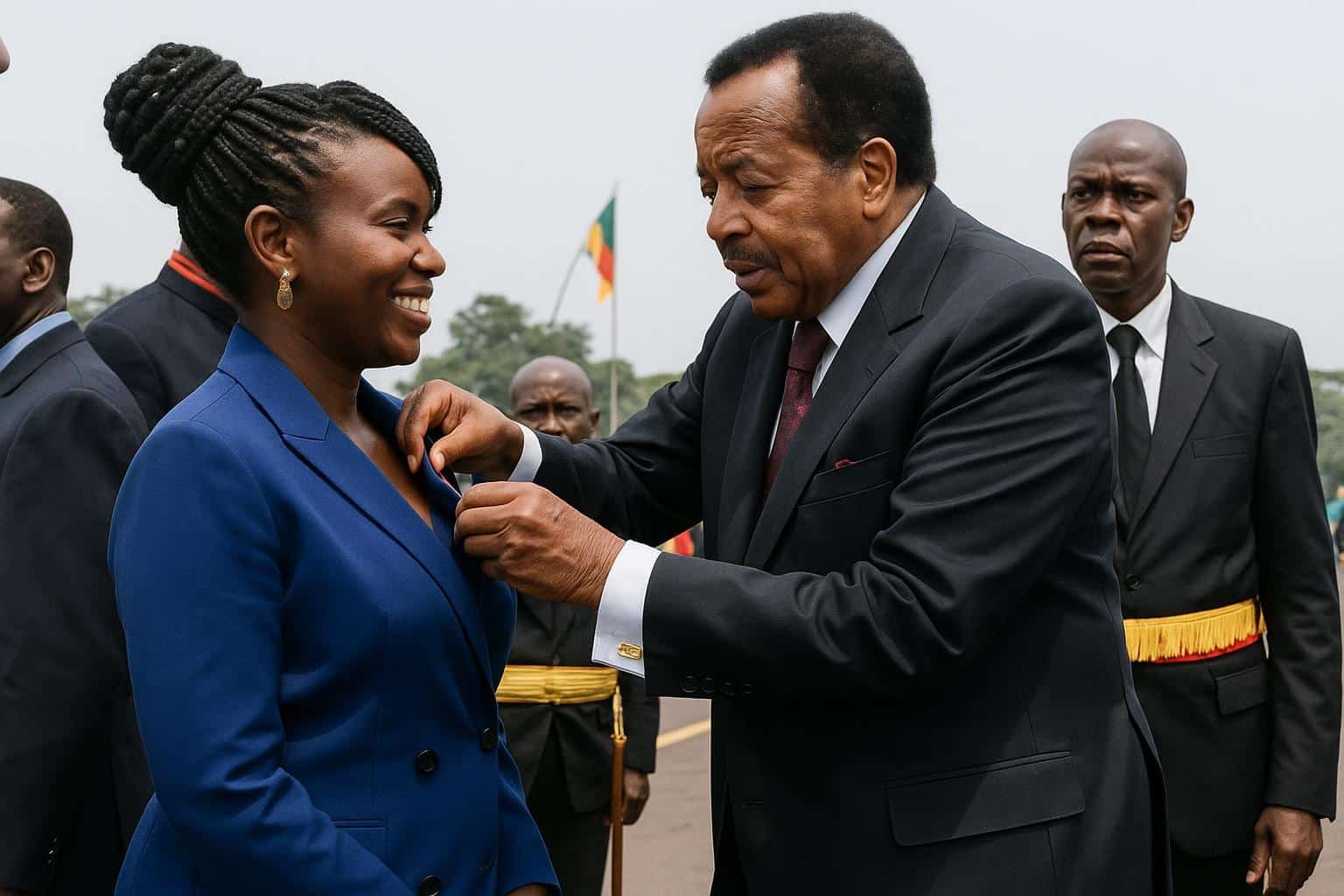
On 15 August, amid celebrations of Congo-Brazzaville’s sixty-fifth independence anniversary, President Denis Sassou Nguesso conferred the rank of Chevalier of the National Order of Merit on slam artist Mariusca Moukengue. The accolade crowns a journey where poetic cadence meets civic commitment.
Moukengue received the medal on the esplanade of Brazzaville’s Palais du Peuple, standing beside decorated military officers and scientists. She later admitted feeling “humbled yet energized,” framing the gesture as public confirmation that slam, once confined to modest cafés, now carries cultural weight.
Her choice of words during the ceremony reflected that balance. “This badge belongs to every young person shaping tomorrow’s Congo,” she told reporters. Observers interpreted the statement as a nod to governmental calls for youth initiative, harmonizing artistic freedom with national development narratives.
The National Order of Merit, created in 1961, is traditionally awarded to diplomats, athletes, or senior civil servants. By entering its roll, Moukengue joins a select group of cultural figures whose craft is deemed to advance Congo-Brazzaville’s international prestige without compromising social cohesion.
Slam’s Growing Stage in Brazzaville
Over the past decade, open-mic nights in the Bacongo and Poto-Poto districts have multiplied, turning spoken-word platforms into informal think tanks on identity, peace, and entrepreneurship. Promoters believe the momentum mirrors audience hunger for concise narratives in a country where storytelling remains ancestral.
The government-backed cultural season Les Feux de Brazza recently allocated a dedicated evening to slam, evidence of institutional openness. Ministry officials attending the pilot event cited the genre’s “discipline of language” as compatible with civic education efforts already promoted in secondary schools.
Moukengue’s own Festival International Slamouv, preparing its fifth edition in 2024, illustrates that soft power. Previous line-ups blended regional voices with participants from France and Canada, facilitating dialogue while positioning Brazzaville as a crossroads rather than a peripheral stop on the Francophone circuit.
Youth Advocacy in Spoken Word
Throughout interviews, Moukengue returns to themes of perseverance and collective effort. She recalls nights drafting verses by candlelight during electricity cuts, moments she says sharpened her conviction that “constraints are the mothers of images.” Such anecdotes resonate among students juggling studies with side hustles.
When asked how the medal affects that mission, she offered a succinct answer: “It legitimises the hustle.” Analysts emphasise the phrase, pointing out that state acknowledgment can bridge perception gaps between institutional authority and informal creative economies that thrive outside conventional grant mechanisms.
Educators have begun inviting her into classrooms to conduct writing workshops. According to a teacher at Lycée Savorgnan, attendance doubles when Moukengue is announced. While quantitative data remain limited, early feedback suggests spoken-word exercises boost vocabulary retention and civic participation among adolescents.
Challenges of Independent Creation
Despite the new honor, financing remains precarious. Moukengue self-produces most recordings, occasionally mixing tracks on a borrowed laptop at Studio M’foa. She notes that corporate sponsorship often gravitates toward Afropop, leaving niche genres to rely on ticket sales, workshops or personal savings.
Travel is another hurdle. Visa fees for European stages sometimes exceed performance stipends. To mitigate, she coordinates group tours with fellow poets, sharing accommodation costs. That model, she argues, cultivates solidarity while demonstrating to partners abroad that Congolese artists manage logistics professionally.
Local observers see possibility in public-private frameworks. In 2022, the Ministry of Culture piloted microgrants for theatre troupes; similar schemes could be extended to slam. For now, Moukengue says she remains “patient but proactive,” continuing to pitch concept notes to potential patrons.
Digital distribution offers both promise and puzzles. While her YouTube channel surpasses 200,000 cumulative views, monetization thresholds remain elusive under regional bandwidth constraints. She is experimenting with pay-what-you-want downloads, hoping diaspora audiences can generate supplemental revenue without compromising accessibility at home.
Vision for Global Resonance
The nearest milestone is a solo concert at Paris’s Studio de l’Ermitage on 29 November. Rehearsals blend Lingala refrains with French metaphors, offering what she calls an “aerial view” of Congolese daily life. Tickets reportedly sold half their allocation within ten days of release.
Beyond that appearance, planning for the fifth Slamouv edition accelerates. Organisers aim to invite poets from Ghana and Brazil, anchoring the event under the theme “Bridges of Breath.” Discussions with regional airlines suggest potential travel discounts, underscoring how verse now intersects with commercial strategy.
Asked about long-term dreams, Moukengue smiles before replying, “The dream is fluid—like water finding its path.” For analysts, the metaphor points to adaptability, a quality increasingly prized in cultural diplomacy. Her next path may therefore wind through avenues yet unimagined but actively prepared.
Enduring Power of Words
Whether on a Brazzaville street corner or an international stage, Mariusca Moukengue’s verses now carry the imprimatur of national merit. The distinction neither ends her journey nor shields her from market realities, yet it amplifies a conviction already etched in rhyme: words can build homes.