
Festival Mwassi amplifies women in African cinema
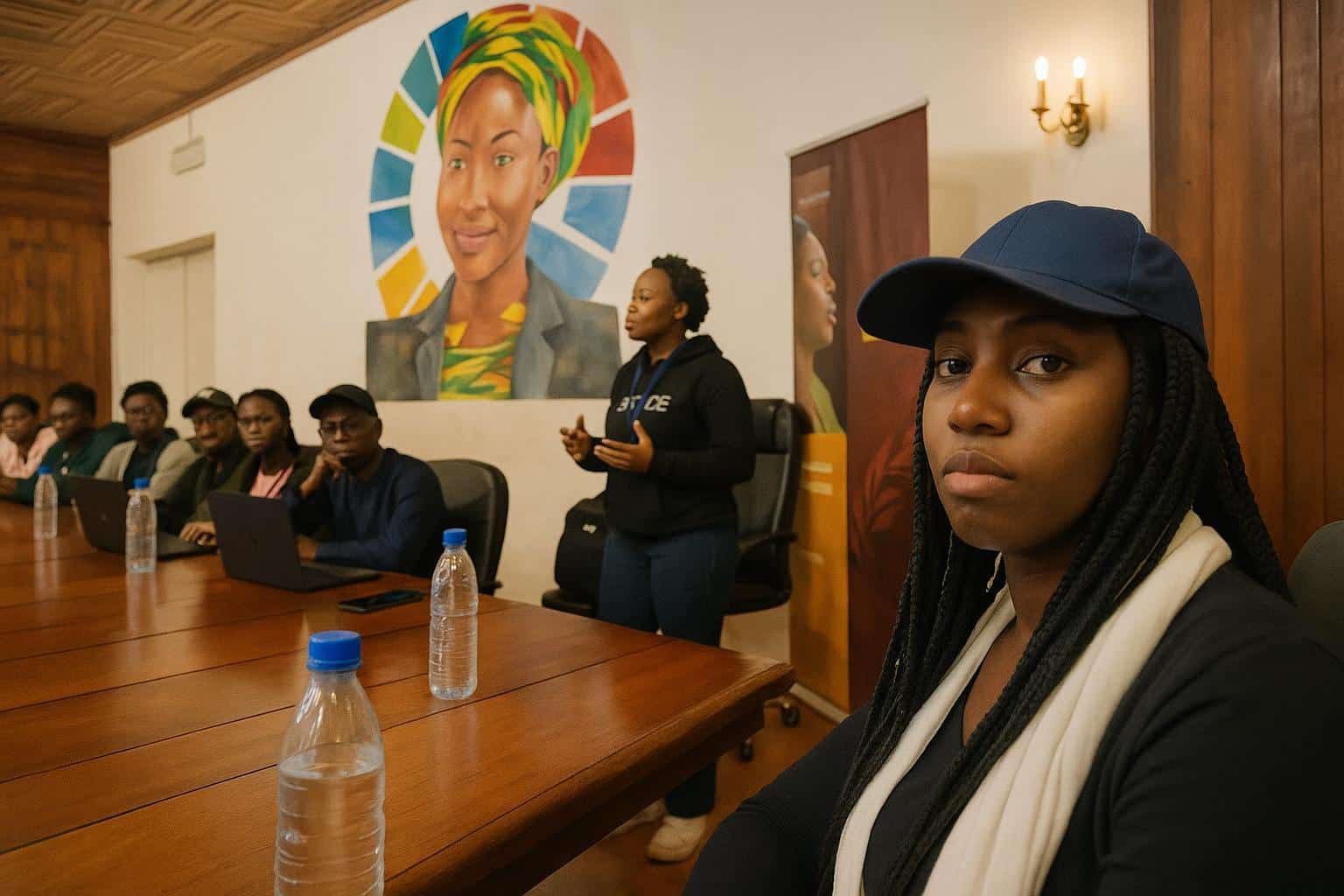
The second edition of Festival Mwassi, branded “African films à la féminine,” drew filmmakers to Brazzaville for a spirited exchange on 27 August, hosted at the United Nations Development Programme headquarters. Gender dynamics in cinema set the agenda.
UNDP deputy representative Henry-René Diouf opened proceedings, linking the panel to the organisation’s priority of advancing Sustainable Development Goal 5. “Your conversation nourishes national gender strategy and creative economy,” he emphasised, framing culture as a lever for inclusive growth (UNDP Congo statement).
Seats filled quickly with delegates from Congo-Brazzaville, Gabon, the Democratic Republic of Congo and beyond, joined by painters, poets and diplomats. The cross-disciplinary attendance underscored how screen narratives radiate influence beyond theatres.
Structural barriers challenge female filmmakers
Four women practitioners—actor-director Razzia Lelahel, producer Divana Cate, cinematographer Aude May and Gabonese performer Adriella Lou—sat beside writer-critic Emeraude Kouka to map structural hurdles that persist despite decades of progress.
Funding canals remain narrow for women-led projects, participants noted, with grant data showing female filmmakers receive barely a quarter of available envelopes (UNESCO Institute for Statistics). Limited access translates into fewer shooting days, reduced crews and restrained marketing.
Distribution hurdles amplify risk. Festival circuit exposure rarely guarantees theatrical screens, and streaming algorithms can privilege titles from larger markets. “Visibility is currency,” Divana Cate argued, urging regional alliances to negotiate catalog space with global platforms.
Adriella Lou offered an unflinching account of casting sessions where artistic merit is eclipsed by informal demands. Her appeal for transparent protocols echoed UN Women’s 2022 survey linking harassment to talent attrition across creative industries.
Creators advocate for equitable narratives
Critic Emeraude Kouka resisted prescriptive labels such as “female gaze,” contending that artistry transcends binary grids. Yet he conceded that social realities shape who gets to tell universal stories. “Equity is a precondition for universality,” he said.
Aude May spoke of balancing authorial vision with the duty to contest clichés. Her forthcoming documentary on riverine communities, shot between the Republic of Congo and Cameroon, foregrounds women’s resource stewardship without turning them into archetypes, she explained.
Razzia Lelahel, whose Algerian-Congolese co-production “Traces of Clay” premiered in Cannes’ market sidebar, argued that craft unions must integrate mentorship clauses. “On each set we can create micro-laboratories of fairness; that is within our immediate reach,” she said.
The audience, a mix of students and senior producers, challenged panellists on pay equity. Divana Cate responded that accurate budgeting starts with clear salary grids filed at pre-production, a procedure now required by Nigeria’s Film Practitioners Bill, providing a regional precedent.
Policy support aligns with development goals
Congo-Brazzaville’s Ministry of Culture dispatched observers, signalling alignment with the government’s 2022-2026 Cultural Industries Roadmap that prioritises women’s participation. Officials nodded as speakers called for simplified licensing and tax incentives to back first-time directors.
International partners echoed that message. “Economic modelling shows gender-balanced crews lift productivity and market reach,” stated UNDP analyst Mireille Ngoma, citing findings from the African Creative Industries Investment Report 2021.
The panel’s recommendations—centralised grant databases, confidential reporting channels and cross-border residencies—will feed into a white paper that Festival Mwassi plans to deliver to the Economic Community of Central African States in November.
Beyond policy, symbolic change matters. The festival awarded its inaugural “Luminary Sister” trophy to pioneer Congolese director Monique Mvezi, honouring a career launched in 1979 that quietly mentored dozens of younger voices.
Inclusive screens inspire next generation
As dusk fell, director Pierre Man’s reminded audiences that stereotypes are resilient yet not immutable. “Cameras can record bias or dismantle it; the choice belongs to each generation,” she observed, summarising the forum’s ethos.
Upcoming Mwassi sessions will pair screenings with legal clinics on intellectual property, supported by the Congolese Agency for the Promotion of Entrepreneurship. Organisers anticipate 4 000 attendees across Brazzaville venues before closing night on 3 September.
For many young creatives, the takeaway was pragmatic optimism. Film student Nadège Nkila said the debate “turned abstract equality into a production checklist I can apply tomorrow,” illustrating how discourse translates into day-to-day practice.
Should the panel’s blueprint gain traction, Central Africa’s screens could soon showcase stories determined as much by craft as by gender, aligning artistic freedom with national development priorities and reinforcing Congo-Brazzaville’s role as a regional cultural hub.
Regional collaborations extend momentum
Delegations from Kigali’s Mashariki Film Festival and Yaoundé’s Ecrans Noirs announced plans for a rotating residency that would move between Congo, Rwanda and Cameroon, giving ten emerging women editors a fully equipped funded workspace each quarter for collaborative post-production experiments and peer mentorship sessions.
The residency concept mirrors a model piloted by South Africa’s National Film and Video Foundation, which recorded a 12 percent rise in female technical crew positions within two years, suggesting scalable impact across linguistic blocs.
Congolese producer Pascal Mabiala said alignment with continental initiatives such as the African Continental Free Trade Area could ease equipment transit costs and enable co-productions, adding an economic rationale to the gender argument.