
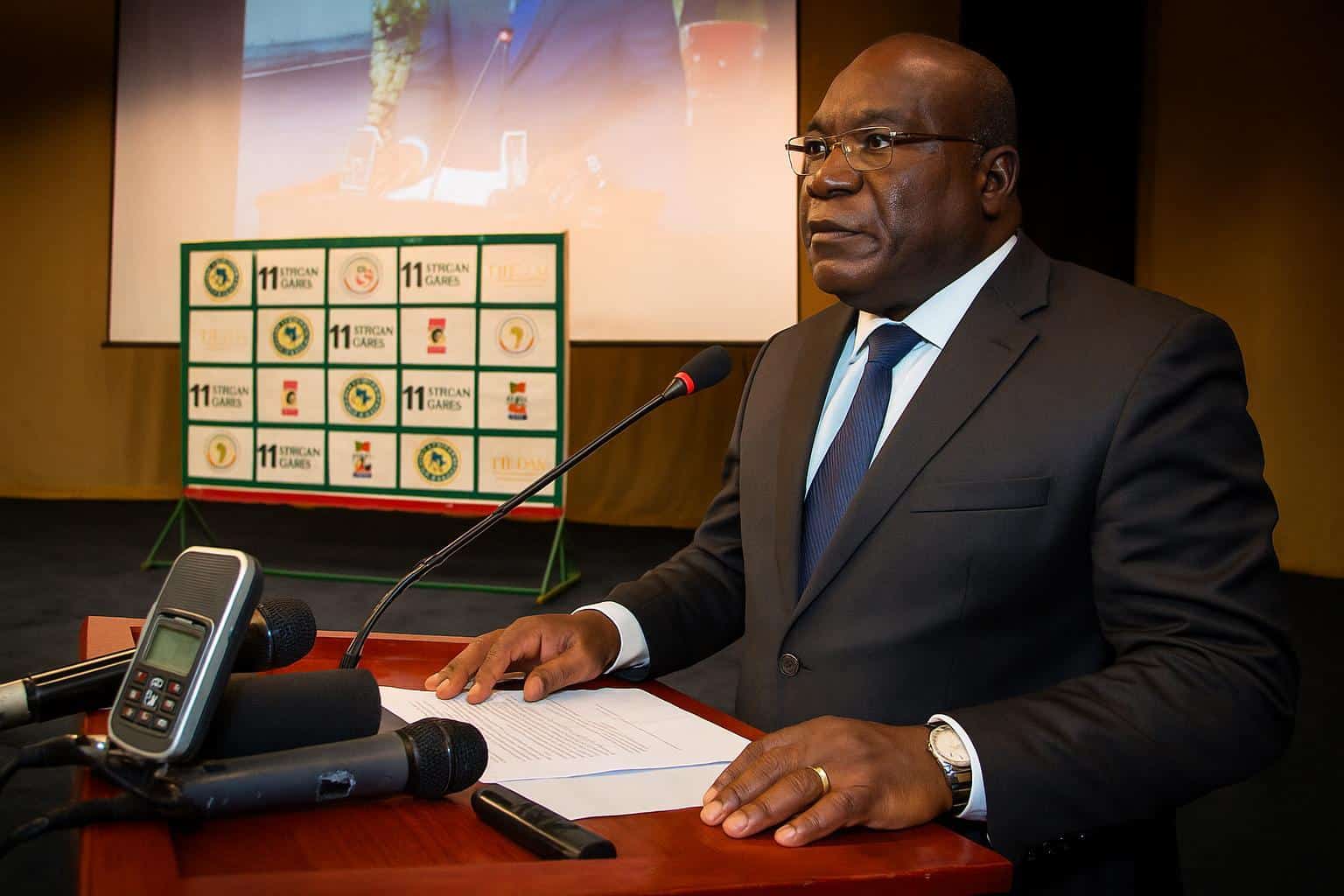
Foundation applauds a decisive organiser
The Pro social inter-États Foundation chose a formal ceremony to spotlight Léon-Alfred Opimbat, now first vice-president of the National Assembly. By handing him the “Memory and Sporting Victory” trophy, the organisation affirmed that his tenure as sports minister still shapes national conversation on athletic ambition.
A flawless 2015 African Games remembered
Speakers recalled September 2015, when Brazzaville hosted the 11th African Games. Observers repeatedly cited an “irreproachable” organisation, crediting Opimbat’s stewardship for keeping schedules tight, venues ready and delegations satisfied. The event, they argued, raised Congo’s profile and projected administrative reliability across the continent.
Colours raised, heritage secured
The Foundation linked the trophy to moments that “hissed high the colours of Congo”. Officials said each well-timed whistle and clean finish in 2015 reinforced a shared belief that national identity can be expressed through disciplined sport. That memory, they stressed, belongs as much to supporters as to athletes.
Recognition rooted in continuity
While applauding past victories, the award aims to ensure continuity. “This trophy is a symbol of memory and recognition for the great figures who marked our sporting history,” said Orcel Bayonga-Mbondza, the Foundation’s resident representative, as he placed the statuette in Opimbat’s hands.
From cabinet seat to parliamentary bench
Opimbat’s journey from minister of Sports and Physical Education to one of the Assembly’s leading figures illustrates how experience in athletic management can inform legislative oversight. Supporters suggest that stadium logistics and parliamentary procedure both reward precision, calm negotiation and clear chains of responsibility.
Youth at the heart of the message
According to the Foundation, nobody has forgotten the former minister’s “unfailing commitment” to coaching young Congolese. The award therefore doubles as encouragement for rising talents who saw 2015’s success and concluded that global standards can be met without leaving home soil.
Symbolism forged in bronze and memory
Although modest in size, the trophy’s name entwines two notions: remembrance and victory. Foundation officials argued that without collective memory, triumph loses meaning; without triumph, memory risks nostalgia. The object thus becomes a tool, reminding institutions to archive achievements and plan responsibly for future competitions.
Institutional handshake strengthens partnerships
The ceremony also underlined the Foundation’s wish to remain a bridge between civil society and state structures. By recognising a sitting parliamentary leader, the organisation signalled confidence that collaboration rather than confrontation sustains durable sports programmes and broader social initiatives.
Echoes far beyond the podium
Commentators present at the event said the 2015 Games continue to echo in community pitches and school grounds. Training drills sometimes bear the nickname “Brazzaville tempo”, a colloquial nod to orderly timetables that allowed local volunteers to learn organisational basics now reused during regional tournaments.
Steady approach praised
The Foundation noted a “determining role” played by Opimbat, emphasising steadiness over spectacle. Observers close to the file linked that attitude to reduced organisational glitches, suggesting that behind-the-scenes attention to detail can be as decisive as medal counts in measuring athletic progress.
National mood lifted through sport
Several guests remarked informally that tangible victories—clean venues, punctual transport—fostered civic pride just as much as podium placements. Such remarks framed the award not merely as personal but as collective, reflecting a mood that extends beyond competitive arenas into everyday conversations.
Message aligns with governmental priorities
By celebrating governance through sport, the Foundation echoed national objectives that place youth development and social cohesion at the centre of public policy. The endorsement suggests a shared perspective: well-managed events can complement infrastructure plans and educational programmes already supported by national authorities.
Archiving a model for future hosts
Documenting 2015’s operational playbook, the Foundation asserted, could help upcoming organisers across Africa. Files on volunteer management or medical preparedness, they believe, testify to methods worth replicating. The award ceremony therefore doubles as a call to preserve records before memories fade.
Quiet influence inside the Assembly
Within parliamentary corridors, Opimbat’s sports background reportedly informs debates on youth policy and community facilities. Colleagues say his interventions often circle back to discipline, preparation and teamwork—values transplanted from the track to the legislative chamber.
Foundations and the culture of gratitude
Analysts present argued that public expressions of gratitude carry strategic weight; they reassure donors, motivate athletes and validate organisers. The Pro social inter-États Foundation, through such ceremonies, positions itself as custodian of that virtuous cycle, ensuring accomplishments receive visible acknowledgment.
Trophy as encouragement for the next wave
By shining a spotlight on prior achievements, the Foundation implicitly nudges current administrators to aim for comparable standards. Coaching clinics and grassroots festivals, they suggest, can draw inspiration from Brazzaville’s 2015 template of punctuality, hospitality and meticulous planning.
Legacy spoken, legacy lived
As applause faded, participants agreed the real prize lies in sustained effort. The trophy may rest on a shelf, yet its inscription—“Memory and Sporting Victory”—invites daily reflection. For Léon-Alfred Opimbat, and for Congo’s sporting community, the story continues each time a whistle starts a new match.