
Government unveils one-year duty suspension
On Sunday the Congolese Ministry of Economy and Finance circulated a notice announcing the temporary cancellation of customs duties, IT fees and value-added tax on a selected basket of staple foods and agricultural inputs. The text bears the signature of Minister Jean-Baptiste Ondaye.
The measure, described as exceptional and limited to twelve months, forms part of the broader government “plan of resilience” adopted last year to contain the rising cost of living and maintain purchasing power in urban and rural households.
Targeted staple foods and farm inputs
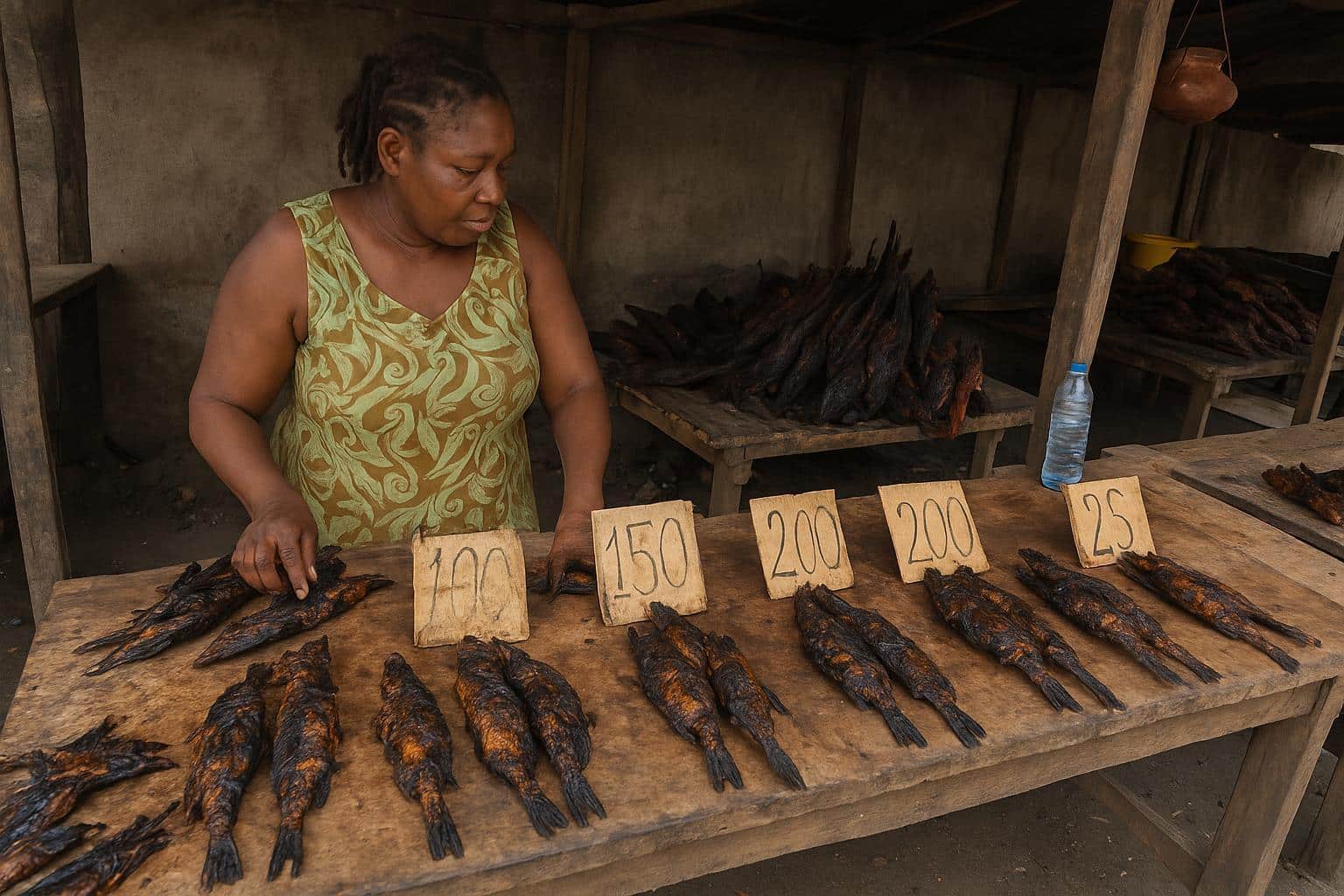
According to the circular, the concession covers wheat, polished rice, refined vegetable oil, powdered milk, frozen sea fish, salted fish, and chilled or frozen domestic meats and offals. Fertilizers, certified seeds and compound feed for livestock are also included.
Officials argue that exempting these categories addresses both the demand side, by lowering shelf prices, and the supply side, by easing production costs for breeders and planters who rely on imported inputs to maintain yields.
Import dependence shapes policy choices
Government data place the country’s annual food import bill between 500 and 700 billion CFA francs. Despite an estimated ten to twelve million hectares of arable land, local output still lags behind demographic growth and shifting dietary preferences.
Economic analysts note that every percentage point shaved off customs costs can translate into sizable savings for public coffers, since the Treasury currently supports price-stabilisation schemes for flour, fuel and transport.
Consumer advocates cautiously optimistic
“This is one of the decisive acts we expected before benefits of the resilience plan become tangible,” said Mermans Babounga, who heads the Congolese Consumer Rights Observatory. He nonetheless warned that monitoring will be key to prevent speculative behaviour along the distribution chain.
Retailers contacted in Brazzaville welcomed the announcement yet insisted that clarity on administrative procedures remains essential. “If paperwork at the port still takes weeks, shelves will not see cheaper goods quickly,” a wholesaler in the Ouenzé district remarked.
Tolls on Route Nationale 1 under scrutiny
The road linking Pointe-Noire to Brazzaville stretches just over 500 kilometres but hosts seven toll stations. Transporters complain that cumulative fees inflate freight costs, ultimately reflected in market prices of cassava, plantain and imported staples alike.
Babounga and several trucking cooperatives urge authorities to extend the fiscal easing to highway tolls, at least for vehicles carrying foodstuffs. They contend that such a step would mirror measures adopted in neighbouring states during the pandemic years.
Balancing budgetary needs and relief
Finance officials emphasise that the exemptions were calibrated to avoid excessive revenue shortfalls. Customs receipts represent a significant share of non-oil income, and the government seeks to preserve macroeconomic stability ahead of mid-year budget revisions.
By opting for a twelve-month window, policymakers retain flexibility to reinstate duties if international commodity prices retreat or if domestic fiscal space tightens due to external shocks in oil or timber markets.
Agricultural potential still untapped
Agronomists often highlight the Kouilou, Niari and Plateaux departments, where fertile soils could host large-scale cereal and soybean projects. However, limited irrigation infrastructure, high logistics costs and fragmented land tenure continue to hamper investment.
The Ministry of Agriculture says pilot programmes on improved seed multiplication and mechanisation are under way, yet concedes that results will take seasons to materialise. Until then, imports will continue to dominate supermarket aisles.
Regional context and inflation pressures
Across Central Africa, consumer inflation accelerated after the outbreak of hostilities in Ukraine disrupted grain and fertiliser flows. The CFA-zone countries, including Congo-Brazzaville, rely on seaborne wheat shipped via Atlantic corridors and processed locally.
The Bank of Central African States recently projected average inflation above the CEMAC convergence threshold this year, citing food and transport as primary drivers. Congo’s tariff holiday is expected to moderate, though not fully offset, these pressures.
Timeline for implementation and oversight
The Director General of Customs has been tasked with translating the ministerial guidance into operational instructions at ports, airports and inland checkpoints. An internal memo seen by this newspaper sets 1 April as the effective start date.
A joint monitoring unit involving the Economy, Commerce and Agriculture ministries will compile monthly dashboards on import volumes and retail price trends. Findings will inform any mid-course adjustments or possible extensions beyond the initial horizon.
Prospects for price stabilization
Traders anticipate a lag of four to six weeks before the first duty-free consignments clear Pointe-Noire docks and enter wholesale depots. Market observers, meanwhile, caution that exchange-rate fluctuations and shipping surcharges could dilute part of the relief.
Still, many households view the decree as a signal of government attentiveness. “If the measure holds and inspections are rigorous, we expect maize flour and cooking oil to drop,” said a mother of three shopping at Marché Total, summing up a widely shared hope.
Private sector preparing for new rules
Shipping agents in Pointe-Noire report increased inquiries from importers recalculating landed costs under the zero-duty framework.
Warehouse operators are reviewing storage contracts to ensure any savings filter through to retailers rather than being captured upstream.