
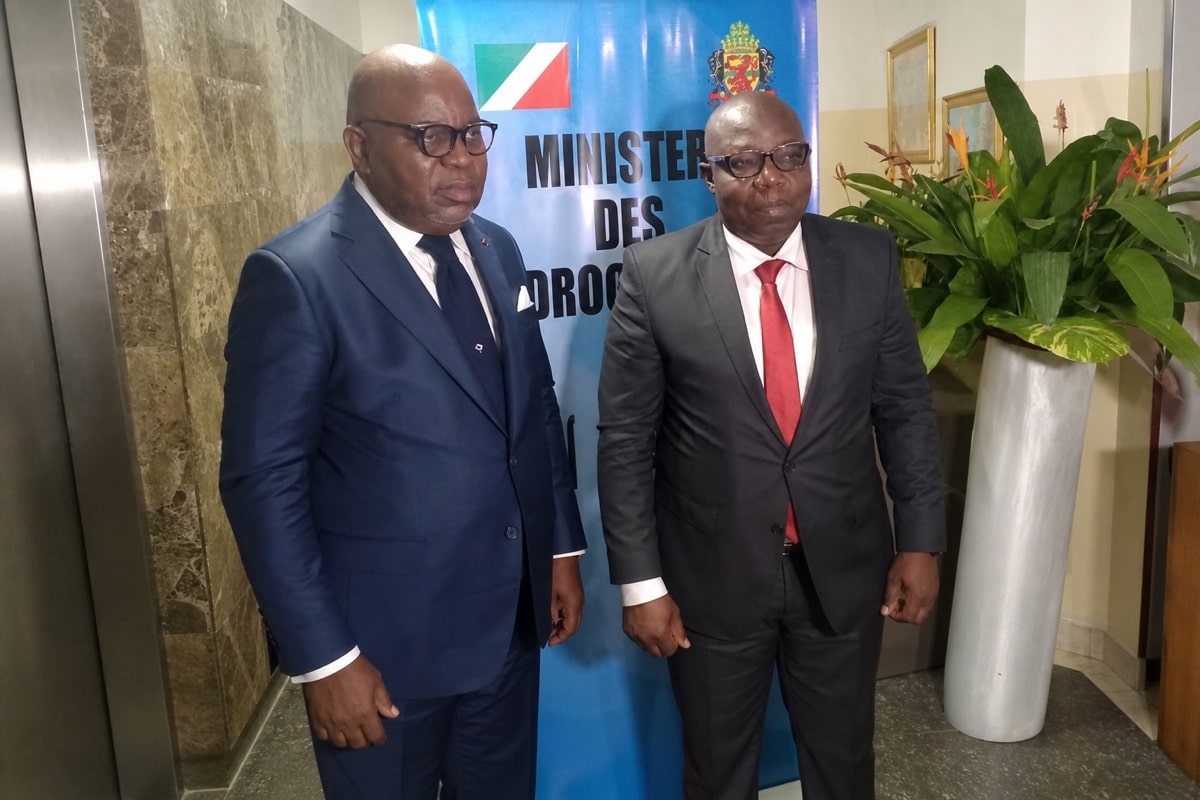
A Historic Meeting Between Two Energy Ministers
On April 15, 2026, Brazzaville hosted a significant bilateral encounter. Arthur Bertrand Piri, the Central African Republic’s minister responsible for energy development and hydraulic resources, sat down with Bruno Jean Richard Itoua, Congo-Brazzaville’s minister of hydrocarbons. Their agenda was precise and consequential: advancing a petroleum transport corridor between the two nations.
The meeting centred on operationalizing a route linking Brazzaville to Bangui, with Pointe-Noire’s deep-water port serving as the logistical anchor. This was not a preliminary conversation — a memorandum of understanding signed in 2024 had already laid the legal groundwork.
Pointe-Noire Positioned as Central Africa’s Gateway
Minister Piri made no secret of his government’s intentions. “The Central African Republic will henceforth call upon this port’s services to transport its petroleum products,” he stated during the meeting. The port of Pointe-Noire, he suggested, was destined to become the logistical hub of Central Africa for goods and merchandise from sub-regional states.
The ambition reflects a wider regional conversation about infrastructure and connectivity. Landlocked countries like the Central African Republic depend on coastal neighbours for access to global markets, and Pointe-Noire has long been seen as the natural outlet for much of the Congo Basin’s trade.
Storage, Transit and Technical Coordination
Beyond transit rights, the two ministers also explored the modalities of storing Central African hydrocarbons on Congolese soil, specifically through Pointe-Noire, before onward shipment to Bangui. The logistics involved are considerable, requiring agreements on warehousing capacity, pipeline access, and customs arrangements.
To move the project forward, both sides agreed on a sequenced approach. Technical experts from each country would be mobilized first, followed by consultations involving other relevant ministries. This phased methodology suggests that both governments are treating the project with institutional seriousness rather than as a diplomatic gesture.
A Project Rooted in Bilateral Agreement
The April meeting did not emerge from a vacuum. Minister Piri described it as a follow-up to the 2024 protocol, saying: “We exchanged views on the effective implementation of this project.” His framing was measured but clear — the political will exists; the task now is translating it into operational reality.
Piri also characterized the initiative as “necessary to the common interest of both nations,” and situated it within the broader political context of President Denis Sassou N’Guesso’s new five-year term. The renewal of that mandate, he implied, offered an opportunity to reinvigorate cross-border cooperation in the energy sector.
Implications for Regional Energy Dynamics
If realized, the Brazzaville-Bangui corridor would represent one of the more concrete steps toward sub-regional energy integration in Central Africa. Countries within the Economic and Monetary Community of Central Africa (CEMAC) have long discussed energy cooperation, but tangible cross-border infrastructure projects remain rare.
For Congo-Brazzaville, the potential upside extends beyond political goodwill. Positioning Pointe-Noire as a pivotal transit hub could generate revenue, create employment, and reinforce the port’s strategic value in a competitive regional landscape. For the Central African Republic, securing a reliable, contractually grounded petroleum supply route would address a longstanding vulnerability in its energy chain.
What Comes Next
The coming weeks and months will test whether the technical framework can be built quickly enough to match the political momentum. Expert delegations will need to define storage capacities, negotiate tariffs, and align their respective regulatory environments. Further ministerial consultations are expected as the two countries work to give the corridor concrete institutional form.
The April 15 meeting, in that sense, was a beginning. The hard work of engineering a cross-border hydrocarbon route through some of Central Africa’s most logistically complex terrain still lies ahead.