
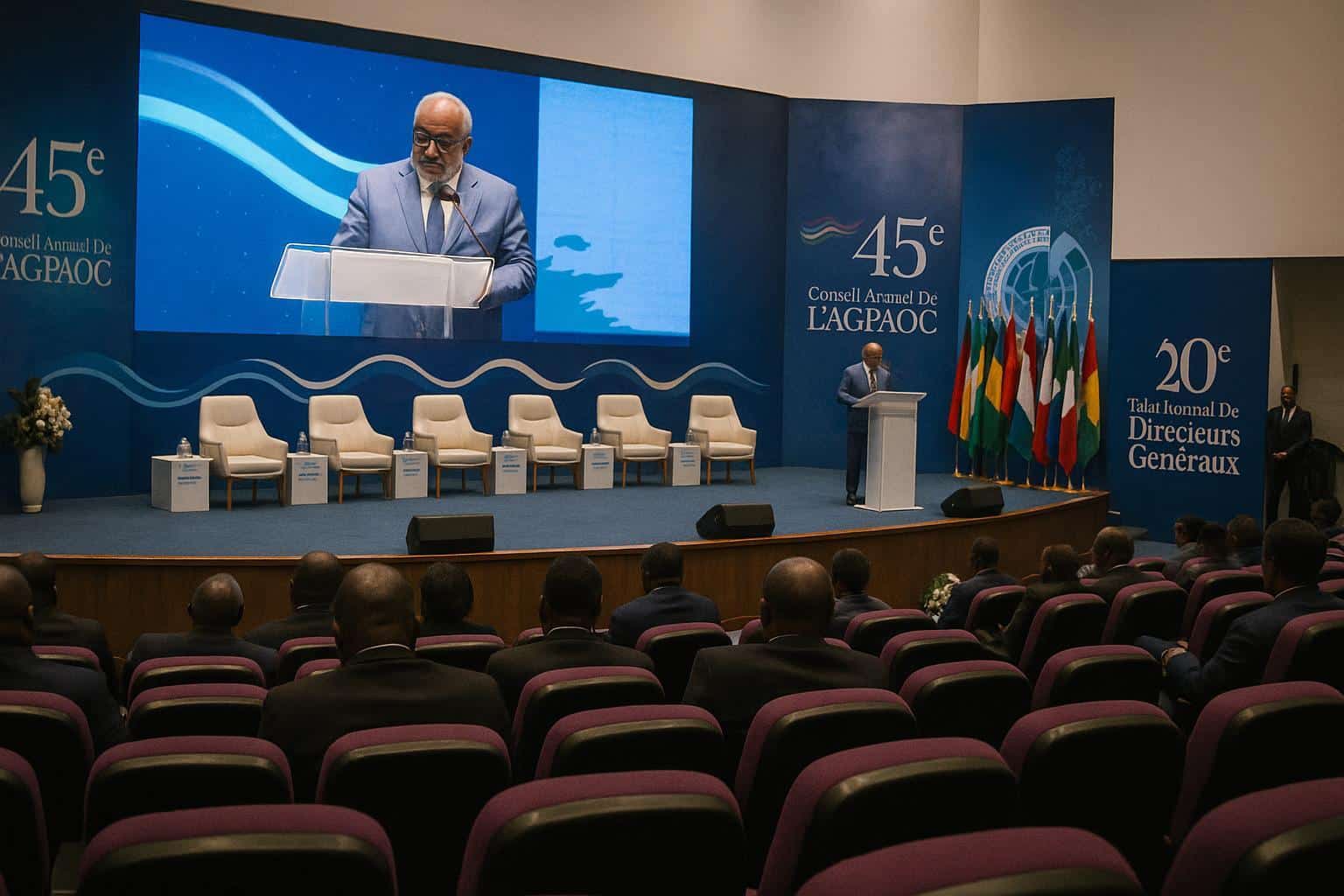
Pointe-Noire hosts strategic AGPAOC summit
An uncommon sense of urgency filled the conference halls of Pointe-Noire as chief executives from twenty-two West and Central African harbours concluded the twentieth AGPAOC directors’ roundtable, stressing that only deeper coordination can protect port estates and deliver the resilient infrastructure regional trade increasingly demands for growth today.
The gathering, organised alongside the association’s forty-fifth annual council from four to seven November, offered two days of intense debate, peer review and case studies drawing on experiences from Pointe-Noire to Lagos, with a single thread: remodel legal frameworks and logistics zones to keep value in Africa itself.
Calls to modernise legal and fiscal regimes
Delegates agreed that revisiting concession agreements, tax codes and environmental norms could unlock the land, capital and technology essential for modern quays able to berth four-hundred-metre vessels while complying with tougher international emission rules and the fragile coastal ecosystems bordering the Gulf of Guinea and the Atlantic rim.
According to Martin Boguikouma, director general of Gabon’s Oprag and chair of the roundtable, the diversity of models showcased ‘allows each authority to question itself and craft new strategies for better protection and valuation of our common heritage’, a message welcomed with sustained applause by port leaders present.
Land management and expansion challenges
Much of the discussion centred on land, a finite commodity many ports are losing to booming cities; Gabonese representatives revealed they had already forfeited two-thirds of their estate, while Cameroon’s Douala reclaimed seventy-five hectares through dredging, reminding peers of the high stakes involved in maritime real estate defense.
Pointe-Noire’s master plan, updated in 2015, illustrates the ambition: extension of the container terminal by 750 metres of quay, deepened to 17 metres, so that the so-called ocean gateway of Central Africa can serve ships that once bypassed it for deeper hubs along the West African shipping corridor.
Innovative financing for green infrastructure
Financing such engineering, participants conceded, demands creativity beyond traditional port dues; real-estate leases, energy partnerships and green bonds were floated as avenues to generate revenue while building breakwaters, digitalising customs and integrating hinterland rail to slash turnaround time for exporters of timber, manganese and refined fuels from Congo.
Several speakers insisted that logistics corridors must be designed at regional scale, echoing the African Continental Free Trade Area agenda; from the oilfields of Cabinda to the Sahel cotton basins, importers and shippers expect seamless clearance, which means harmonised fees, shared data platforms and mutual recognition of certificates.
Experts devoted a full session to environmental safeguards, arguing that mangrove protection, wastewater treatment and climate-resilient breakwaters should be embedded in concession clauses, thereby turning sustainability into a business proposition rather than an external cost that investors negotiate away after contracts are signed for port communities and financiers.
Stronger governance and geopolitical stakes
Legal scholars present recommended that member states codify minimum buffer zones around quays, limit speculative housing near fuel depots and streamline courts handling maritime disputes, moves they believe would reassure shipping lines seeking long-term visibility before assigning weekly rotations to an African call in their global network schedules.
While the conversations were technical, the subtext was geopolitical; whoever aligns ports from Dakar to Luanda secures influence over supply chains feeding 400 million consumers, said one Central African diplomat, noting that efficient harbours increasingly shape the narrative of sovereignty and industrial emergence on the continent right now.
Congolese officials highlighted the government’s maintenance of stable regulatory settings, arguing that predictability remains an underrated competitive asset; investors, they said, prefer concise rules over generous incentives that might shift with electoral cycles, a position that drew nods from chamber-of-commerce delegates seated in the back row on Monday.
Roadmap and commitments for next council
Looking ahead, AGPAOC secretariat staff promised to circulate a matrix tracking progress on land security, dredging volumes and customs digitalisation across member ports, an instrument intended to move discussions from rhetoric to measurable action before the next council convenes in Banjul next year for West African stakeholder review.
Industry veterans cautioned, however, that harmonisation should not erase local knowledge; the volcanic sand found in São Tomé, for example, requires special quay coatings, while the long swell off Pointe-Noire dictates different mooring gear, factors any continental template must respect to avoid costly retrofits after project handover periods.
By late afternoon the delegates signed a non-binding communiqué endorsing the principle of joint advocacy on customs reform, green infrastructure and estate preservation, signalling a political will that observers believe could translate into collective bargaining power when negotiating with global terminal operators or multilateral lenders in coming cycles.
As the Pointe-Noire coastline faded into dusk, most participants boarded flights carrying a reinforced conviction that the fortunes of African trade lanes rest on ports speaking with one voice, pooling resources and defending their land, a task they now brand a shared continental mandate for sustainable maritime development.