
A Ceremony that Echoed Far Beyond the Rectorate
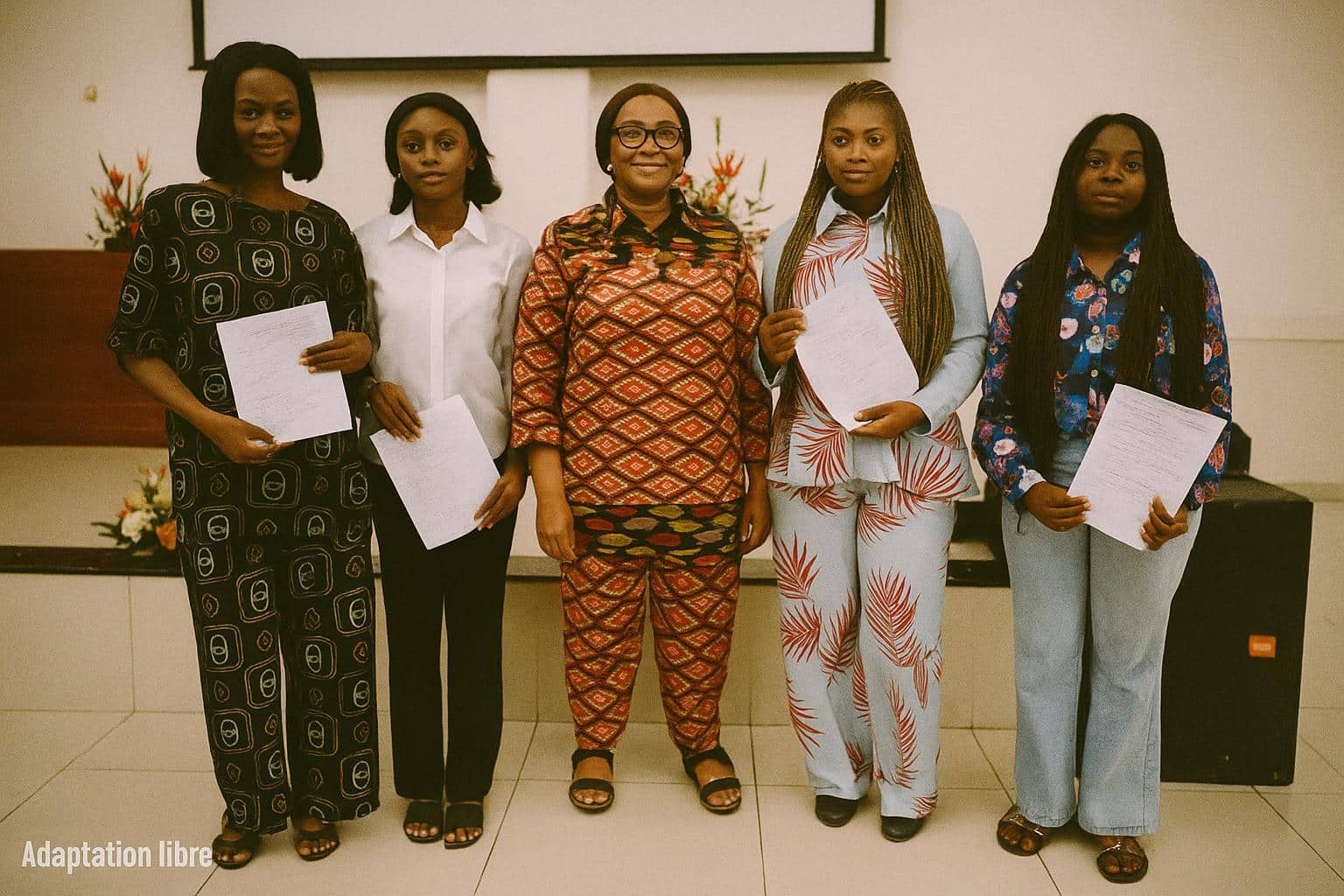
In late July, the marble-lined conference hall of Marien-Ngouabi University briefly resembled a diplomatic salon. Four students—Christ Nourra Ntsoumou-Ntounou, Bénie Riche Aimervia Elenga, Théodorat Hilary Makambala-Ndeke and Nicie Michelle Amora Mviri—were applauded for conquering the intricacies of French grammar, orthography and conjugation at the second edition of the Miss Mayele contest. The event, animated by the outspoken literature professor Sylvia Djouob, was more than a prize-giving moment; it was a carefully choreographed affirmation that linguistic precision remains a strategic asset for the Republic of Congo.
French Language Policy and National Identity
French has been the country’s official language since independence, serving as a unifying medium among more than sixty vernacular tongues. While digital shorthand threatens syntactic discipline worldwide, Brazzaville has doubled down on language policy as a vector of cohesion and global competitiveness. The Ministry of Higher Education’s 2023 white paper singled out “orthographic excellence” as a pillar of human-capital development, a stance consonant with the African Union’s Continental Education Strategy and with UNESCO’s plea to strengthen foundational literacy (UNESCO 2022 GEM Report). By rewarding exactitude, Miss Mayele aligns seamlessly with these policy trajectories.
Empowering Women through Academic Merit
Behind the glitter of sashes lies a deliberate gender dimension. Only twenty-nine percent of Congolese scientists are women, according to the latest African Development Bank statistics (AfDB 2023). The contest therefore operates as what sociologist Fatou Niang describes as “affirmative intellectualism”: offering young women a public stage where erudition, rather than aesthetics, commands attention. Laureate Théodorat Hilary Makambala-Ndeke, dedicating her prize to her father for “initiating her to literature,” stressed that thirty minutes of daily reading can change a life. Her call dovetails with government campaigns encouraging female enrollment in STEM and language programmes under the National Plan for Gender Equality 2021-2025.
Governmental Backing and Diplomatic Significance
Professor Djouob expressly thanked President Denis Sassou Nguesso for institutional support, an acknowledgment that situates Miss Mayele within the republic’s broader soft-power portfolio. Cultural diplomacy is no minor affair: in December 2023 Brazzaville’s city hall hosted the International Francophonie Symposium, drawing observers from the Organisation internationale de la Francophonie. By uplifting French mastery at home, authorities project credibility in these multilateral fora. A senior official at the Ministry of Foreign Affairs remarked, on condition of anonymity, that “linguistic excellence is an instrument of negotiation as potent as any memorandum.” Such statements reveal how a campus competition can ripple into corridors where economic accords and climate talks are framed.
Education Versus Digital Slang
The contest also confronts a generational paradox: while smartphone penetration reached seventy-four percent in urban Congo last year (ARPTC 2024), algorithmic autocorrect often shields users from grammatical responsibility. Miss Mayele offers a counter-culture, praising manual mastery over algorithmic convenience. Observers noted the symbolic value of the prizes—hard-cover dictionaries and classic novels. In an age of e-books, the tactile authority of print underscores what Ms Djouob calls “the two legs of French: grammar and orthography; without them, walking is impossible.”
Prospects for a Polyglot Generation
Congo-Brazzaville is simultaneously negotiating oil diversification, regional integration and post-COVID recovery. Human-capital quality is the connective tissue among these goals. By revitalising French competence, authorities also prepare students for plurilingual agility; curricular reforms announced this spring add compulsory English from grade six, and pilot modules in Mandarin at the University of Denis-Sassou-Nguesso’s new language centre in Oyo. Analysts interpret the synergy as pragmatic: impeccable French secures Francophone diplomatic leverage, while additional languages open trade corridors toward Abuja, Nairobi and Beijing.
A Measured Triumph, Not a Finish Line
Miss Mayele 2025 ends with snapshots of awardees holding books rather than bouquets, yet its real outcomes will emerge in boardrooms, laboratories and negotiating tables years ahead. The ceremony’s restrained glamour conveyed a message cherished in diplomatic circles: that soft skills, grounded in linguistic rigour, are indispensable to hard-power objectives. As Professor Djouob reminded her audience, “What I do for you is what others once did for me; the struggle continues.” In Congo-Brazzaville, the struggle takes the refined guise of a grammar pageant—and, for now, it appears to be working.