
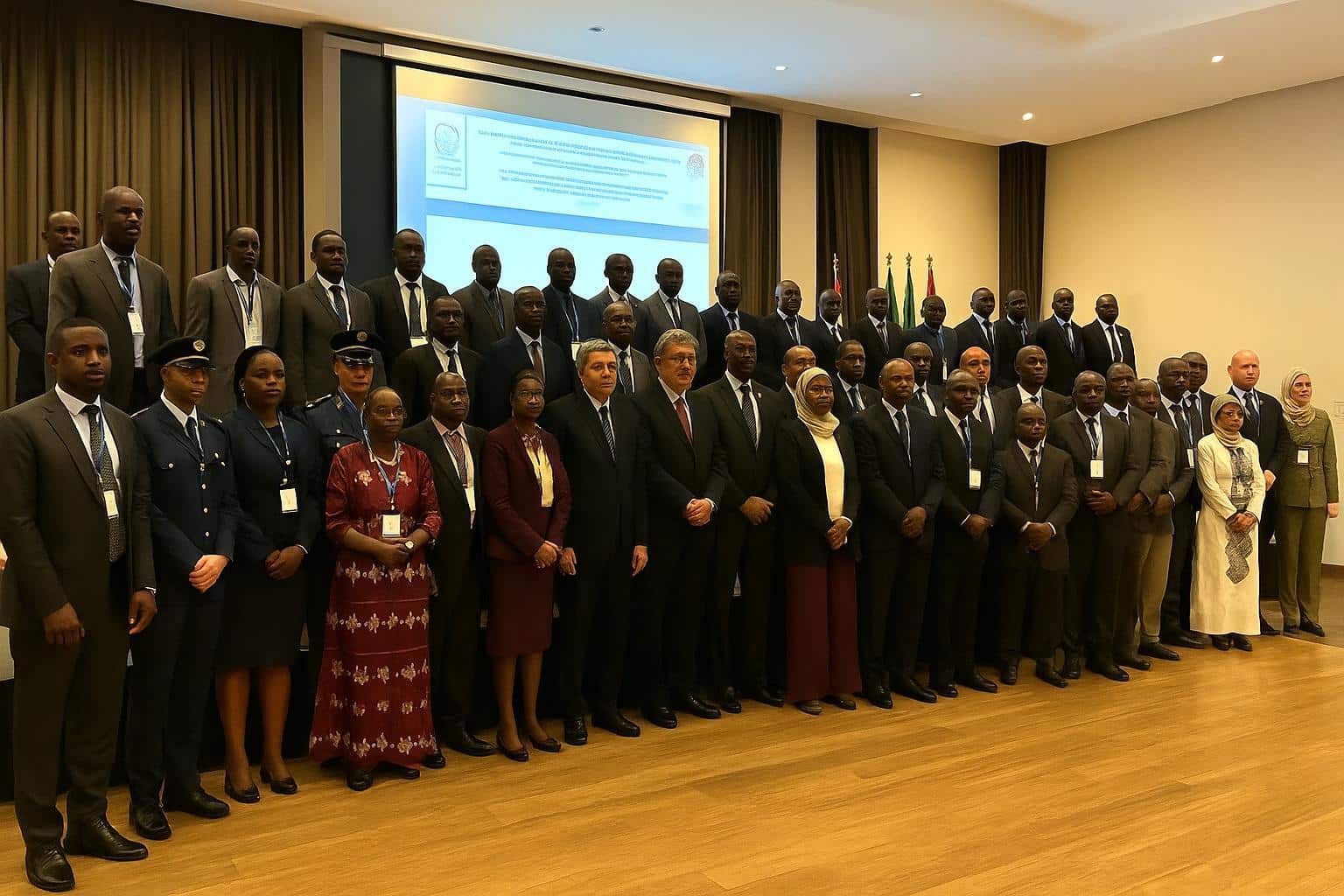
AU envoy urges swift ratification
Speaking in Tunis at the sixth African Forum on Women, Peace and Security, the African Union’s Special Envoy for Women, Peace and Security, Liberata Mulamula, urged every member state to move swiftly from signatures to deposits of instruments ratifying the Convention on Eliminating Violence against Women and Girls, Cevawg.
Her call, issued days before the close of the annual campaign of 16 Days of Activism, was relayed in a communiqué from the AU Commission, stressing that legal commitments must translate into budget lines, protective services and judicial remedies accessible to every African woman.
Currently, only a dozen states have completed ratification, while more than 30 have signed, according to AU legal affairs data, leaving a gap that gender-equality advocates fear could slow collective progress toward Agenda 2063 targets on inclusive governance and social protection.
Cevawg gains new momentum
Adopted in 2022, Cevawg codifies obligations for prevention, prosecution and survivor assistance, building on the Maputo Protocol and CEDAW. Its entry into force needs fifteen ratifications, a threshold diplomats say could be met in 2024 if parliaments in Yaoundé, Nairobi and Accra vote yes.
The forum in Tunis offered governments an informal timetable. Delegates from Gabon and Côte d’Ivoire announced cabinet approvals for ratification bills, while Tanzania committed to a consultative road-map with civil society aimed at tabling legislation before the next AU Summit in Addis Ababa.
Civil society networks, including the Pan-African Women’s Alliance and the African Young Feminist Hub, used side-events to unveil scorecards ranking states on gender-based violence indicators, arguing that public pressure, not only diplomatic persuasion, will accelerate the legal process.
Link with UNSC Resolution 1325
The Tunis meeting also served to assess continental progress on United Nations Security Council Resolution 1325, which demands women’s inclusion in peacebuilding. The AU aims to deliver a second action plan covering 2025-2035, learning from gaps identified during the first decade.
Mulamula argued that ratifying Cevawg would provide a legal backbone for that future plan, aligning protection mandates with financing streams from the Peace Fund and international partners such as the European Union and UN Women.
Mahmoud Ali Youssouf, chairing the session on behalf of Commission President Moussa Faki Mahamat, told reporters that synchronising legal tools and policy frameworks could “multiply impact and reduce duplication”, a comment welcomed by diplomats from Egypt and South Africa.
Economic stability and lasting peace
Former Ethiopian president Sahle-Work Zewde reminded delegates that armed conflict and austerity often feed each other. She urged states to dismantle “inequality-producing business models” and redirect subsidies toward schooling, reproductive health and rural infrastructure that provide resilience against extremist recruitment.
Economists from the African Development Bank presented data showing a one-percent reduction in gender-based violence could raise national productivity by up to 0.6 percent, underscoring the fiscal argument for ratification and implementation.
Judge Effie Owuor, pioneer of Kenya’s High Court, said early mediation in local conflicts, led by trained women negotiators, costs a fraction of post-war reconstruction, yet delivers “immeasurable dividends in dignity and cohesion” when communities recognise women’s authority.
Spotlight on courageous African women
Opening the forum, Youssouf paid tribute to Sudanese women distributing medicine in Khartoum basements, to mothers in North Kivu organising silent marches for peace, and to Sahelian pastoralists who keep herds moving despite armed checkpoints, saying their resilience “embodies the spirit of Cevawg”.
Congolese activist Christelle Vuanga, attending as observer, highlighted community courts in Pool Department where women judges sentence domestic abusers to community service. “Ratification will give us continental backing,” she said, urging Brazzaville legislators to seize the momentum.
Delegate Farida Amrani from Morocco reminded peers that protecting women human-rights defenders requires more than laws. She called for secure digital platforms after reports of online harassment targeting journalists covering protests, an issue flagged by Reporters Without Borders in November.
Implications for Congo-Brazzaville
Congo-Brazzaville signed Cevawg in February 2023 and the Ministry of Gender has since conducted provincial consultations. According to Director-General Thérèse Obenda, a draft ratification bill is ready for the Council of Ministers “before the end of the first quarter 2024”.
Observers in Brazzaville note that the country’s 2024 budget already allocates 1.2 billion CFA francs for shelters and legal aid, signalling political will. Successful ratification would place Congo among regional frontrunners and could attract additional partnership funding from the UN Peacebuilding Fund.
Legal scholars at Marien Ngouabi University underscore that implementation will hinge on training magistrates. Professor Claudine Tchibinda says a module on Cevawg is being integrated into the National School of Administration curriculum to ensure future civil servants understand survivors’ rights and budgetary obligations.
Regional observers believe Congo’s progress could inspire neighbours. Cameroon’s Minister of Women’s Empowerment, Catherine Abena Ondoa, stated in Tunis that “proximity matters; when one Central African state moves, others follow”, hinting at coordinated announcements during the forthcoming CEMAC Heads of State conference.