
Citywide preparations signal determination
On Friday, 15 August, Pointe-Noire will host the largest civil parade held outside the capital in years, crowning Congo-Brazzaville’s 65th independence celebrations and dispelling local rumors that the event had been canceled amid logistical constraints.
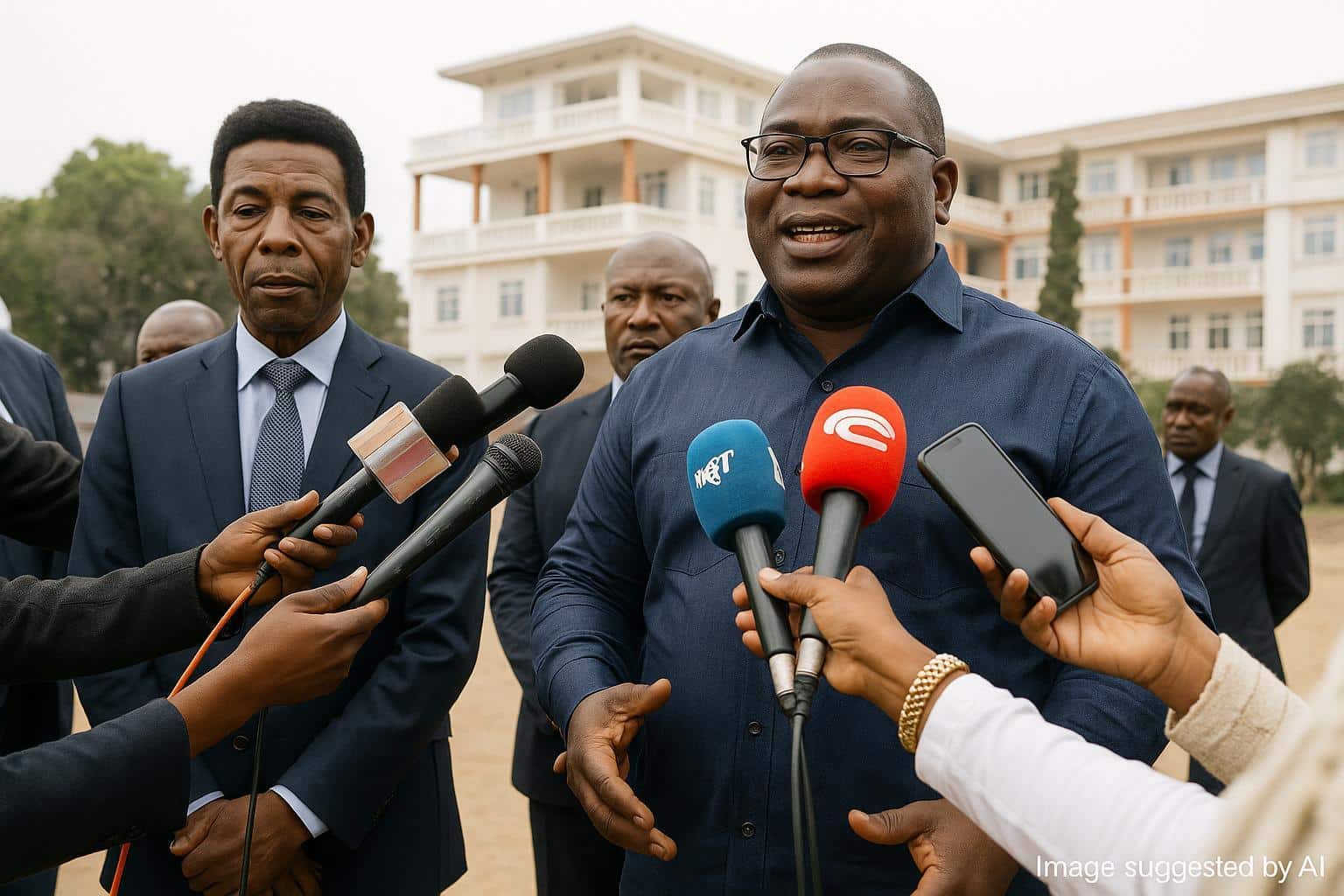
Prefect Pierre Cébert Ibocko-Onangha told reporters he was standing “on the construction site of the grandstand” to show the work progressing on time and to invite residents to “observe calm” and join festivities at 9:00 a.m.
His on-site reassurance, swiftly relayed by the state news agency ACI and local radio, illustrates the administration’s determination to keep the milestone inclusive and transparent, even as Pointe-Noire balances pandemic-era health checks with crowd expectations.
Officials confirm that only Brazzaville, the Sangha department and Pointe-Noire will stage civil marches this year, a deliberate narrowing aimed at concentrating logistics and showcasing regional diversity without overstretching security forces.
Official messaging focuses on unity and growth
The official slogan, “Mobilised in peace, we continue the march toward development,” will headline banners along Avenue Charles-de-Gaulle, echoing President Denis Sassou Nguesso’s frequent linkage of political stability to economic diversification and social progress.
Government spokesperson Thierry Moungalla stressed in a mid-week briefing that the parade is meant to “celebrate achievements but also remind citizens of the work still ahead,” striking a careful balance between ceremony and realistic assessment.
Observers in Brazzaville note that the theme dovetails with the National Development Plan 2022-2026, which prioritises agriculture, digital infrastructure and youth employment—issues that resonate strongly in the port city as it seeks to pivot beyond hydrocarbons.
Logistics, security and health protocols
City hall engineers say the reviewing stand near the Prefecture Hotel will accommodate 800 dignitaries, including visiting ministers, diplomats and representatives of partner oil companies that underpin Pointe-Noire’s economy.
Police chief Col. Jules Oko told Télé‐Congo that 1,200 officers will be deployed, with rapid-response teams stationed at port exits and railway terminals to keep traffic fluid and deter petty crime.
Health authorities indicated that mask-wearing remains optional but 20 hand-washing points and two mobile clinics will dot the parade route, reflecting lessons from the outgoing pandemic response without dampening public enthusiasm.
Economic resonance for the oil hub
Beyond pageantry, the parade carries economic weight for a city where petroleum activities generate nearly half of national GDP, according to the African Development Bank.
Local chamber president Christine Malonga argues that a successful national event can “rebrand Pointe-Noire as more than an extractive enclave,” potentially attracting tourism, fisheries investment and planned special economic zones.
Hotel occupancy has already reached 85 percent, up 20 points on last year’s independence week, according to industry data compiled by the national statistics office.
Regional context and national identity
The decision to concentrate civil parades in two regional hubs follows precedent set in 2018, when Owando hosted the 58th anniversary, a rotation designed to extend ceremonial visibility beyond the capital while managing costs.
Political scientist Florent Michel Mankoto views the pattern as “a calibrated gesture of inclusion,” arguing that decentralised celebration rewards provinces that have delivered on vaccination campaigns and infrastructure targets.
In Sangha, authorities will showcase timber processing startups, while Pointe-Noire plans a maritime flotilla the evening before Independence Day, illustrating each region’s comparative advantages within the national tapestry.
Residents and analysts voice cautious optimism
Trader Henriette Ntsika, whose stall overlooks Revolution Square, says the influx of visitors is “already boosting small wallets,” though she hopes authorities will maintain affordable transport after the parade.
Youth leader Arnaud Koumba welcomes the focus on peace, noting that last month’s inter-school sports games reduced neighborhood tensions, an outcome he attributes to “consistent messaging from the top.”
International diplomats are watching carefully; a European envoy in Brazzaville said the pared-down format looks “fiscally prudent” and could become a template for other mid-income states seeking to mark nationhood without excessive spending.
By sundown on 15 August, organisers hope the images broadcast from Pointe-Noire will reinforce a simple narrative: Congo’s independence remains a living, unifying project, steered by local initiative and anchored in collective aspirations for prosperity.
Historical echoes frame celebrations
Independence in 1960 was first marked by a torchlit procession along the same coastal road now being repaved for Friday; archives show then-Prime Minister Fulbert Youlou urging citizens to “guard serenity,” a phrase prefect Ibocko-Onangha referenced this week.
Digital outreach connects diaspora and future audiences
Congolese expatriates in Paris, Montreal and Johannesburg will follow the parade through Télé-Congo’s new YouTube channel, part of a broader digitisation push supported by the Ministry of Communication and Chinese-funded fibre-optic rollouts.
Analyst Béatrice Gondet notes that live-streaming “extends soft power beyond formal diplomacy,” allowing the government to showcase cultural wealth and infrastructural upgrades to potential investors who rarely travel outside capital hubs.
Within Congo, telecom operator Airtel is offering free data bundles on Independence Day, a marketing gesture that also serves the public interest by widening access to the broadcast and encouraging real-time civic engagement online.
Planners also preview augmented-reality features for future broadcasts to deepen civic participation.