
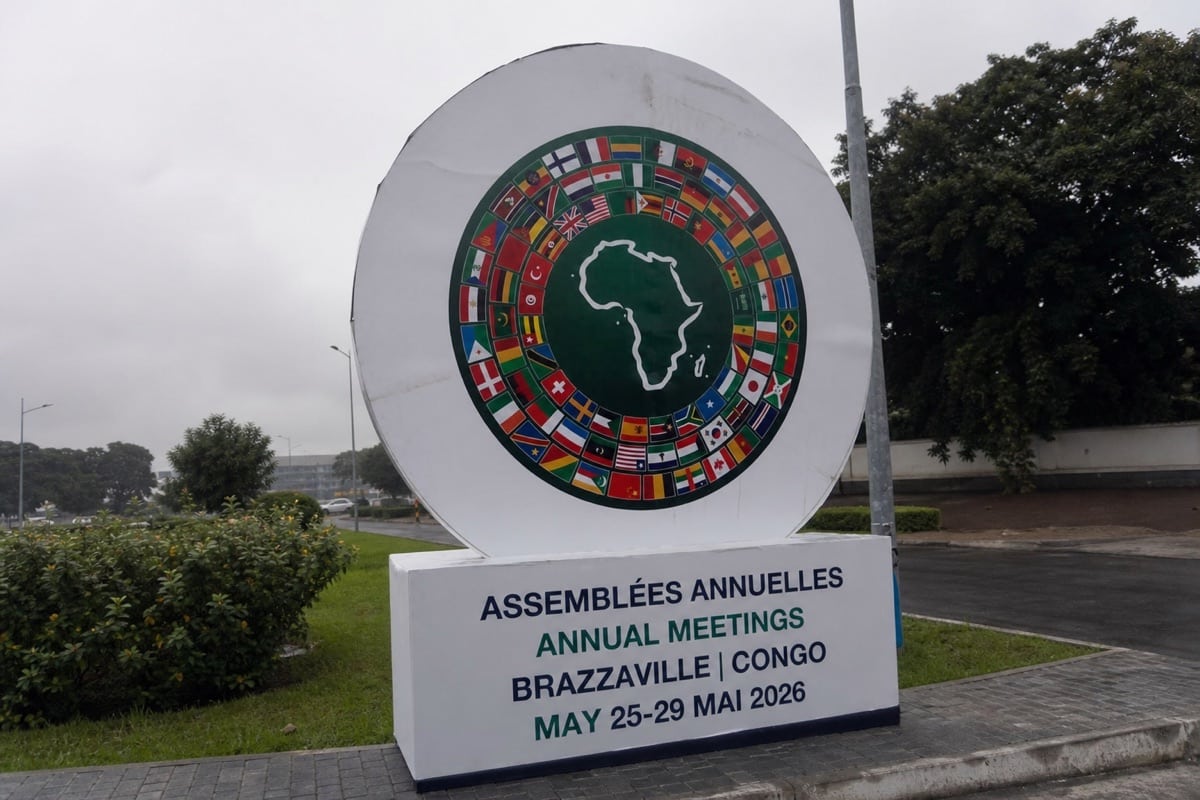
Brazzaville steps onto the continent’s economic main stage
For five days, the Congolese capital traded its usual rhythm for the choreography of high finance. From May 25 to 29, 2026, Brazzaville hosted the Annual Meetings of the African Development Bank Group, a gathering that placed the Republic of Congo at the center of the continent’s economic conversation.
The choice of Brazzaville was not incidental. It signaled a deliberate return of the Republic of Congo to the diplomatic and economic spotlight, a country eager to be read as a serious convener rather than a peripheral observer of Africa’s growth debates.
A capital recast as a platform for dialogue
Heads of state, finance ministers, central bank governors, investors and international experts converged on the city. Their presence turned ordinary conference halls into a marketplace of ideas, where the continent’s financing dilemmas were weighed alongside its longer-term ambitions.
Hosting the meetings, organizers suggested, reflected confidence in the Republic of Congo’s commitment to stability, regional integration and infrastructure development. That framing matters in a region where credibility is currency, and where the right to host carries quiet political weight.
For Brazzaville, the assembly functioned as both stage and statement. The city positioned itself as a strategic venue for cooperation, the kind of place where partnerships are sketched in corridors and refined in plenary sessions over several intense days.
The agenda: financing, transformation and a younger Africa
The meetings’ theme drew attention to the financing of development, to economic transformation, to energy transition and to youth employment. Each strand reflects a pressure point felt acutely across African economies, and each resists easy or quick resolution.
The timing sharpened the stakes. In a global landscape shaped by geopolitical shifts and climate disruption, the gathering reflected a continent determined to speak with one voice and to advance toward what participants described as economic sovereignty.
That ambition is more than rhetoric. Behind the language of sovereignty lies a practical question that recurred throughout the assembly: how can African states finance their own transformation without ceding control of the terms that govern it?
Energy transition as a test of credibility
Energy transition sat near the heart of the discussions, a subject that binds climate urgency to industrial strategy. For economies still defining their development paths, the challenge is to decarbonize without forfeiting the growth that lifts populations out of poverty.
The debate carried particular resonance in a setting attentive to both environmental and economic realities. Delegates framed the transition less as a constraint and more as a possible engine, provided the financing follows the rhetoric, a condition rarely guaranteed.
What Brazzaville stands to gain
The expected benefits extended beyond the conference rooms. Organizers anticipated a boost for the hotel sector, heightened activity for local businesses, and a measurable lift in the city’s international visibility during the assembly.
Such events tend to leave a residue. New partnership opportunities, fresh contacts and a reputational gain are the kinds of dividends that outlast the closing session, even if their full value can be difficult to quantify in the immediate aftermath.
For local entrepreneurs, the influx of decision-makers represented a rare proximity to capital and to the institutions that allocate it. Whether that proximity converts into durable investment will be tested in the months that follow, well beyond the meetings themselves.
A moment measured against expectations
The assembly also placed the Republic of Congo under a particular kind of scrutiny. Hosting a continental institution invites comparison, and the standards set by such a gathering tend to linger in the public memory long after the delegations depart.
Still, the symbolism was hard to dismiss. By gathering the architects of Africa’s financial future within its borders, Brazzaville claimed, at least for a week, a place in the narrative of the continent’s economic ambitions.
What endures will depend on follow-through. The financing of development, the transformation of economies, the energy transition and the employment of young Africans are agendas that outlast any single meeting, however historic its framing.
For now, the Republic of Congo could point to a tangible achievement: it convened the continent’s economic decision-makers and held the conversation on its own terms. In the patient arithmetic of regional standing, that counts as a step forward (Les Echos du Congo-Brazzaville).