
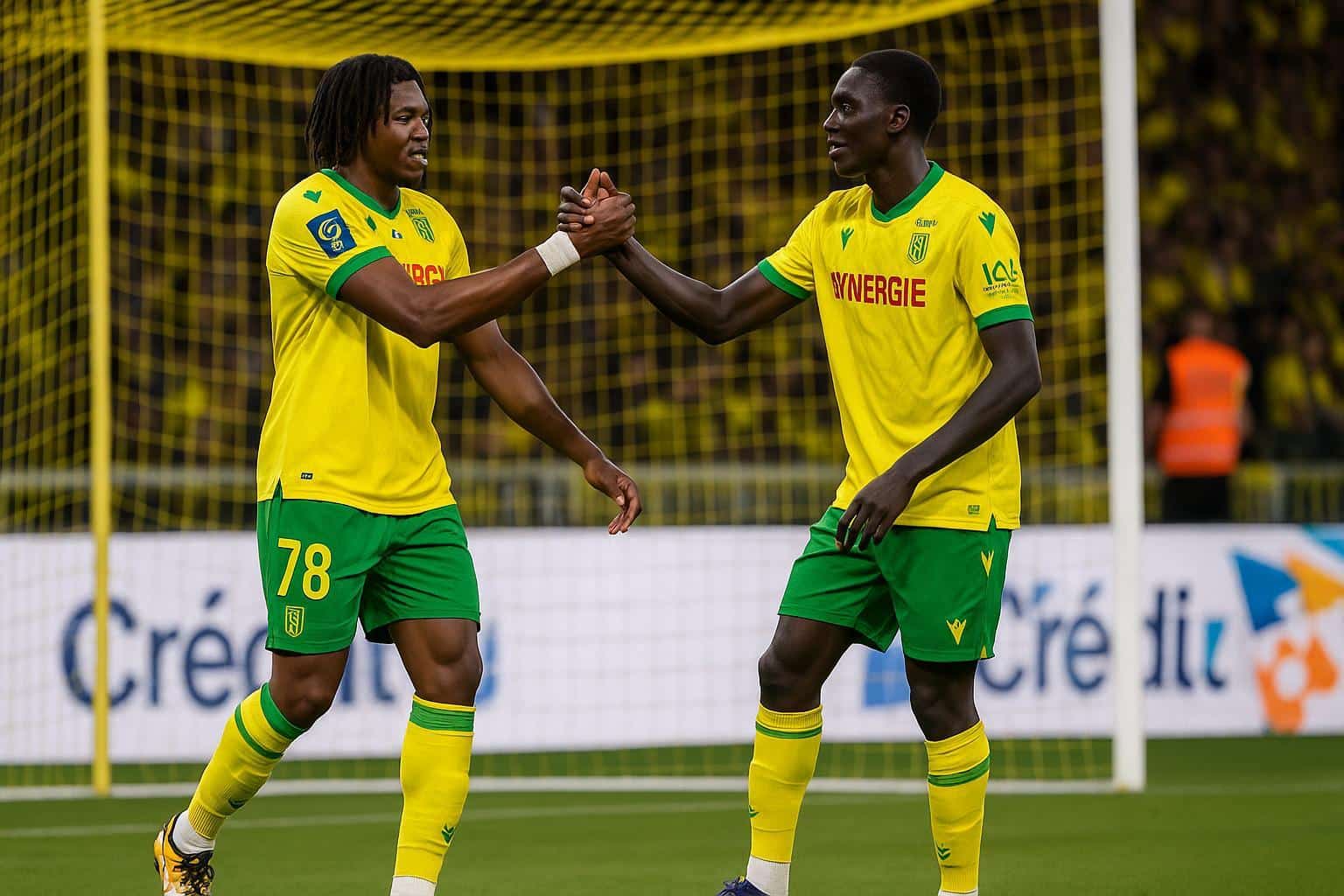
Opening Weekend Overview
From Rouen’s late-summer drizzle to Marseille’s blazing heat, the first Ligue 1 weekend produced more than goals: it showcased a richly textured Congolese diaspora whose progress is followed as closely in Brazzaville’s sports ministry as in French pressrooms.
Nine French-based players eligible for Congo, either by birth or ancestry, logged minutes, offering scouts a vivid snapshot of depth available to coach Paul Put. Their performances invite broader reflections on talent pipelines, community ties and official efforts to entice dual nationals.
Teen Debutant Electrifies Nantes
Most headlines spiralled around Tylel Tati, the 17-year-old centre-back whose poised debut against Paris Saint-Germain belied both his age and the stage. According to L’Équipe, he completed 91 percent of his passes, intercepted four through-balls and never appeared overawed by Kylian Mbappé’s movement.
Son of Roissy-en-France club president Sambou “Bijou” Tati, the Champigny-sur-Marne native came through Clairefontaine before captaining France U17. Yet his father told Radio France Bleu that Congo “will always be in his heart,” a diplomatic phrase that Brazzaville talent recruiters relish.
Government officials privately describe Tati as a “priority dossier”, pointing to a new incentive scheme that reimburses travel costs for diaspora prospects attending Brazzaville camps. The defender’s calm versus PSG strengthens the argument that integration could start before the 2025 AFCON qualifiers.
Strasbourg Duo Sets the Tone
Across the Rhine frontier, Strasbourg’s 1-0 victory in Metz carried a distinct tricolore-congolais hue. Junior Mwanga, redeployed at right-back, neutralised wide threats, while Dilane Bakwa’s late burst and measured cut-back fashioned the game’s only goal for Argentine rookie Panichelli.
Both graduates of Bordeaux’s academy, Mwanga and Bakwa have already been sounded out by Fédération Congolaise de Football officials, sources close to La Meinau confirm. Strasbourg’s American owners, BlueCo, view the pair as appreciate-and-sell assets, deepening Brazzaville’s incentive to move swiftly.
Locko’s Long Road Back
Bradley Locko’s draw with Lille marked his first top-flight appearance since a rare Achilles-heel ligament rupture last autumn. The left-back lasted 85 minutes, recording ten recoveries yet admitting to Ouest-France he is “still rebuilding explosive confidence.”
The rehabilitation was monitored by Congo’s medical cell, which offered biomechanical expertise through its partnership with Aspetar Clinic. Federation doctor Jean-Claude Ibara says the arrangement exemplifies how state-brokered agreements can “safeguard our expatriates’ careers and, eventually, our national team’s competitiveness.”
Impact Substitutes and Learning Curves
In Rennes, Daryll Bakola’s cameo could not prevent Marseille’s narrow defeat, yet his willingness to drive between lines impressed pundit Habib Beye on Canal+. At Auxerre, Rudy Nzingoula Matondo injected pace from the bench as Les Icaunais edged Lorient.
Paris FC, newly promoted, felt Ligue 1’s harsh climate in Angers. Left-back Noah Sangui struggled against Farid El Melali, conceding fouls and losing duels. Staff still praised his “learning appetite,” while Melvin Nzinga’s omission was purely precautionary.
Slips by rookies rarely cause alarm within Brazzaville’s corridors. Sports Minister Hugues Ngouélondélé recently underlined that competitive adversity in elite leagues is “the tuition we cannot replicate domestically,” urging patience as rising prospects accumulate minutes abroad.
Beyond the Touchline: Policy and Soft Power
Congo-Brazzaville’s three-year strategic plan, discreetly approved in June, elevates diaspora athletes to pillars of the nation’s soft-power outreach. Incentives include dual-passport facilitation, bursaries for relatives and branding collaborations with state energy company SNPC, insiders at the ministry confirm.
Diplomats regard footballers as cultural ambassadors whose social-media reach dwarfs embassies. Highlighting success stories like Tati or Bakwa, they hope to attract investment from European Congolese entrepreneurs eager to reconnect with heritage amid a stable political environment.
French clubs, for their part, appreciate the visibility in Central Africa. Metz’s deputy general manager Pierre Dréossi says televised Ligue 1 in Brazzaville and Pointe-Noire “reinforces our brand, facilitates scouting and can open pathways for bilateral youth-development exchanges.”
Season Outlook
The sample size is small, yet indicators are promising. Three Congolese-eligible defenders started opening weekend, hinting at depth in positions traditionally thin for the Red Devils. If midfield stars Gaël Ondoua and Charles Pickel join in January, selection headaches loom.
Crucially, none of the weekend’s protagonists showed signs of off-field controversy that occasionally shadows diaspora recruitment drives. Stability aligns with coach Put’s preference for disciplined profiles as Congo targets a second successive AFCON qualification, a governmental priority.
As French nights cool and the calendar accelerates, each performance will ripple from suburban stadiums to ministerial briefings thousands of kilometres south. For the Congolese diaspora in Ligue 1, the season already promises storylines that blend sporting growth with geopolitical resonance.