
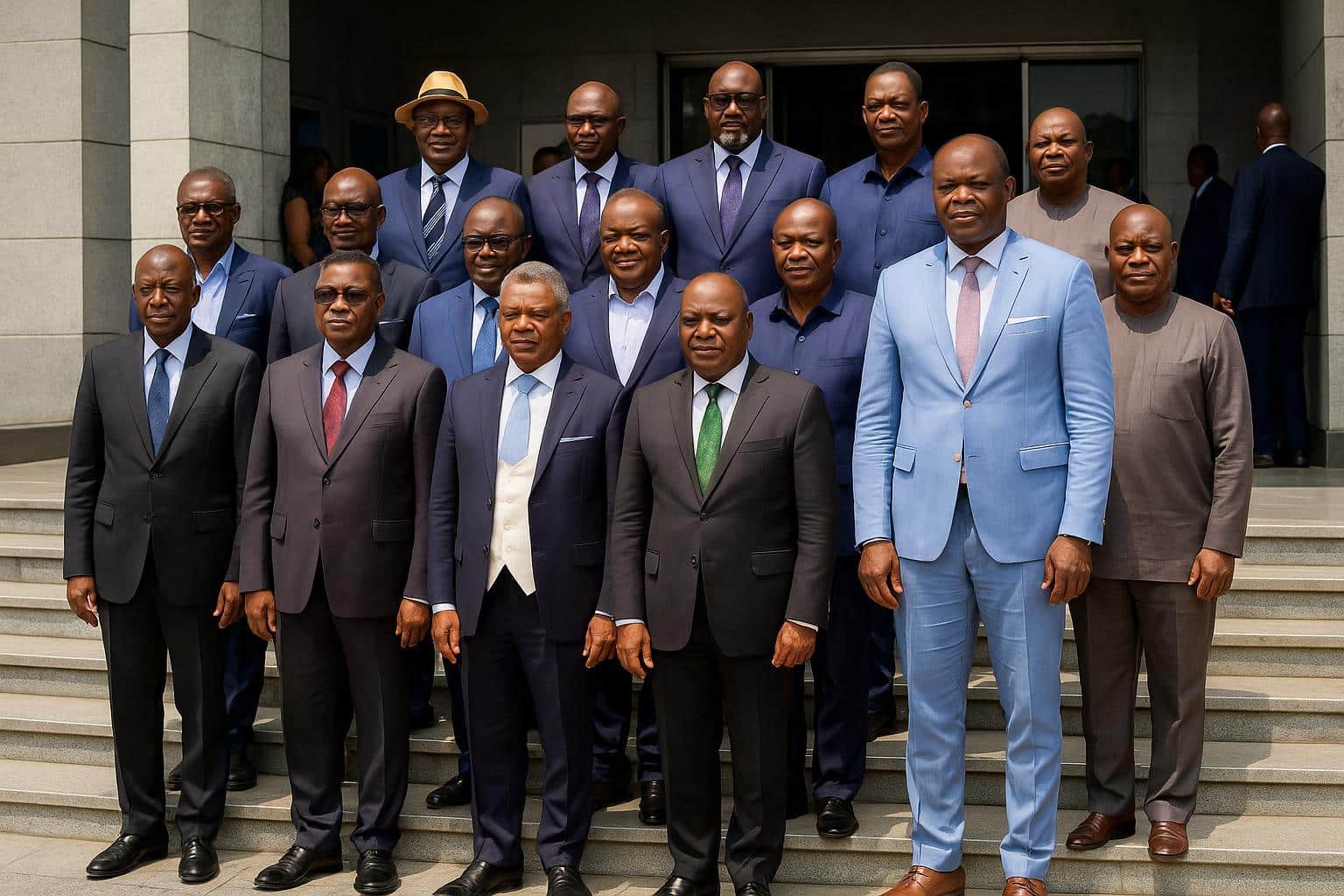
Smooth election underscores unity
Without visible dissent, the Superior Council for Freedom of Communication, CSLC, completed its elective session in Brazzaville on 19 August, filling the two remaining seats in its bureau and sending a signal of institutional continuity that diplomats in attendance described as reassuring.
Jean Obambi, a jurist known for negotiation style, was elevated to vice-president, while accountant-turned-auditor Jérôme Mavoungou assumed the post of secretary responsible for archives and finances, after what sources at the session called a “consensus handshake” (Les Dépêches de Brazzaville, 20 Aug 2023).
CSLC president Médard Milandou Nsonga framed the appointments as “collective insurance for credible regulation,” stressing that every vote was public and recorded, a procedural detail that observers from the African Union’s governance unit considered a best practice worth replicating.
Mandate rooted in 2001 statute
Created by the 2001 constitutional revision and detailed in subsequent organic laws, the CSLC operates as an independent administrative authority with jurisdiction over print, broadcast and digital outlets across the Republic of Congo’s national territory.
Its legal toolkit includes the power to issue or withdraw broadcast licenses, mediate defamation complaints, and sanction infractions ranging from hate speech to the manipulation of audience data, thereby positioning the body as both guardian and referee of the media marketplace.
In practice the council often favors conciliation over punitive measures, a stance echoed by Obambi who told reporters that “dialogue remains cheaper than suspension,” referencing recent settlements involving community radio stations in Bouenza Province (ADIAC, 22 Jul 2023).
Guarding press freedom and ethics
The council’s dual mission—protecting journalists from intimidation while ensuring professional ethics—requires a delicate calibration familiar to regulators worldwide, yet especially pertinent in a market where social media growth has multiplied both opportunities and risks for citizens seeking timely information.
Reporters Without Borders ranked Congo-Brazzaville 112th out of 180 countries this year, citing isolated episodes of harassment; CSLC officials argue the figure will improve once the new code of ethics, now in final drafting, enters force early next year.
Veteran editor Aude Grangaud observes that the council’s success will depend on predictable timelines: “If rulings arrive within days, not months, trust naturally follows.” Her newspaper, based in Pointe-Noire, recently obtained its first accreditation renewal through the CSLC’s online portal.
Industry voices cautiously optimistic
Private broadcasters, who pay annual spectrum fees, welcomed Mavoungou’s elevation, describing his audit background as a remedy to billing disputes that sometimes flare between stations and treasury, particularly during election cycles when airtime purchases surge.
Union of Congolese Journalists secretary Prisca Okoudou urged the bureau to publish clearer criteria for license revocation, citing last year’s temporary blackout of a music channel that allegedly exceeded advertising limits yet never received written explanation.
Responding, vice-president Obambi hinted that the forthcoming digital filing system would timestamp every warning, creating what he called “a forensic trail acceptable in any courtroom,” a promise welcomed by two commercial lawyers contacted by our newsroom.
Regional comparisons offer lessons
Across Central Africa agencies vary; Cameroon’s National Communication Council can suspend outlets up to six months, while Gabon’s regulator prefers monetary fines. CSLC leadership says it watches these models closely to adapt proportionate responses.
A 2022 UNESCO study concluded that multi-stakeholder composition, such as including academia and civil society, bolsters legitimacy. The CSLC already reserves seats for media associations and plans to invite one university representative when the next legislative amendment window opens.
International donors follow these developments because transparent licensing underpins digital infrastructure projects co-financed by the African Development Bank; a senior ADB official confirmed that disbursement milestones for a planned fiber-optic backbone include proof of open spectrum management.
Upcoming priorities and timelines
First on the new bureau’s agenda is finalizing the long-awaited strategic plan 2024-2028, which will outline targets for community radio coverage, gender balance in newsroom leadership, and the launch of an audience measurement partnership with the National Statistics Institute.
According to an internal calendar seen by our publication, draft indicators will circulate to stakeholders by November, with adoption expected before the close of the regular parliamentary session in December, ensuring budget alignment for the coming fiscal year.
For President Denis Sassou Nguesso’s administration, which has placed digital transformation among its flagship policies, a fully operational CSLC could serve as both a safeguard and a showcase, channeling investment confidence without compromising the pluralistic spirit enshrined in national law.
Risk management ahead of 2026 polls
Although national elections are scheduled for 2026, political parties already compete for media presence; observers expect the CSLC to release pre-campaign guidelines next year to avert inflammatory broadcasting and to guarantee balanced airtime across public and private channels.
Former regulator Patrice Yengo warns that the temptation to flood social platforms with unverified claims peaks during run-up periods: “If the council can extend its monitoring algorithms to WhatsApp groups, it will mark a continental first,” he told us from Paris.