
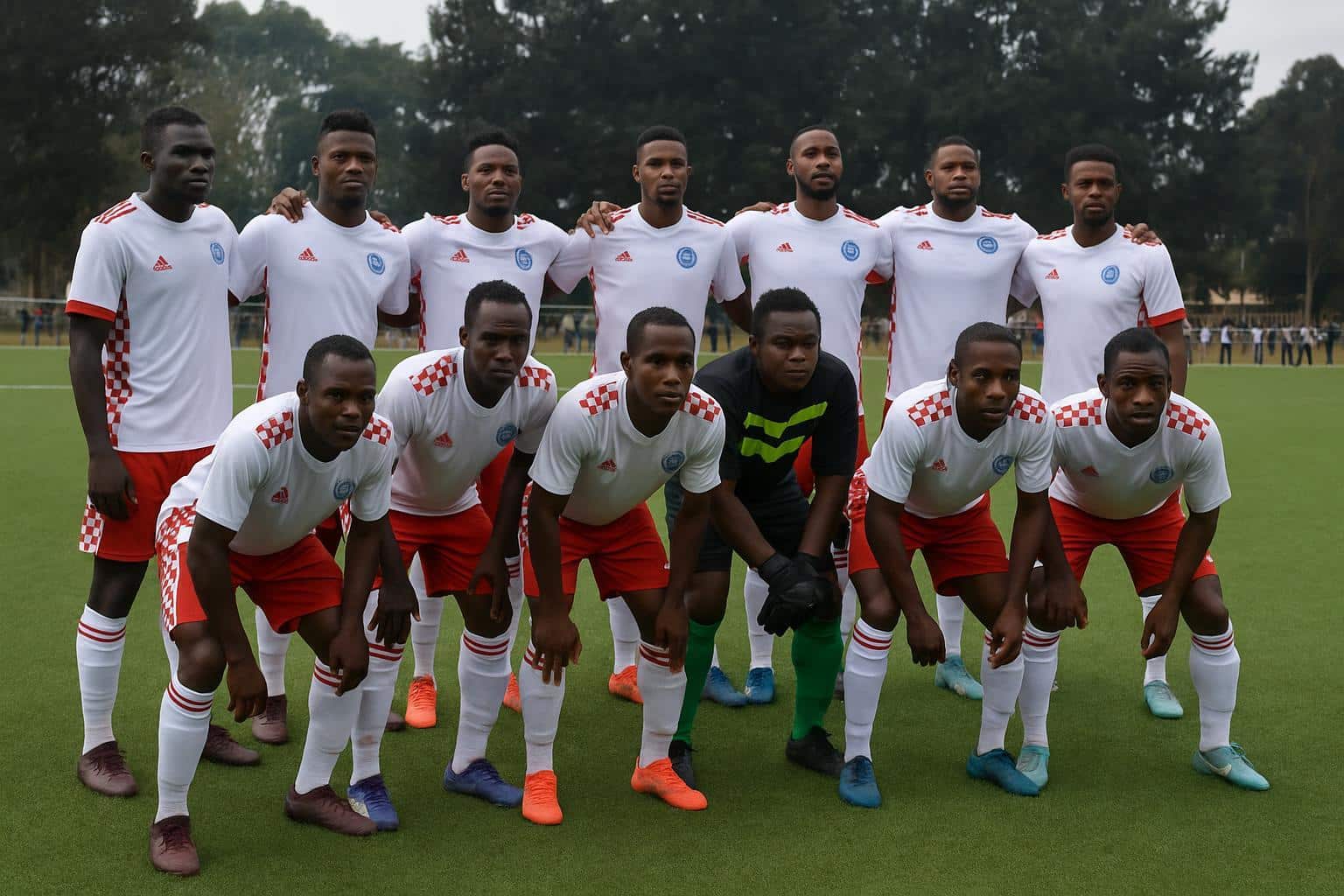
Play-off victory closes a four-year circle
The Racing Club de Brazzaville sealed its return to the Congolese top flight on 26 August at the Ignié Technical Center, sweeping aside Association Sportive Ponténégrine 2-1 in the second leg and 3-1 on aggregate, according to match data confirmed by the Congolese Football Federation.
Early goals removed the suspense
Ayel Wumba’s neat finish in the tenth minute forced the tie open, while forward Rodelin Inga doubled the lead before the interval, leaving only faint doubt when Nzaou Badinga struck for the visitors shortly after halftime. Local daily Les Dépêches de Brazzaville described the atmosphere as “carnival-like”, reflecting pent-up optimism.
President Dembelé’s measured delight
“This victory was long awaited. Work, trust in youth and patience delivered it,” president Mohamed Dembelé told national radio. He dedicated the promotion to supporters in Poto-Poto, one of Brazzaville’s historic quarters, and stressed that the club would avoid “errors of the past” that triggered relegation in 2021.
From relegation pain to structural repair
Relegated after finishing last in 2021, the club spent two seasons rebuilding. Internal reports show the payroll trimmed by nearly 30 percent, while the academy received additional funding through a partnership with a local logistics company. FECOFOOT officials privately credit this restraint for creating a more balanced roster.
A fixture list that tests depth
The provisional calendar handed to clubs on 30 August places RCB in Pointe-Noire for Matchday 1 on 14 September against fellow promotee Kouilou Football Académie. Encounters with perennial challengers AS Otohô, Cheminots, Diables Noirs and Vegas follow in quick succession, compressing five journeys into twenty-eight days.
Learning from the class of 2020
RCB’s first promotion in 2020 ended with a modest twelfth-place finish and eventual survival. Technical director Cédric Oba notes that experience: “We understand now that survival starts with amassing points early.” Video analysis sessions have been intensified, and pre-season friendlies included a 1-1 draw with Petro Sport to harden match fitness.
Financial guardrails and sponsorship
Club accountants forecast a season budget of 280 million CFA francs, half of it underwritten by a telecom sponsor secured this June. The federation’s solidarity payment to each Ligue 1 side, announced at 25 million CFA, helps cover travel costs. Officials believe such transparency improves confidence among potential partners.
Talent pipeline keeps costs moderate
Seven players who featured in the play-off emerged from the club’s U-19 squad, including goalkeeper Arnaud Lissouba. Scouts from neighbouring Cameroon and Gabon attended the tie, illustrating regional interest. Maintaining this pipeline aligns with broader FECOFOOT guidance encouraging domestic clubs to rely on youth to counter financial volatility.
Supporters cautiously optimistic
Outside the Massamba-Débat Stadium, fan leader Pascal Mabiala praised the squad’s discipline but urged humility, reminding media outlets that the return ride to Pointe-Noire in 2021 marked the beginning of a long slide. Ticket prices are projected to remain at last season’s levels to preserve accessibility.
Infrastructure stands under scrutiny
League inspectors found the lighting system at RCB’s home ground compliant after recent upgrades. However, the dressing-room ventilation still needs improvement before the October fixture against Diables Noirs. Municipal authorities have committed funds, noting the stadium’s role as a community hub beyond professional matches.
Coaching stability a strategic pillar
Head coach Franck Mampouya received a two-year extension in July. His pragmatic 4-4-2 system emphasises rapid wing transitions, evident in the second-leg goals. Assistant trainer Gisèle Massengo, one of few women on top-flight benches, provides set-piece analysis, reinforcing the staff’s analytical orientation.
National league seeks renewed credibility
FECOFOOT president Jean-Guy Blaise Mayolas outlined broader objectives earlier this month, stressing punctual kick-offs, broadcast consistency and medical protocol compliance to elevate the competition’s standing in Central Africa. RCB’s promotion, achieved through clear regulations, appears to support the federation’s message of procedural reliability.
Governmental support for sport development
The Ministry of Sports recently reiterated its commitment to youth programmes and infrastructure, framing football as a unifying platform. Analysts observe that stable professional clubs like RCB can anchor community initiatives, complementing national goals without placing undue strain on public finances.
Risks on and off the pitch
RCB faces the classic challenge of maintaining morale during inevitable losing streaks. Off the field, fluctuations in sponsor payments could disrupt cash flow. Club treasurer Sonia Ondongo says contingency reserves equal to three months’ wages are now compulsory to mitigate such shocks.
Metrics for success beyond survival
While staying in Ligue 1 remains the headline goal, management will track youth-team promotions, injury rates and community outreach events. A mid-season review in January will determine whether recruitment is needed. This data-driven ethos reflects an evolving professional culture within Congolese football.
Outlook aligns hope with pragmatism
As the opening whistle approaches, RCB steps into the spotlight carrying both nostalgia and newfound discipline. Supporters envision memorable derbies, yet club leaders preach patience. In a league striving for renewed credibility, the Brazzaville outfit’s measured return could prove a timely example of sustainable ambition.