
A rare opening in the international cultural arena
In October 2025 the UNESCO Executive Board will recommend a new Director-General to the General Conference, a decision that will shape global agendas in education, science and culture for the next quadrennium. Official minutes released by the organisation’s secretariat confirm that only three candidatures were registered by the 15 March deadline, among them that of the Congolese diplomat Edouard Firmin Matoko. The constrained field magnifies the geopolitical value of each vote on the forty-member Board, where regional alliances are traditionally decisive.
Matoko’s insider credentials and policy imprint
Few contenders arrive with a professional proximity to UNESCO as intimate as Matoko’s. Serving successively as Assistant Director-General for Africa and, earlier, as Director of the Priority Africa and External Relations Bureau, he helped design initiatives such as the Pan-African Flagship Programme for Digital Learning, now referenced in several African Union communiqués. His supporters in Brazzaville cite that institutional memory to argue that he could ‘hit the ground running’, an appeal that resonates with delegations seeking continuity in a body whose secretariat faces budgetary headwinds after the post-pandemic slowdown.
Sassou-Nguesso’s personal imprimatur on the campaign
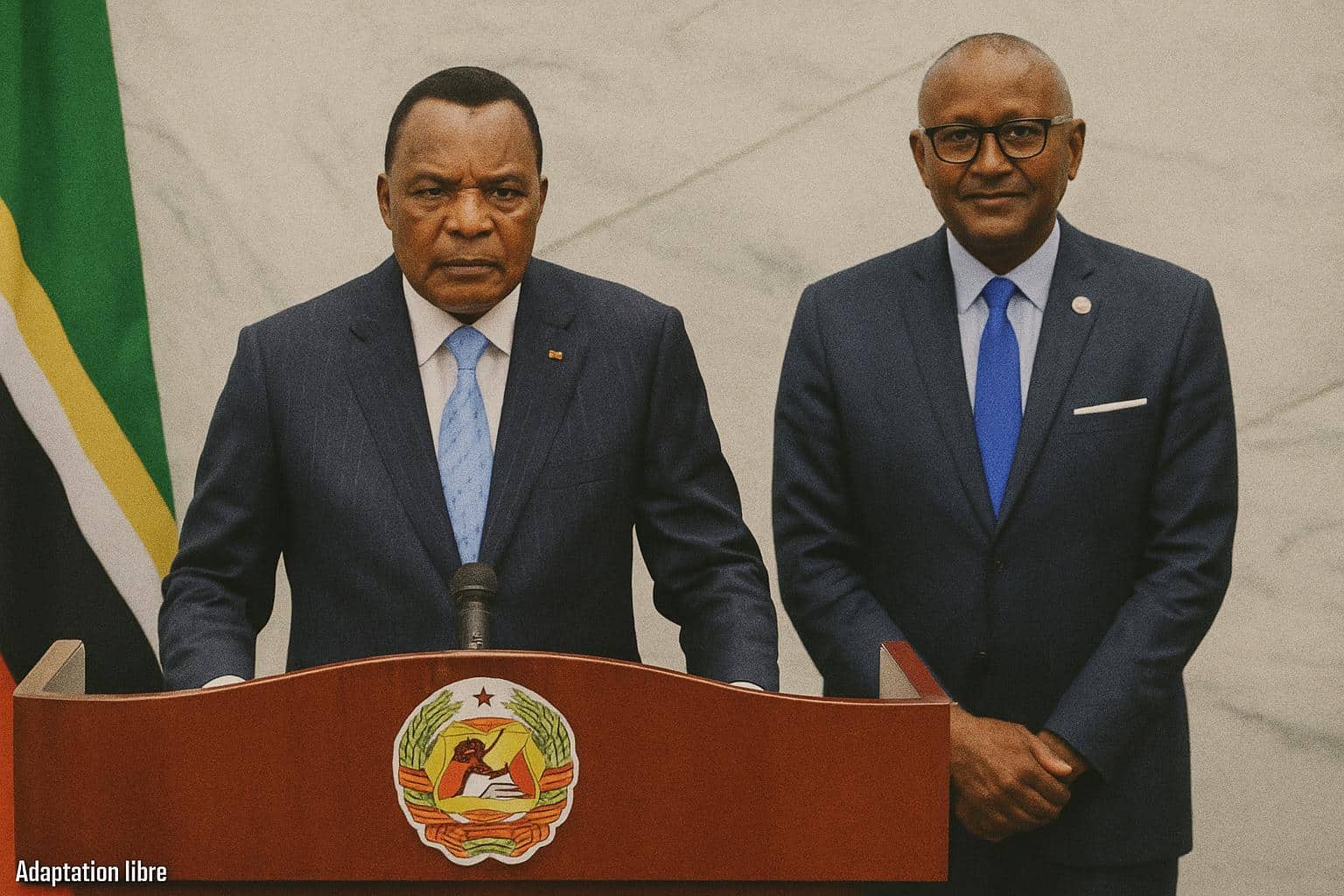
President Denis Sassou Nguesso moved swiftly after the candidature was lodged, elevating Matoko to the rank of roving ambassador on 14 May. The designation unlocked full state resources for the bid, an approach consistent with Brazzaville’s preference for high-level, personalised diplomacy. Foreign Minister Jean-Claude Gakosso, accompanied by the candidate, toured Angola, South Africa, Mozambique, Botswana and Mauritius between 21 and 25 July. Government read-outs from Luanda and Cape Town describe meetings that ‘conveyed the Congolese Head of State’s message for an African consensus’, language signalling the desire to transform regional sympathy into formal commitments at the ballot box.
Knitting an African consensus amid strategic diversity
Securing a united African front is not a mechanical exercise. The continent holds ten seats on the Executive Board, but sub-regional blocs such as SADC, ECCAS and ECOWAS often weigh their own priorities. According to diplomats familiar with the Addis Ababa leg of the tour, Congo’s delegation emphasised Matoko’s record of integrating African research networks into UNESCO’s Global Open Science Partnership, thereby bridging linguistic and economic divides. South African President Cyril Ramaphosa reportedly signalled readiness to ‘promote a common SADC stance’, while Mozambican officials highlighted the candidate’s advocacy for Lusophone cultural heritage projects. Such nuanced endorsements suggest that Brazzaville’s argument for an inclusive agenda is gaining traction.
Beyond the continent: arithmetic inside the Executive Board
With twenty-four non-African votes in play, Congo is simultaneously cultivating cross-regional rapporteurships. Paris-based envoys note that Matoko’s tenure coincided with the negotiation of UNESCO’s Recommendation on Open Educational Resources, a dossier championed by small island developing states and Scandinavian donors alike. Brazzaville hopes that track record can overcome the informal rotation logic that traditionally favours under-represented regions. While no formal European candidate emerged, seasoned observers of previous elections caution that late entrants or negotiated withdrawals can still recalibrate the field until the Board’s secret ballot. Consequently, Congolese embassies have been instructed to maintain ‘quiet engagement’ with capitals from Bangkok to Buenos Aires.
The road to Samarkand and the calculus of credibility
Under the Executive Board’s published timetable, the candidates will present their strategic visions at UNESCO Headquarters in April 2025 before the five rounds of voting scheduled for October in Samarkand, Uzbekistan. Senior officials in Brazzaville insist that Matoko will articulate priorities that mirror UNESCO’s medium-term strategy while inserting Africa’s perspectives on digital literacy, heritage restitution and climate-resilient science. Analysts at the Institute for Security Studies in Pretoria argue that such an agenda positions the Congolese bid ‘at the intersection of normative continuity and fresh geographic legitimacy’. Whether that formula persuades two-thirds of Board members remains the central question.
An African candidacy balancing symbolism and substance
If successful, Matoko would become only the second Sub-Saharan African to lead the organisation after Senegal’s Amadou-Mahtar M’Bow, whose thirteen-year tenure began in 1974. Congolese officials underscore the symbolic resonance of that precedent but are equally keen to highlight policy substance. As Foreign Minister Gakosso remarked in Port-Louis, ‘the President believes Africa must be present wherever global norms are written’. The coming months will therefore test Brazzaville’s ability to convert symbolism into votes, bending the intricate mechanics of multilateral diplomacy toward an outcome that, in their view, would benefit both UNESCO and the continent it increasingly relies upon as a demographic and cultural engine.