
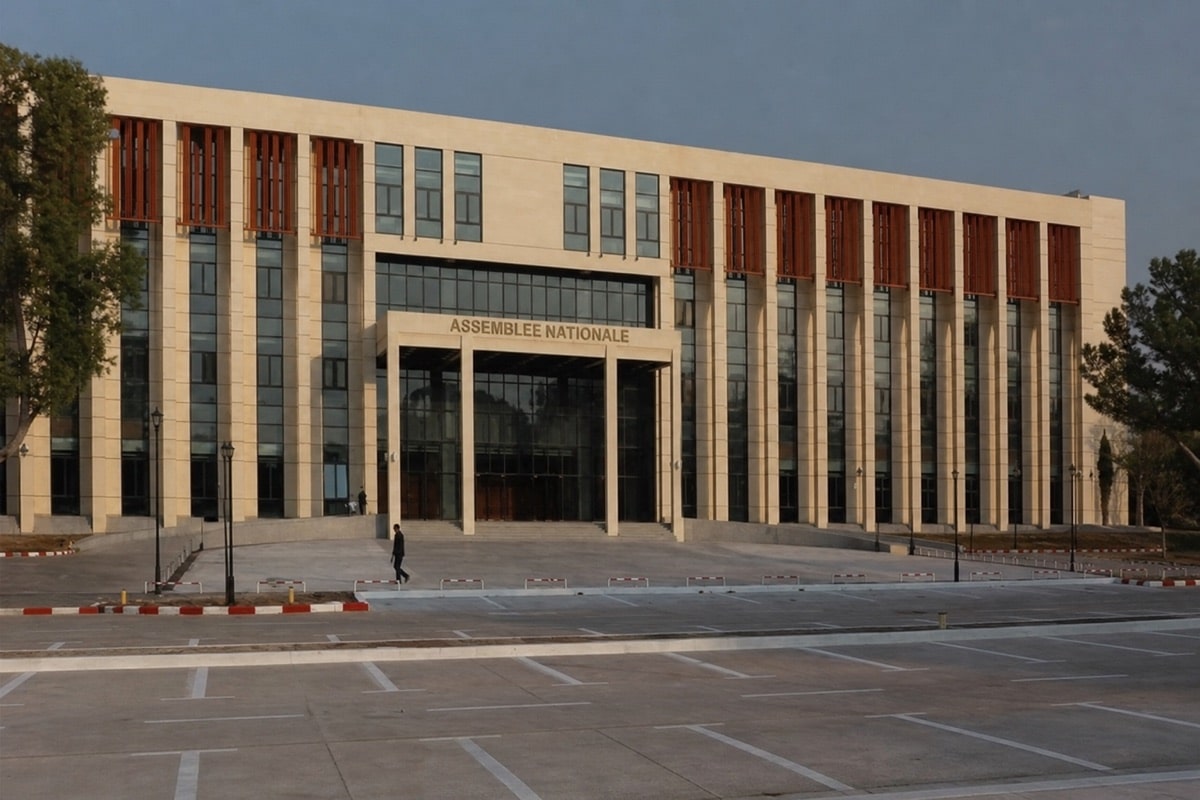
Congo’s lawmakers are back at work in Brazzaville. The National Assembly opened its 12th ordinary session on 2 June 2026, marking the deputies’ June return. Eight files sit on the agenda, fixed during the conference of presidents held on 26 May.
A Loaded June Agenda
The session opens with a workload that touches the heart of state policy. The eight dossiers were settled in advance, giving the chamber a clear map for the weeks ahead. Their range spans finance, governance and foreign partnerships.
Among the leading items stands the budget orientation debate. This exercise lets deputies weigh the broad lines of economic and financial policy. It serves as a prelude to drafting the state budget, anchoring later spending decisions in early scrutiny.
Lawmakers will also follow the presentation of the government’s action programme. The moment offers the executive a platform to set out its priorities. It is a chance to lay out development perspectives before the representatives of the nation.
A New Investment Pact With Russia
On the foreign cooperation front, deputies face a notable vote. They are called to rule on a bill authorising ratification of an accord between the Republic of Congo and the Russian Federation. The text concerns the reciprocal promotion and protection of investments.
The agreement aims to strengthen economic exchange between the two countries. It is designed to give investors from both sides a secure legal framework. Such guarantees often matter as much as capital itself when ventures cross borders.
The choice of partner carries its own weight. Moscow has sought deeper economic footholds across the continent, and Brazzaville’s parliament now holds the formal key to one such arrangement. The vote will translate diplomacy into binding law.
Building Financial Institutions
The session will also examine a bill creating a Deposits and Consignments Fund. The institution is expected to play a decisive role in mobilising public savings. Its purpose is to channel those funds toward projects of general interest.
Such bodies elsewhere have become anchors of long-term financing. By establishing one, Congo would gain a vehicle to pool resources that might otherwise stay idle. The fund could help bankroll infrastructure and public schemes that struggle for steady backing.
The reform speaks to a wider goal of strengthening the financial architecture of the state. A dedicated institution offers permanence that ad hoc arrangements cannot. Whether it delivers will depend on how it is governed once in place.
Modernising the Education System
Another awaited reform concerns schooling. A bill setting the organisation of the education system in the Republic of Congo is on the table. It is meant to modernise the legislative framework governing teaching.
The text aims to respond better to the challenges of training younger generations. Education law that lags behind reality can hamper reform on the ground. Updating it gives administrators a clearer mandate.
For a country with a youthful population, the stakes are considerable. The shape of the education framework influences how schools, teachers and students operate for years. Parliament’s handling of the bill will shape that landscape.
A Chamber Asserting Its Role
The national representation says it intends to contribute to the modernisation of the state. Improving governance and consolidating international partnerships sit at the centre of that ambition. The session is framed as part of a broader reform drive.
The breadth of the agenda reflects that posture. Finance, foreign policy and social reform appear side by side. Few sessions concentrate so many strands of national policy into a single sitting.
What unites the eight files is their forward-looking character. Each addresses a structure or partnership meant to outlast the immediate moment. The chamber is being asked to legislate for the medium term, not merely the day.
The session’s outcome remains to be written. Bills validated in committee must still clear debate and vote. The deputies hold the pace, and their choices over the coming weeks will determine how much of the agenda becomes law.
For now, the June return has set an ambitious tone. Brazzaville’s deputies face a docket that ranges from the budget to Moscow, from savings to schools. How they navigate it will mark this session’s place in the legislative record.