
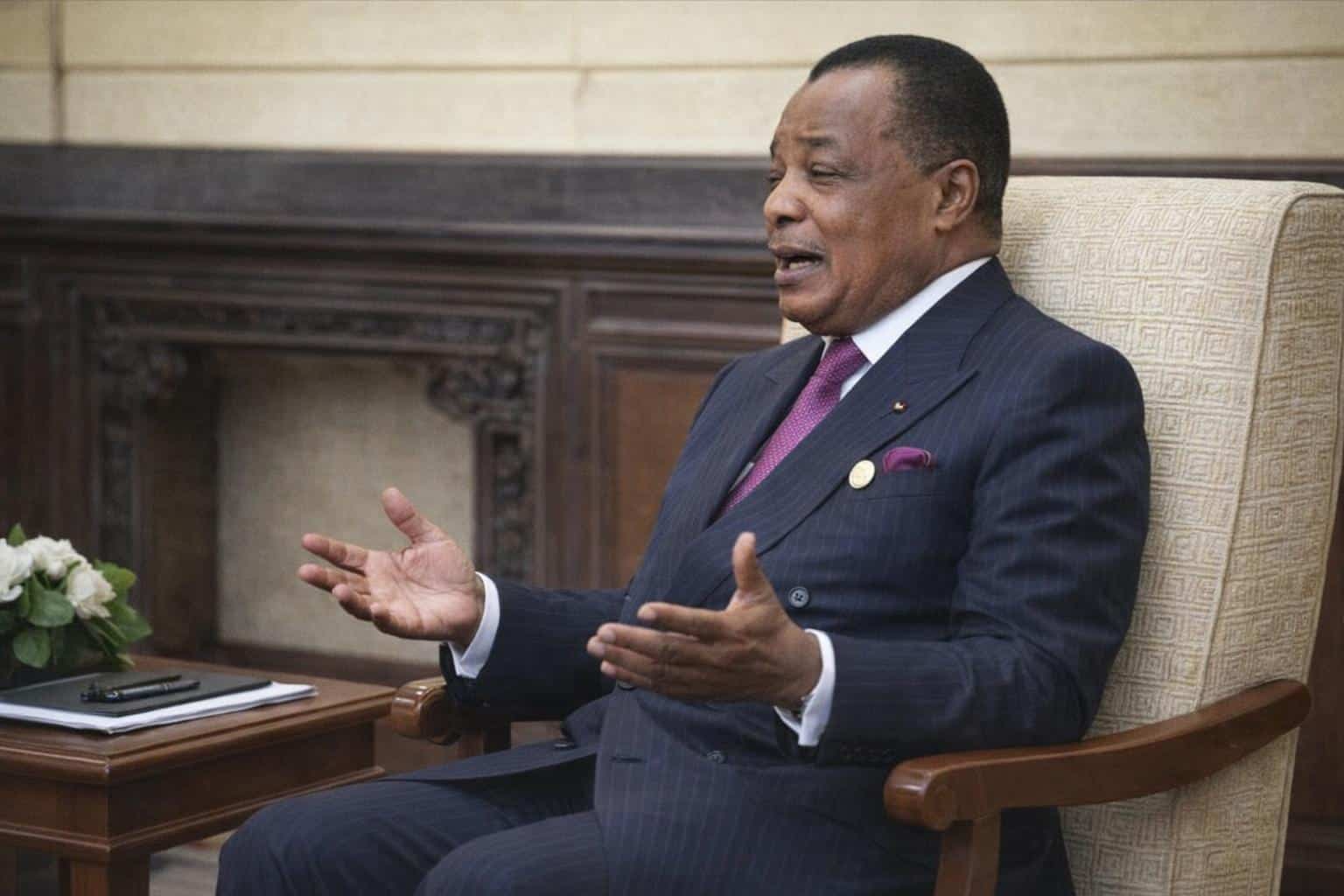
Congo presidential election 2026: youth at the center
With the presidential election expected in March 2026, political messaging in the Republic of Congo is intensifying, especially toward younger voters. In this context, Brice Itoua, a member of the Congolese Labour Party (PCT) Central Committee, has publicly appealed for strong youth participation.
Speaking in response to questions from this newsroom, Itoua presented the youth vote as decisive for the country’s direction. He argued that young Congolese should see the election as a moment to weigh responsibility, national cohesion and the practical impact of long-term public policies.
Brice Itoua’s message: stability, continuity, responsibility
Itoua urged young voters to place their trust in President Denis Sassou-Nguesso, framing that choice as a preference for continuity and stability. According to Itoua, the head of state’s experience matters in a period where citizens are asking for predictability and consistent governance.
“Young people must be aware of their electoral weight and their power of decision. Voting Denis Sassou-Nguesso means choosing experience, peace and a vision for a stable and prosperous Congo,” Itoua said, presenting his appeal as both political and civic.
Development priorities cited: education, jobs, entrepreneurship
In his argument, Itoua highlighted what he described as state efforts to expand education, support youth employment and encourage entrepreneurship. He also pointed to infrastructure as a visible marker of public action that, in his view, should be consolidated rather than disrupted.
The message was crafted for an audience that often measures politics through daily opportunities: access to training, pathways into work, and the possibility to launch small businesses. Itoua said these areas remain central to the country’s development trajectory.
A call against division and unrealistic promises
Itoua also warned against rhetoric he characterized as divisive, and against promises he described as unrealistic. Without naming specific actors, he urged young voters to scrutinize political claims and to prioritize national interest over slogans that may deepen polarization.
In his telling, a “thoughtful vote” is one that weighs what is already in place and what can realistically be strengthened. leaving space for debate while insisting that social peace should remain a guiding line during campaign season.
Denis Sassou-Nguesso portrayed as a central political figure
Itoua portrayed Denis Sassou-Nguesso as a major figure in Congolese political life, emphasizing the president’s long experience at the top of the state. He described that longevity as a form of institutional memory that can help manage both domestic priorities and external relationships.
In language typical of party mobilization, Itoua went further, calling the president a “blessing for Congo.” Even with such strong phrasing, he anchored his argument in themes that resonate broadly: stability, unity and a capacity to deliver public projects.
Infrastructure and public services: what supporters point to
According to Itoua, the country has made significant progress in strategic sectors under Sassou-Nguesso’s leadership. He cited investments in roads, energy, health and education as developments that have improved daily life and strengthened national cohesion.
Such claims reflect a familiar political divide: supporters underline visible projects and continuity, while critics often focus on unmet expectations. In his interview, Itoua stayed on the side of consolidation, arguing that large public investments require time and consistent follow-through.
Youth policies and training: building a future workforce
Itoua stressed that youth occupy a central place in the president’s stated vision for the country. He pointed to public policies oriented toward schooling, vocational training and socio-economic inclusion, which he said aim to prepare young Congolese for contemporary challenges.
He referenced the construction of schools, universities and training centers as evidence of that approach. For many families, these investments shape everyday decisions: where to study, whether to move, and how to plan a path from diploma to employment.
Peace and stability in a tense region: a key argument
Another major pillar of Itoua’s appeal was peace and stability. He argued that, in a region that sometimes experiences tensions and crises, Congo has preserved social calm, national unity and a sense of living together—conditions he said are essential for youth to innovate and take economic risks.
In political communication, stability is both a promise and a benchmark. Itoua presented it as a concrete advantage: a safer environment for training, entrepreneurship and long-term investment, including by the diaspora looking for reliable conditions at home.
Mobilizing young voters: civic engagement and turnout
Beyond endorsing a candidate, Itoua framed his intervention as a push for “massive and responsible” youth mobilization. He described civic engagement by young people as an essential lever for democracy and development, urging participation rather than apathy.
As parties prepare for March 2026, youth-focused messages are likely to multiply, with each camp competing to define what responsibility looks like. Itoua’s version rests on continuity with the incumbent and an appeal to protect cohesion while deepening development policies.
March 2026 election: a message meant to strengthen momentum
With only months separating voters from the ballot, Itoua’s remarks add to a broader pro-incumbent dynamic within the PCT and its supporters. He positioned Sassou-Nguesso as “the man for the moment” to continue what he called national construction.
Whether through speeches, interviews or local outreach, the coming period is expected to center on turnout, trust and credibility. For Itoua, the core pitch to youth is straightforward: choose experience, preserve peace, and build on existing development efforts.