
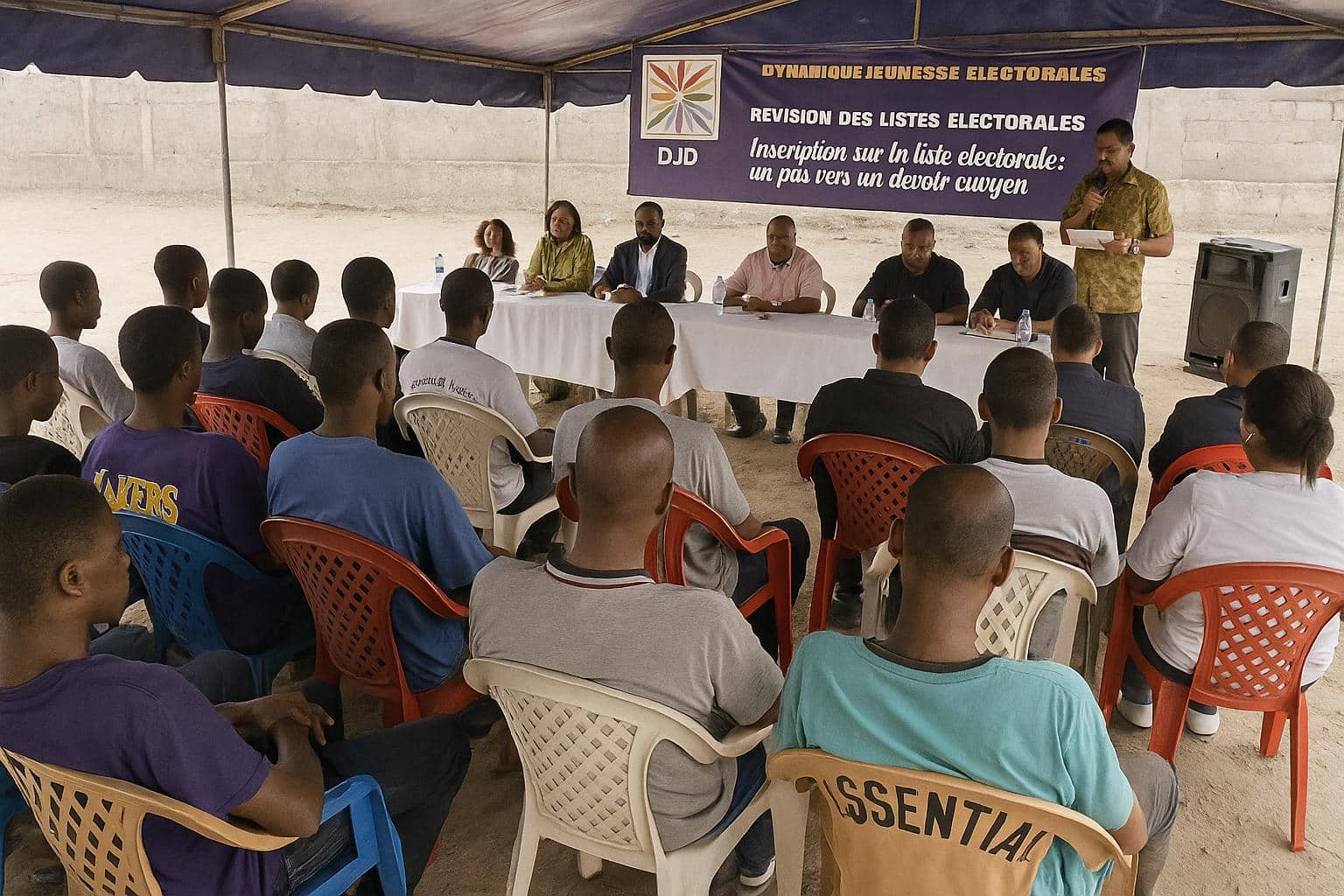
Nationwide voter list update under way
Across the Republic of Congo, registration centres opened their doors after a decree from the Ministry of Territorial Administration launched the statutory revision of electoral lists. The exercise, monitored by the Independent National Electoral Commission, aims to refine voter rolls ahead of the next cycle of municipal and legislative contests.
Why the youth vote matters
National statistics show nearly 60 percent of Congolese citizens are under 25. Electoral analysts argue that translating this demographic weight into ballot-box influence could recalibrate local governance priorities toward employment, digital infrastructure and culture. Officials stress that inclusive lists are the foundation of credible, peaceful elections.
Inside the Djiri mobilisation
In Brazzaville’s ninth arrondissement, Samarange Gordani Poukouo and the Dynamic Youth of Djiri have taken the census to heart. Volunteers wearing orange vests fan out each afternoon, reminding shopkeepers, moto-taxi riders and university students that a national identity card and five minutes are all they need to enrol.
Community leadership at the forefront
“We call on every young resident to register so their voices resonate in decisions shaping Congo’s future,” Poukouo told reporters, standing beside neighbourhood chiefs who have lent community halls for impromptu briefing sessions. The movement’s slogan—“From spectator to actor”—is echoed on hand-painted banners flapping above dusty streets.
From doorsteps to timelines
The campaign blends traditional outreach with digital flair. Short TikTok clips explain the process, while WhatsApp groups share maps to the nearest centre. According to organisers, one viral meme featuring a soccer ball entering a ballot box racked up 20,000 local views in two days, spurring fresh foot traffic.
Peer influence drives momentum
Field teams note that youths often arrive in clusters, urged on by classmates or church choir mates. “Signing up together makes it feel like a rite of passage,” said Léa Ngoma, a volunteer registrar. She adds that personal reminders counter lingering misconceptions that registration is time-consuming or reserved for older voters.
Official endorsement and resources
City authorities have facilitated extra registration kits for Djiri after turnout surpassed initial projections. A municipal communiqué praised the district’s energy and urged other arrondissements to replicate the model. Nationally, the government has supplied biometric tablets and solar chargers to reduce paperwork and speed uploads to the central database.
Civic education partners
Local NGOs, including Observatoire Congolais des Droits de l’Homme, provide legal hotlines for first-time voters with documentation issues. CENI trainers meanwhile host nightly radio spots clarifying deadlines and eligibility rules, reinforcing the administration’s message that registration is a non-partisan civic obligation shared by all generations.
Digital tools, practical hurdles
Despite progress, connectivity lapses occasionally slow data transfer from outer quarters. Technicians from the telecom regulator have installed temporary signal boosters, while registrars batch-upload files during off-peak hours. Observers say these logistical wrinkles are typical of large-scale civic operations and show signs of being addressed promptly.
Security and health measures
Registrations unfold under police patrols meant to deter petty crime, yet the atmosphere remains relaxed. Hand-washing stations and mask reminders persist, reflecting lessons learned during past health alerts. “We want safety to be a footnote, not a headline,” stated Lieutenant Jean Okemba during a site inspection.
Voices from the street
At the Lycée de la Réconciliation centre, 19-year-old economics student Clémence Moussavou emerged waving her laminated receipt. “I used to think politics was for elders, but my teachers said development begins with a vote,” she said. Nearby, market vendor Alain Mayitoua nodded, citing hopes for better drainage in rainy seasons.
Shared optimism among parents
Older residents applaud the surge. “Seeing my son register gives me confidence that future debates will include youth perspectives,” remarked Clarisse Biyombo, a retired nurse. She believes higher turnout will strengthen mandates of elected officials and reduce post-poll disputes that previously slowed community projects.
Observers see a constructive climate
Domestic monitors from Plateforme Citoyenne 2023 have toured nine centres without reporting major incidents. Spokesperson Éric Bissila described the mood as “committed and orderly,” adding that early engagement should lighten crowds during the final week. International partners welcomed the transparency, citing regular publication of daily figures.
Data snapshot so far
Unofficial tallies indicate Djiri registered more than 4,200 new voters in the first ten days, nearly half under 30. Citywide, the cumulative count exceeds 28,000. Analysts say maintaining current rhythm could push Brazzaville toward record participation levels, reinforcing its role as a barometer of national political sentiment.
Toward the next polls
The revision window closes next month, after which CENI will publish provisional rolls for public scrutiny. Contested entries can be corrected before lists are certified. Authorities emphasise that an updated database promotes efficient distribution of electoral materials and accurate allocation of parliamentary seats under the proportional system.
A template for civic engagement
Whether Djiri’s momentum ripples across the republic remains to be seen, yet the district’s example underscores the potency of youth-led organisation working in tandem with state structures. For many first-time registrants, the laminated receipt is more than paper; it is a ticket to shape Congo-Brazzaville’s democratic journey.