
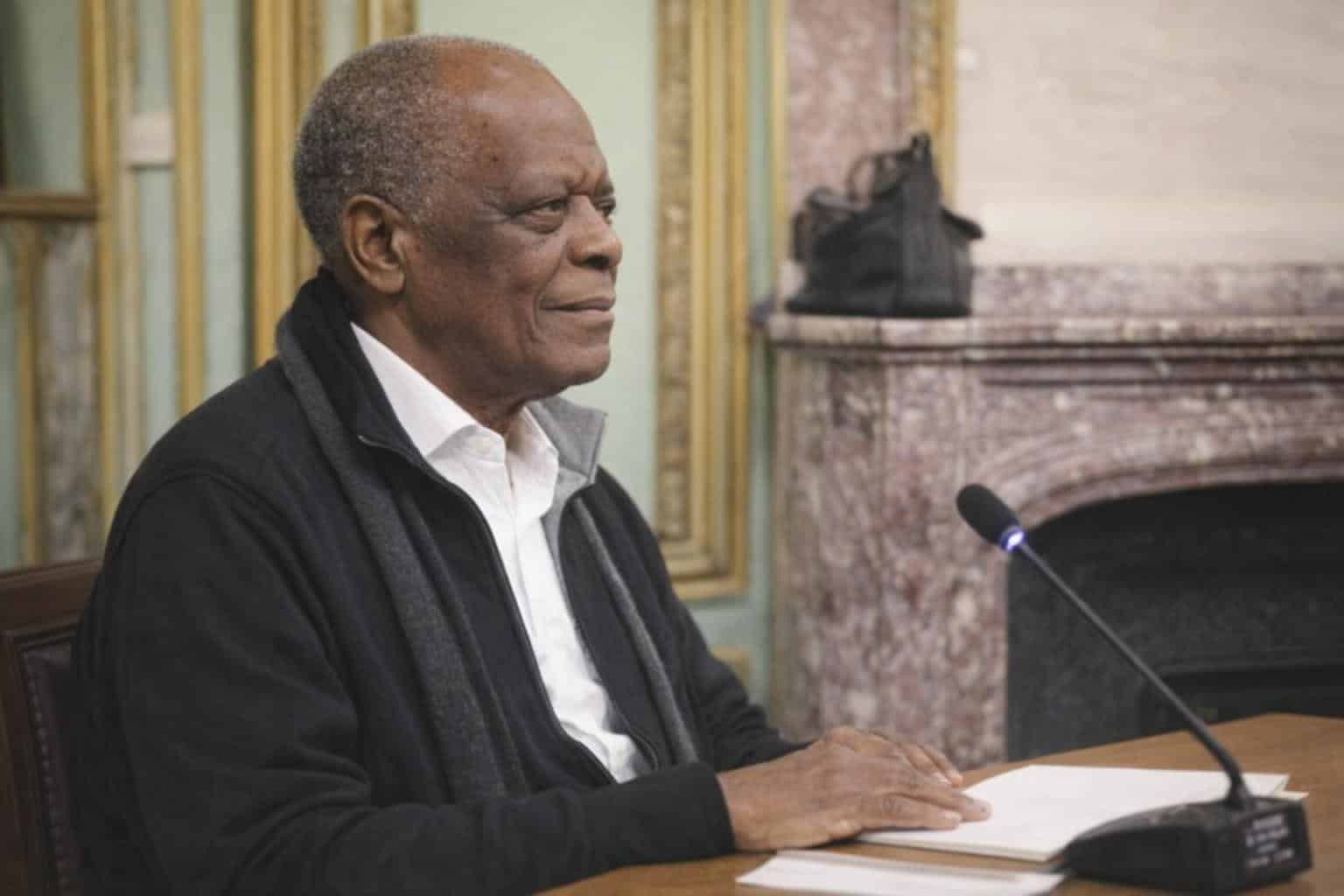
Paris launch spotlights Henri Djombo’s new novel
Congolese writer Henri Djombo met readers in Paris for the presentation and signing of his new novel, “Une semaine au Kinango”, in an event moderated by Rudy Malonga. The gathering brought together book lovers for an evening centered on literature and conversation.
The session took place on Saturday, January 17, in the Green Room of the Embassy of the Republic of Congo in Paris. The venue was filled, underlining the appetite for cultural events within the Congolese community in France.
Embassy hosts a packed cultural moment for the diaspora
Ambassador Rodolphe Adada welcomed participants and noted the strong attendance, a visible sign of cultural ties among Congolese living in France. His remarks framed the evening as more than a book launch, but also as a meeting point for a community.
Among those present were Pr André-Patient Bokiba, Eric Dibas-Franck, Driss Senda, Emmanuel Dongala, Sami Tchak, Patrice Yengo, Nicolas Martin-Granel, Jean-Aimé Dibakana, Marien Fauney Ngombé, Gabriel Kinsa, Inès Féviliyé, Russel Morley Moussala and Criss Niangouna, who delivered an excerpt from the book.
Simone Bernard-Dupré, responsible for the novel’s literary critique during the event, guided the audience through key choices of structure and meaning. Her reading positioned the text as both accessible and demanding, inviting attention to detail rather than quick consumption.
A one-week timeframe, and a close look at ordinary life
In her presentation, Simone Bernard-Dupré stressed that the novel is built around a short timeframe: one week. That compressed temporality, she said, encourages a careful reading of ordinary events, revealing deeper layers of social fragility, power relations and shared responsibilities.
She described Djombo’s approach as an intellectual commitment carried through fiction, where storytelling becomes a way to think, test ideas and question the forces that shape communities. The result, in her view, is a narrative that stays close to lived realities while opening wider perspectives.
Bernard-Dupré argued that Djombo once again blends literary writing with social analysis. She said the novel participates in contemporary debates about how African societies evolve, not through slogans but through scenes, characters and tensions that feel recognizable to many readers.
A literary mirror of African social tensions and hope
Drawing on her reading of Djombo’s earlier work, Bernard-Dupré highlighted the author’s ability to interrogate societies and consciences in a subtle mode. She pointed to a dense style anchored in African realities and the questions they raise, without losing the reader along the way.
From “Une semaine au Kinango”, she inferred a mirror held up to social realities, capturing tensions that can run through communities while also leaving room for hope. That hope, she suggested, persists despite setbacks, and gives the story its forward movement.
During her remarks, she recalled a line attributed to Shakespeare: “What a terrible era where idiots lead the blind.” In the room, the quotation worked less as a verdict than as an invitation to reflect on responsibility and the costs of collective blindness.
The magnan ants: a striking ecological and political allegory
The novel opens with an invasion of magnan ants. Bernard-Dupré noted that these ants exist in reality: predatory “warrior ants” found in the lush forests of Congo and the Amazon. Carnivorous, they kill and consume what lies in their path, spreading panic among humans.
In Djombo’s fictional Kinango, the magnan ants invade the country’s main prison, described as an establishment inherited from the colonial era. Terrified detainees rush toward the exit, and the prison is suddenly emptied of its 30,000 captives.
Faced with the phenomenon, the story turns to consultation and collective inquiry. Forces are called in from across Africa and the wider world, while members of secret and initiatory societies convene—mediums, marabouts, magicians, palm readers, sorcerers and miracle workers—to deliberate.
A warning about the environment and the price of disunity
The assembled initiatory societies reach a clear conclusion: people must stop altering the environment. The story links ecological imbalance to an existential risk, suggesting that the consequences of disruption could lead to the end of the human species.
Another conclusion is equally blunt in its social reading. Bernard-Dupré said the book highlights how a lack of understanding among the forces united against the ants allowed the ants to win the war, while humans, divided and overwhelmed, ultimately lost it for good.
Kinango’s rebuilding and an “optimism that fights”
Bernard-Dupré described the novel as a powerful allegory, a space for deeper reflection on the human condition and the trajectory of African countries. Yet she emphasized that the ending opens onto what she called an “optimism that fights,” rather than easy comfort.
In her account, Kinango begins to rebuild on new foundations: the fight against impunity, economic sovereignty and a pan-African dream of a united and prosperous Africa. “Kinango embodies the dynamic transformations of Africa and the world,” she concluded.
Questions, answers, and the lasting value of dialogue
During the question-and-answer session, Henri Djombo reiterated that Kinango is прежде everything a mirror of human societies. He spoke of tensions and misunderstandings, but also of the possibility—never guaranteed, always to be worked for—of dialogue and change.
As the event closed, Djombo stayed with the public for a signing session. For many attendees, the evening’s most memorable feature was its tone: attentive listening, the mix of generations and professions, and the sense that literature can still serve as a shared civic space.