
Congo Cabinet Session Delivers Two Landmark Decisions
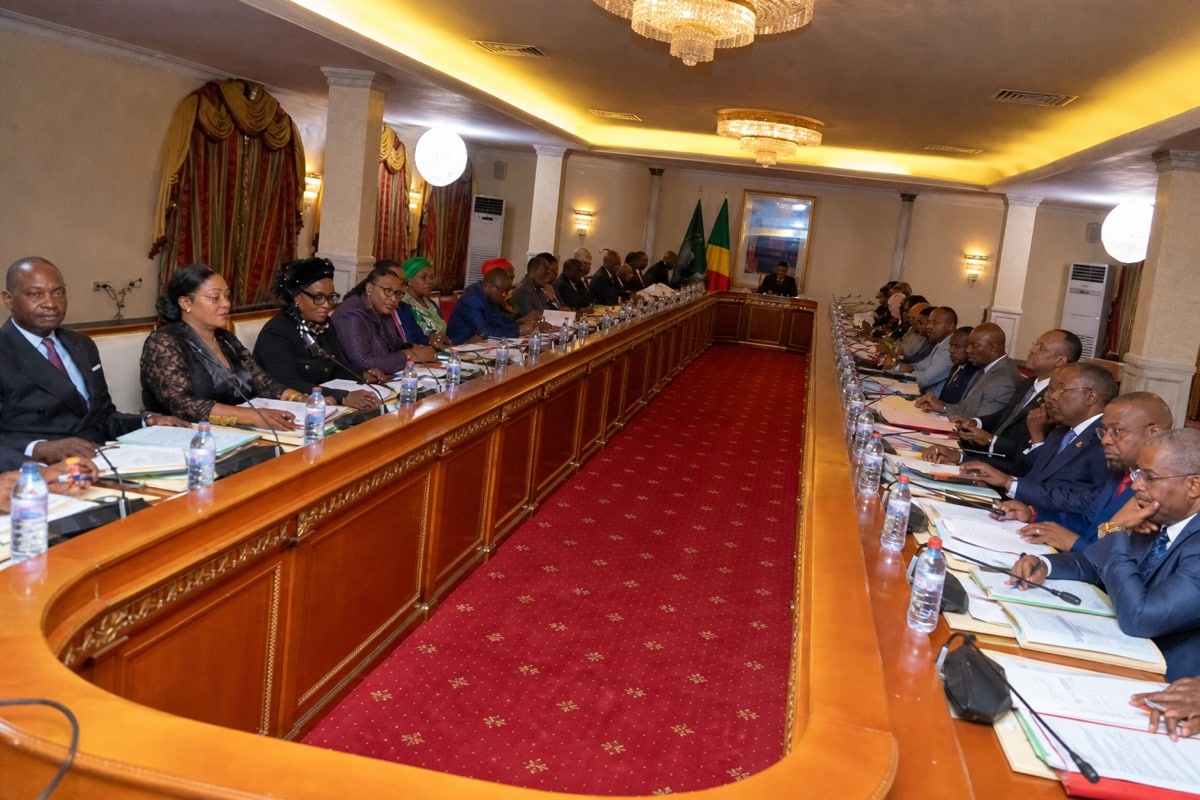
Congo-Brazzaville’s Council of Ministers, meeting on June 18, 2026 at the Palais du Peuple under the chairmanship of President Denis Sassou N’Guesso, produced a session that stretched from mid-morning to early afternoon and covered a range of legislative and policy matters.
Among the decisions taken, two stood out for their scale and their potential long-term impact: a major mining permit for a foreign fertilizer giant and a decision to open the country’s borders to African travelers without a visa requirement.
Dangote Fertilizer Secures Potash Mining Rights
The cabinet granted an exploitation permit for potash salts to Dangote Fertilizer Limited Congo, a subsidiary of the Nigerian industrial conglomerate led by Aliko Dangote. The permit covers a project valued at three billion US dollars and is projected to generate 800 direct jobs once operational.
Potash is a critical input for agricultural fertilizers, and Congo-Brazzaville holds reserves that have attracted international attention. The Dangote concession would make the country a significant participant in a global supply chain that has experienced considerable price volatility in recent years.
Visa-Free Africa: A 2027 Deadline
The second headline decision came during a segment on communications, which included a presentation on the annual assemblies of the African Development Bank. In that context, the government announced that visa requirements for citizens of African countries will be abolished as of January 1, 2027.
The move aligns Congo-Brazzaville with a broader continental push toward greater intra-African mobility, a goal long championed under the African Union’s Agenda 2063 framework.
Urban Sanitation Gets a Policy Framework
On the domestic governance side, the council adopted a national urban sanitation policy covering the period 2026 to 2035. The document commits the government to ensuring “sustainable, inclusive, universal and equitable access to sanitation services” across the country.
Sanitation infrastructure in Congolese cities, and particularly in peripheral neighborhoods of Brazzaville and Pointe-Noire, has been a persistent development challenge. The policy framework is intended to provide a structured approach to closing those gaps over the next decade.
University Reform and New Appointments
The session also dealt with higher education. Delegates adopted new statutes for the University of Loango and modified the retirement conditions applicable to staff at the Marien-Ngouabi University, the country’s main public university based in Brazzaville.
Several senior appointments were also confirmed, including new directors-general in the fields of scientific research and hydrocarbons, signaling continued attention to the administrative infrastructure of the energy sector.
A Full Cabinet Agenda
Taken together, the June 18 session reflected an administration managing multiple policy tracks simultaneously — from large-scale foreign investment in extractive industries to continental integration commitments and domestic university governance.
Whether the Dangote permit signals a new phase of mineral sector development, and whether the 2027 visa-free commitment is implemented on schedule, will be among the indicators to watch in the months ahead.