
Brazzaville has chartered three special flights to bring home Congolese nationals stranded in South Africa, where a fresh wave of xenophobic attacks has unsettled several foreign communities and pushed African governments toward emergency protection measures.
A Government Response to a Deteriorating Security Climate
The Congolese government has launched a voluntary repatriation operation for its citizens living in South Africa. Officials framed the move as a direct response to a worsening security situation affecting many Congolese nationals now described as being in distress.
The decision reflects a stated determination by Brazzaville to safeguard the safety and dignity of its citizens. Authorities cast the operation less as a routine consular service than as an urgent duty toward compatriots caught in an increasingly hostile environment abroad.
Three Special Flights From Cape Town and Johannesburg
Three special flights will be chartered between June 22 and June 24, departing from Cape Town and Johannesburg. The arrangement forms part of an emergency mechanism coordinated by Congolese authorities through their diplomatic missions on South African soil.
Nationals wishing to take part are asked to register with consular services beforehand. That registration requirement allows officials to organize the airlift, confirm eligibility, and prioritize those most exposed to the unrest unfolding across several South African localities.
The logistics underscore the scale of the concern in Brazzaville. Mobilizing dedicated aircraft from two major South African hubs signals that the authorities expect meaningful demand from a community judged vulnerable enough to warrant a structured, time-bound evacuation effort.
Xenophobic Violence Targeting Foreign Communities
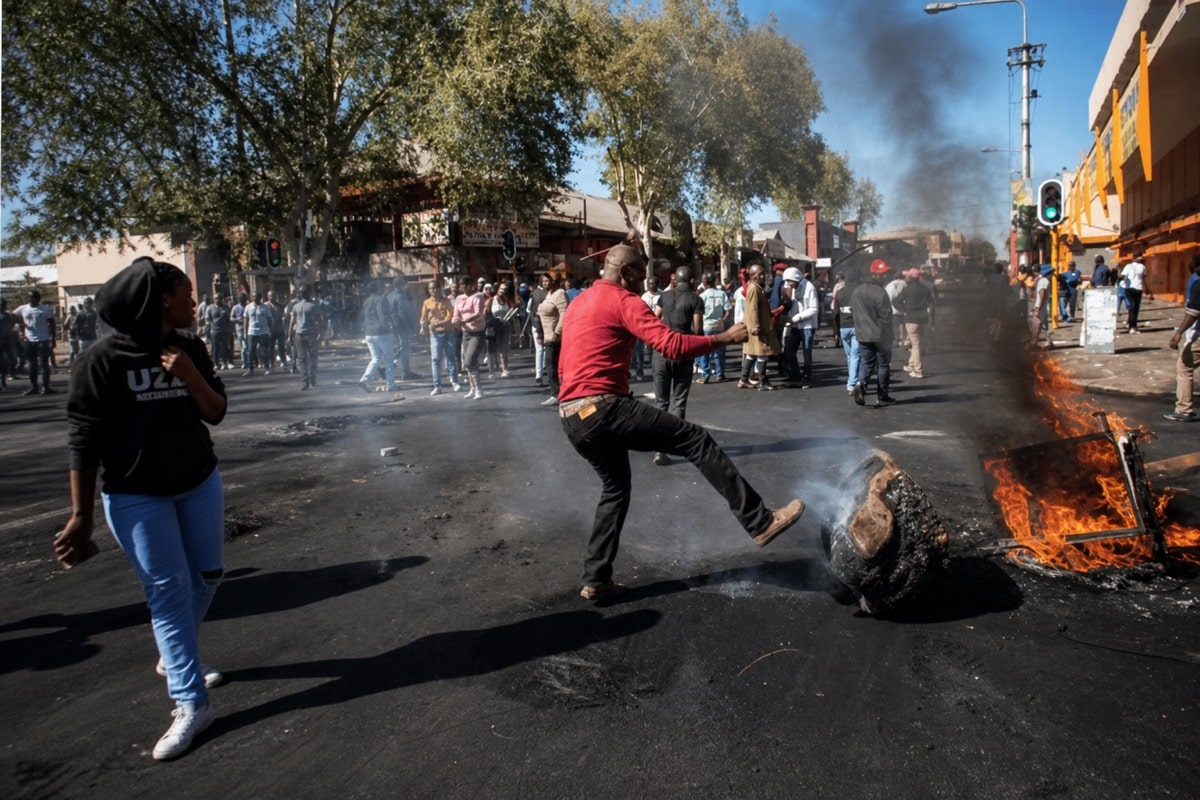
The operation comes against a backdrop of intensifying xenophobic aggression aimed at several foreign communities settled in South Africa. For several weeks, acts of violence, intimidation, and forced displacement have been reported in a number of areas, according to the Congolese account (Journal de Brazza).
Such episodes have a long and painful history in South Africa, where economic strain has repeatedly translated into hostility toward migrants. The current surge fits a familiar and troubling pattern, even as each new wave carries its own immediate human cost for those caught in it.
For Congolese families, the consequences are concrete. Displacement, fear, and the loss of livelihoods leave many weighing whether to remain in a country they once chose for opportunity, or to accept a return home under conditions none of them anticipated.
A Wider African Reaction
Brazzaville is not acting in isolation. The reported violence has pushed several African countries to put in place protection measures and voluntary return schemes for their own nationals, signaling a continental dimension to a crisis that began as a local security problem.
That collective response illustrates how quickly internal tensions in one country can ripple across borders. When foreign communities feel threatened, the governments behind them face pressure to act, transforming a domestic South African issue into a matter of regional diplomacy and consular coordination.
For policymakers across the Central African subregion, the episode is a reminder of the exposure that growing diasporas can create. Citizens abroad represent economic lifelines and reputational stakes alike, and their security can rapidly become a test of a state’s reach.
Brazzaville’s Appeal for Calm
Alongside the airlift, the government has issued an appeal for calm. It is encouraging Congolese established in South Africa to stay in contact with diplomatic services for any assistance they may require, keeping open a channel for those who do not board the chartered flights.
That dual message, urgent action paired with measured reassurance, is characteristic of consular crisis management. The aim is to extract those in immediate danger while discouraging panic among a wider community that may yet remain, at least for now, where it is.
How many Congolese will ultimately register and depart remains unclear from the official communication. The three-day window suggests a deliberately compact operation, designed to move quickly while the security picture, by the government’s own description, continues to evolve.
A Test of Diplomatic Readiness
For Brazzaville, the repatriation is also a measure of its capacity to protect citizens far beyond its borders. Coordinating flights, consular registration, and reassurance under pressure demands an administrative agility that emergencies rarely afford the time to build from scratch.
The coming days will show how smoothly the operation unfolds and how many compatriots it reaches. What is already evident is that the safety of Congolese abroad has, at least briefly, become a defining concern at the center of the country’s foreign engagement.