
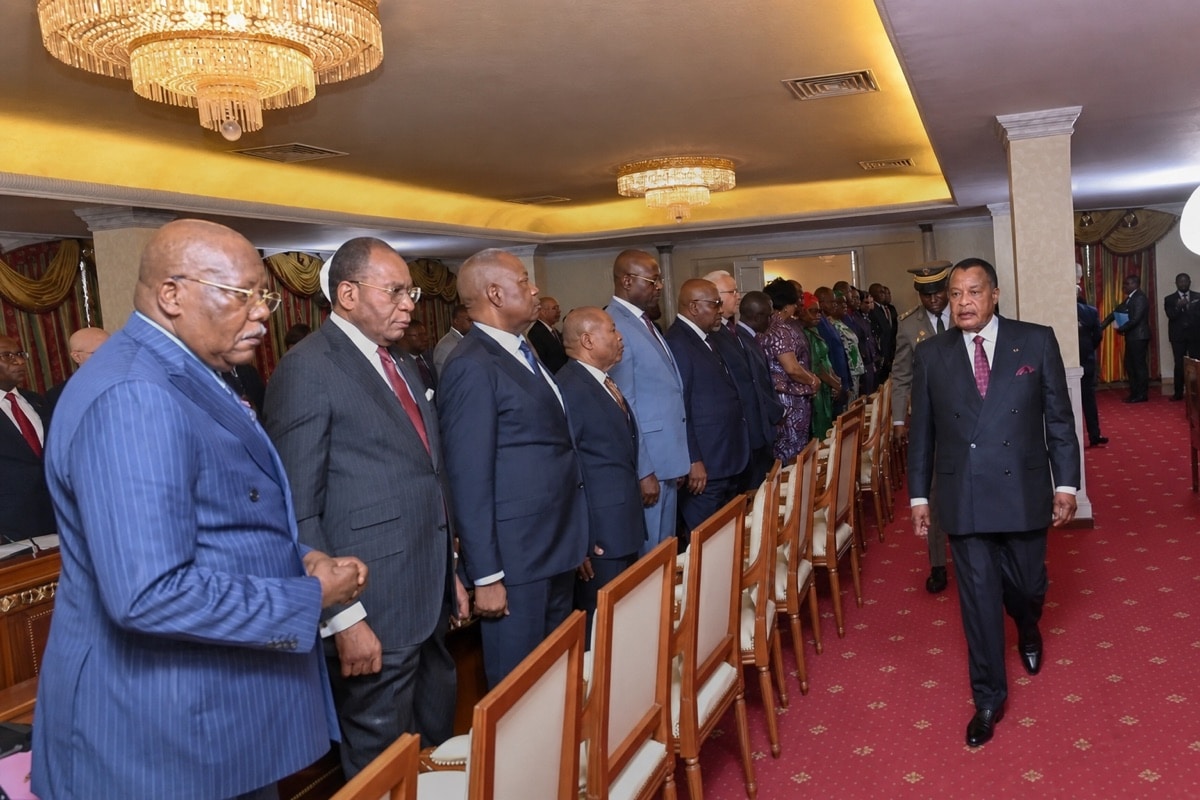
Two Congos, One Security Agenda
The vice-Prime Minister and Minister of National Defense of the Democratic Republic of Congo, Guy Kabombo Muadiamvita, arrived in Brazzaville on February 9, 2026 for a working visit aimed at consolidating security ties between the two neighboring nations that share the Congo River as a common border.
The visit was framed around what officials described as an effort to “consolidate military partnerships between the two Congos” — a formulation that underscores both the closeness and the complexity of a relationship between two countries bearing near-identical names but governed by distinct political realities.
Strategic Dialogue at the Heart of the Visit
The DRC defense minister held talks with his counterpart from Congo-Brazzaville, General Charles Richard Mondjo. The discussions centered on operational coordination, institutional capacity building, and the sharing of strategic expertise at a moment when the security situation in eastern DRC continues to affect regional stability.
Several sessions brought together ministerial delegations and sector-level experts, covering a range of pressing concerns that have long animated bilateral exchanges on defense and security matters.
Cross-Border Threats Drive the Agenda
Both governments acknowledged the importance of coordinating their responses to shared transboundary threats. The two states, separated by the Congo River, face security challenges that do not respect geographic boundaries and can spill from one side to the other with little warning.
This mutual recognition of vulnerability has increasingly pushed Brazzaville and Kinshasa toward structured bilateral cooperation frameworks, rather than ad hoc responses to crises that emerge without warning in the sub-region.
A Relationship Forged by Geography and History
Congo-Brazzaville and the DRC share more than a river. Their capitals, Brazzaville and Kinshasa, face each other across the water — one of the few pairs of national capitals in the world separated only by a body of water. That proximity has historically made dialogue both urgent and complicated.
The Kabombo Muadiamvita visit builds on a tradition of periodic high-level exchanges on defense matters, even as broader diplomatic relations between the two countries have sometimes been tested by migration disputes and differing postures toward armed groups operating in the region.
Institutional Capacity as a Long-Term Investment
Beyond the immediate security concerns, both delegations discussed longer-term investments in institutional resilience. The idea of learning from each other’s organizational experiences — in military training, in command structures, in inter-ministerial coordination — was presented as part of a broader vision of sustainable regional security architecture.
Officials stopped short of announcing specific joint operations or new treaty commitments, but the tone of the meetings suggested a renewed appetite on both sides for structured engagement.
Eyes on the Eastern Front
The timing of the visit was not incidental. The security situation in eastern DRC has remained fragile, with armed groups continuing to operate across a vast territory that neither Kinshasa nor its regional partners have been able to fully stabilize despite successive international initiatives.
Congo-Brazzaville, while not directly affected by the eastern DRC conflict, has a stake in regional stability — both as a neighbor and as a member of broader Central African diplomatic frameworks that are regularly called upon to address the crisis.
A Signal to the Sub-Region
Senior analysts watching the visit noted that its political significance extends beyond bilateral ties. At a moment when multilateral efforts to stabilize the Great Lakes region have produced mixed results, direct state-to-state engagement between two Congos carries symbolic weight.
The Brazzaville meetings send a message that cooperative security frameworks can be built from the ground up, neighbor by neighbor, even in the absence of grand regional settlements.