
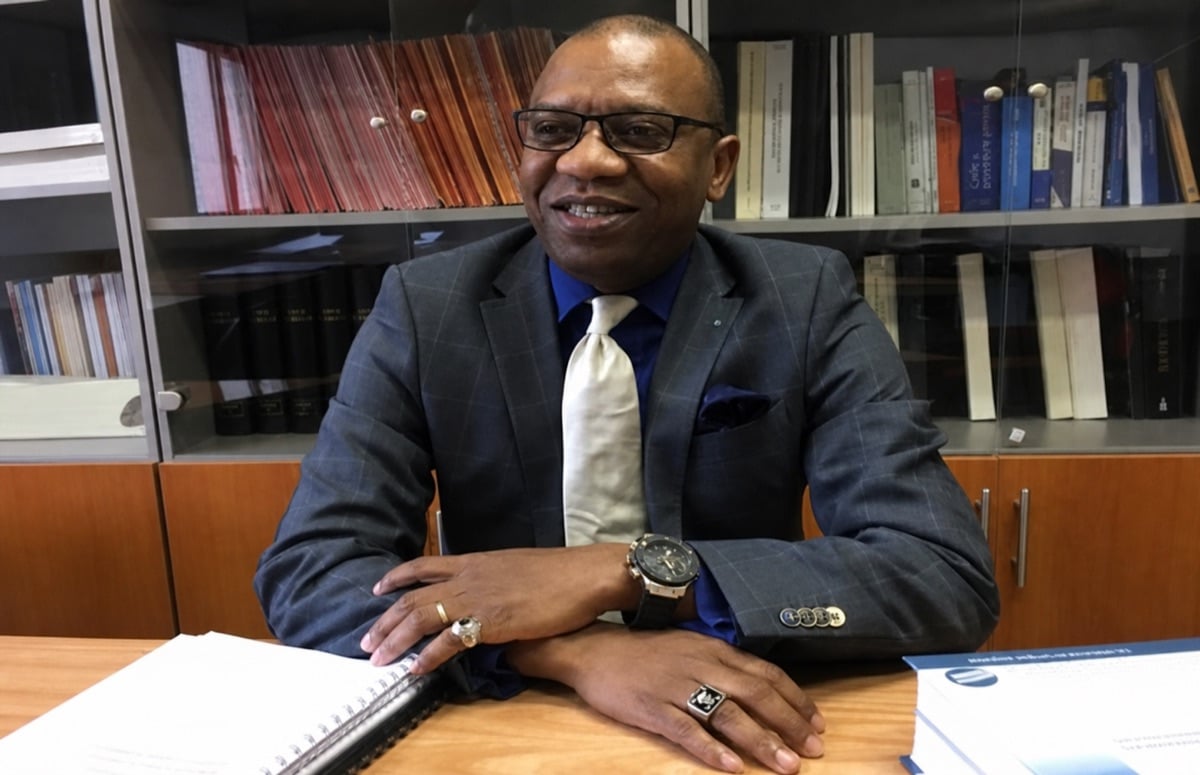
The announcement of Denis Sassou N’Guesso’s candidacy on February 5 triggered a swift rally of support from across the Congolese political spectrum. Among the first to declare formally was the Union pour la refondation républicaine, a centrist party whose president, Roger Ndokolo, stepped before cameras to endorse the incumbent head of state.
A Centrist Party Joins the Presidential Coalition
Ndokolo framed his endorsement in terms of national continuity. “Seeing Denis Sassou N’Guesso seek a new mandate at the highest office of the Republic of Congo, with the authority of the state, aligns with the logic of preserving, under all circumstances, social peace, national cohesion, and the institutional stability of our country,” he said at a press briefing.
He urged Unirr members and sympathizers to align with the coalition of presidential majority parties that was already coalescing around the incumbent.
A Mandate Envisioned as Generational Transition
Looking ahead to the 2026–2031 presidential term, Ndokolo expressed hope that it would be marked by the beginning of a generational transmission of leadership. His vision centred on Congo-Brazzaville emerging as a united, solidary, and prosperous nation — a formulation that echoed the aspirations of many urban professionals and young graduates watching the political scene closely.
He described the country as an island of stability in Central Africa, referencing the theme of the Grand Agricultural Fair of Congo — progress through land, unity through labour — as an embodiment of the direction he hoped the new mandate would follow.
Agriculture as a Pillar of Sovereignty
Ndokolo’s remarks extended beyond electoral politics to touch on economic sovereignty. He welcomed Sassou N’Guesso’s commitment to agricultural development as a pathway for Congolese citizens to achieve genuine autonomy — in his words, to “be free, because they will consume what they produce.”
This agricultural dimension resonated with entrepreneurs and investors tracking diversification efforts in an economy historically dependent on oil revenues.
A Rallying Call Ahead of the March 15 Vote
The Unirr president concluded his statement with clarity: “Denis Sassou N’Guesso is our sole candidate for the March 15, 2026 presidential election.” The declaration added another bloc to the majority coalition at a moment when parties across the ideological centre were staking out their positions ahead of the vote.
He predicted that the momentum around the president’s re-election bid would grow in strength over the coming years, pledging to accompany the movement.
Political Dynamics in a Competitive Electoral Calendar
The endorsement came less than two weeks after Sassou N’Guesso’s formal declaration of candidacy, illustrating the speed with which the presidential majority sought to consolidate its base. For the Unirr, a party positioned at the centre of the Congolese political landscape, the move was a calculated alignment with institutional stability rather than a departure from its profile as an independent actor.
Observers noted that the language of Ndokolo’s statement — stressing peace, cohesion, and generational renewal — was carefully calibrated to appeal to a broad coalition: cadres, public decision-makers, and younger voters alike, constituencies that brazzavilleinsider.com has consistently tracked ahead of the election.
What Comes Next
With Sassou N’Guesso’s campaign machinery now drawing in parties from across the majority spectrum, attention shifts to the opposition’s capacity to organize a credible counter-offer before March 15. The Unirr endorsement adds institutional weight to an incumbent who had already secured the backing of leading majority blocs, narrowing the political space available to challengers.
The full alignment of the presidential coalition now in place, the campaign enters its substantive phase, where economic promises, agricultural policy, and generational narratives are expected to dominate the public debate.