
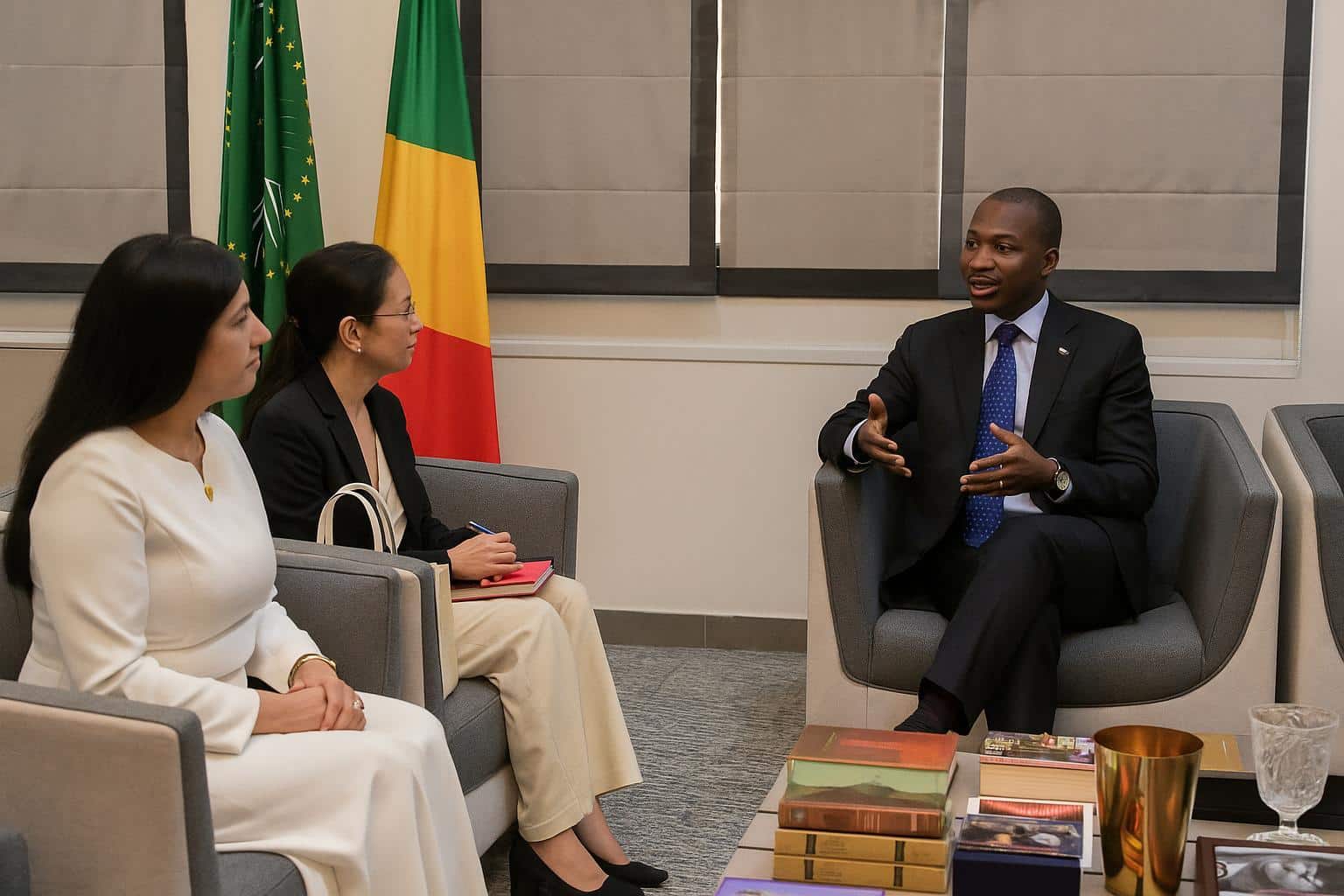
Historic Brazzaville-Havana Ties Enter New Phase
In a meeting at the ministry in Brazzaville, Minister of Cooperation and Public-Private Partnership Denis Christel Sassou Nguesso told Cuba’s envoy Indira Napoles Coello that Congo will keep the sixty-year bilateral bond “dynamic and useful for our citizens,” according to his post on X.
The minister highlighted that Havana’s unwavering dispatch of physicians, professors and scholarships has allowed Congo’s hospitals and universities to weather recurrent shortages of personnel and equipment, a partnership he said “sets a standard of solidarity in the Global South”.
Cuban assistance to Congo started in the early 1960s, soon after both nations gained independence. Over the decades the cooperation has survived ideological shifts and economic headwinds, building a reputation of reliability that regional observers, such as CEMAC analyst Rodrigue Okouala, describe as “rarely matched in Central Africa”.
Medical Training Pipeline Shows Early Returns
Since 2013, Brazzaville has sent more than 700 medical students to Cuban faculties through bursaries. The first cohort of 431 graduates returned in mid-2020 amid the pandemic and is currently completing immersion internships in hospitals across twelve departments.
Hospital directors in Pointe-Noire, Dolisie and Ouesso report that the young physicians are improving patient throughput and introducing protocols learned in Havana, including preventive care. Dr. Clarisse Makaya of Loandjili General Hospital says the trainees “bring a sense of discipline and evidence-based practice into our wards”.
Cuban Doctors Bolster Provincial Hospitals
Equally visible is the Cuban medical brigade stationed in Congo. Roughly 250 specialists, from cardiologists to epidemiologists, rotate every two years between regional facilities. Their presence, the health ministry notes, has lowered referral times for complex cases and offered mentoring that reduces costly evacuations abroad.
During last week’s audience, Minister Sassou Nguesso and Ambassador Napoles Coello reviewed avenues to refresh the legal architecture of the cooperation. Draft memoranda cover telemedicine services, co-production of generic drugs, and joint research on tropical diseases such as malaria and sickle-cell anaemia, officials familiar with the talks disclosed.
Although no date is set, capitals hope to sign the updated agreement during the Cuba-Africa Business Forum in Havana, a move that could unlock concessional financing from Banco Nacional de Cuba and multilateral facilities keen to back South-South ventures.
Education and Innovation Beyond Medicine
Education is the second cornerstone. Beyond medicine, Cuban lecturers continue to assist Marien-Ngouabi University in physics, mathematics and Spanish. According to the university’s rector, Professor Martial Odende, the programme has helped stabilise departments that once struggled to keep laboratory courses running amid budgetary constraints.
Students interviewed outside the science faculty say Cuban teaching emphasises rigour and practical experiments over rote learning. “They make us build devices from recycled parts, which proves you do not need expensive gear to understand electromagnetism,” smiles second-year undergraduate Prisca Mavouemba.
For Congo, the partnership dovetails with the government’s 2022-2026 National Development Plan, which lists human capital and health coverage as top priorities. Economist Etienne Mbemba argues that using external expertise to train local professionals is “more sustainable than importing expatriates indefinitely”.
The model also aligns with President Denis Sassou Nguesso’s push for diversified diplomacy that balances historic ties with France, emerging investments from China and deeper collaboration within Latin America. Analysts note that Cuba, though under sanctions, offers technical know-how without geopolitical conditionalities.
A Win–Win Model of South–South Cooperation
Havana gains as well. The medical brigades, a hallmark of Cuban foreign policy since the 1960s, generate valuable foreign exchange and political goodwill. Fees paid by host governments help fund Cuba’s universal health system, while returning doctors share African field experience with colleagues back home.
Challenges remain. Language barriers occasionally slow clinical handovers, and logistical gaps can delay the arrival of Cuban-supplied equipment. Nevertheless, the Ministry of Health says a joint monitoring committee established in 2021 has halved procurement lags and expanded interpretation services in regional referral centres.
Civil society groups such as the Congolese Patients League advocate for greater transparency in posting newly graduated doctors to underserved districts. Minister Sassou Nguesso told reporters that placement criteria are being reviewed to mirror demographic needs, adding that “equity will guide future deployments”.
Looking ahead, officials are considering a public-private hospital in Oyo run under Cuban management, similar to models operating in Qatar and Algeria. The project, still in feasibility assessment, would specialise in oncology and advanced imaging, potentially reducing outbound medical tourism that costs Congo an estimated 40 million dollars annually.
As the two nations prepare to mark sixty-two years of diplomatic relations, the mood in Brazzaville is cautiously upbeat. “Congo and Cuba prove that solidarity is not a slogan but a practical tool,” Ambassador Napoles Coello said after the meeting. Few policymakers here would disagree.