
A Coalition Sharpens Its Tools
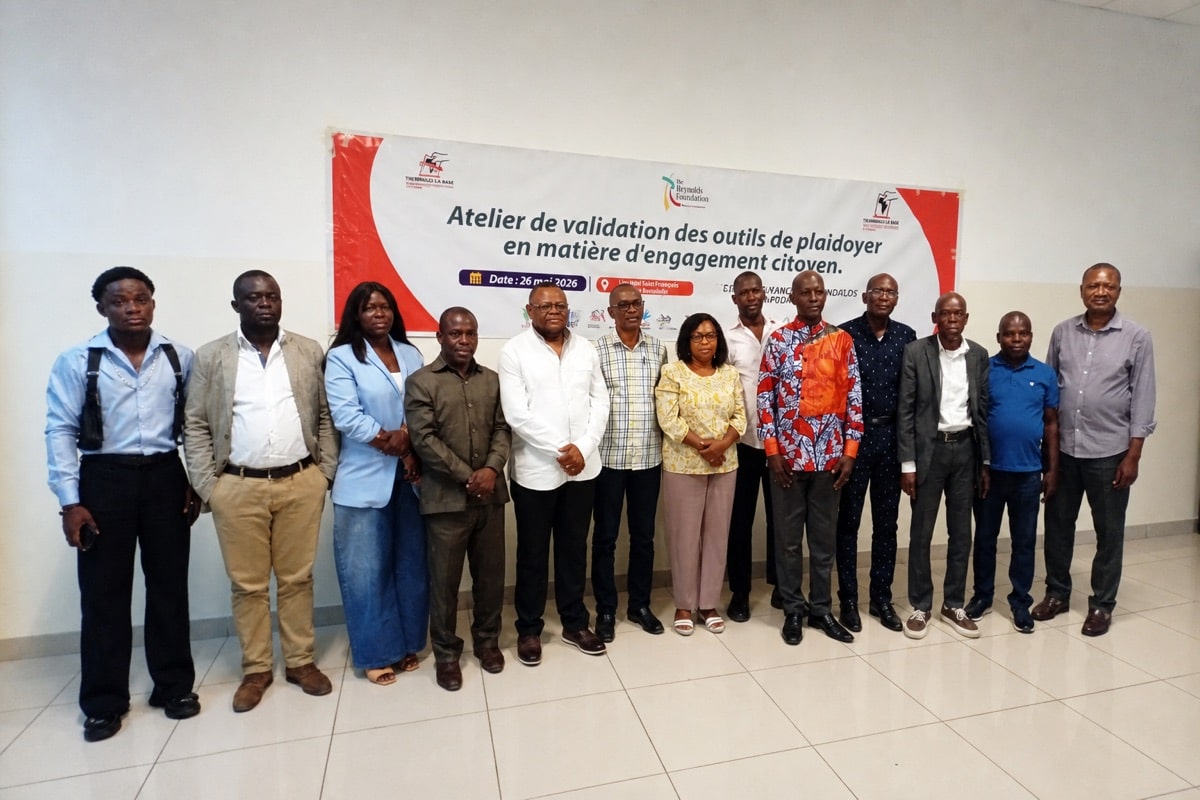
With legislative elections in the Republic of Congo scheduled for July 2027, the Coalition Tournons la page Congo convened a workshop on May 26, 2026, in Brazzaville to validate a set of new advocacy instruments. The session, led by coalition coordinator Christian Mounzeo, brought together members from approximately a dozen civil society organizations united under the coalition’s banner.
The timing was deliberate. A year before a national vote that will determine the composition of the National Assembly, the coalition is positioning itself to track government commitments, apply pressure on institutions, and engage a public it describes as operating under increasing constraint.
The “Tosa Obika” Report
The centerpiece of the May 26 workshop was a report titled “Tosa obika” — a phrase translating roughly as “the survival at the price of silence.” Produced with the support of the Reynolds Foundation, the report examines conditions surrounding public freedoms in the 2025-2026 period, with particular attention to the rights of assembly, association, and expression.
The document describes a pattern of restrictions on public demonstrations and growing difficulty for civil society actors to operate without interference. It maps the landscape facing organizations that seek to organize, speak publicly, or challenge official positions in Congo-Brazzaville.
Mounzeo framed the pre-electoral period in stark terms. “The pre-electoral period has been particularly anxiety-inducing for civil society and for public opinion,” he said. He added that the coalition had documented serious human rights violations, including what he described as summary executions and property destruction carried out during a government operation targeting banditry.
What the Coalition Is Asking For
Beyond diagnosis, the coalition outlined a set of priorities for the coming months. Among the most prominent is a call for the adoption of a law protecting human rights defenders. Such legislation, standard in a number of countries in the region, would provide explicit legal cover for individuals and organizations engaged in monitoring state conduct and advocating for civil liberties.
The coalition also intends to follow up on recommendations already addressed to national authorities, parliament, media institutions, and international partners. That follow-up mechanism is one of the new advocacy tools validated at the workshop — a structured approach to accountability that the coalition says has been lacking.
Civil Society Under Pressure
The broader context the “Tosa obika” report addresses is one of narrowing space for independent civic action. The language Mounzeo used — anxiety, silence, violations — points to an environment that the coalition believes has worsened during the period bracketed by the 2025-2026 review.
That assessment, if accurate, carries implications for the 2027 elections. Legislative contests in the Republic of Congo unfold in an institutional environment shaped significantly by the relationship between the executive, the security apparatus, and independent civic voices. The coalition’s argument is that the conditions for a credible vote in 2027 need to be addressed now, while there is still time to build the pressure necessary to produce change.
Reynolds Foundation Support
The involvement of the Reynolds Foundation in producing the “Tosa obika” report reflects a pattern common in advocacy work across francophone Africa, where international partners provide research capacity, funding, and credibility to civil society organizations operating under difficult conditions.
The coalition’s ability to present a documented, structured report rather than a set of unsubstantiated allegations is partly a product of that support. Whether the report gains traction with domestic institutions or international partners remains to be seen.
Eyes on 2027
The Tournons la page Congo coalition emerged in a regional context of sustained civic pressure on governments perceived as insufficiently accountable. Its Congo-Brazzaville chapter is one of several national affiliates operating across sub-Saharan Africa under the broader Tournons la page movement.
As July 2027 approaches, the coalition’s ability to translate its new tools into measurable influence — whether through policy changes, candidate commitments, or shifts in how authorities manage public freedoms — will be the real measure of the May 26 workshop’s value.