
Brazzaville stakes in regional trade
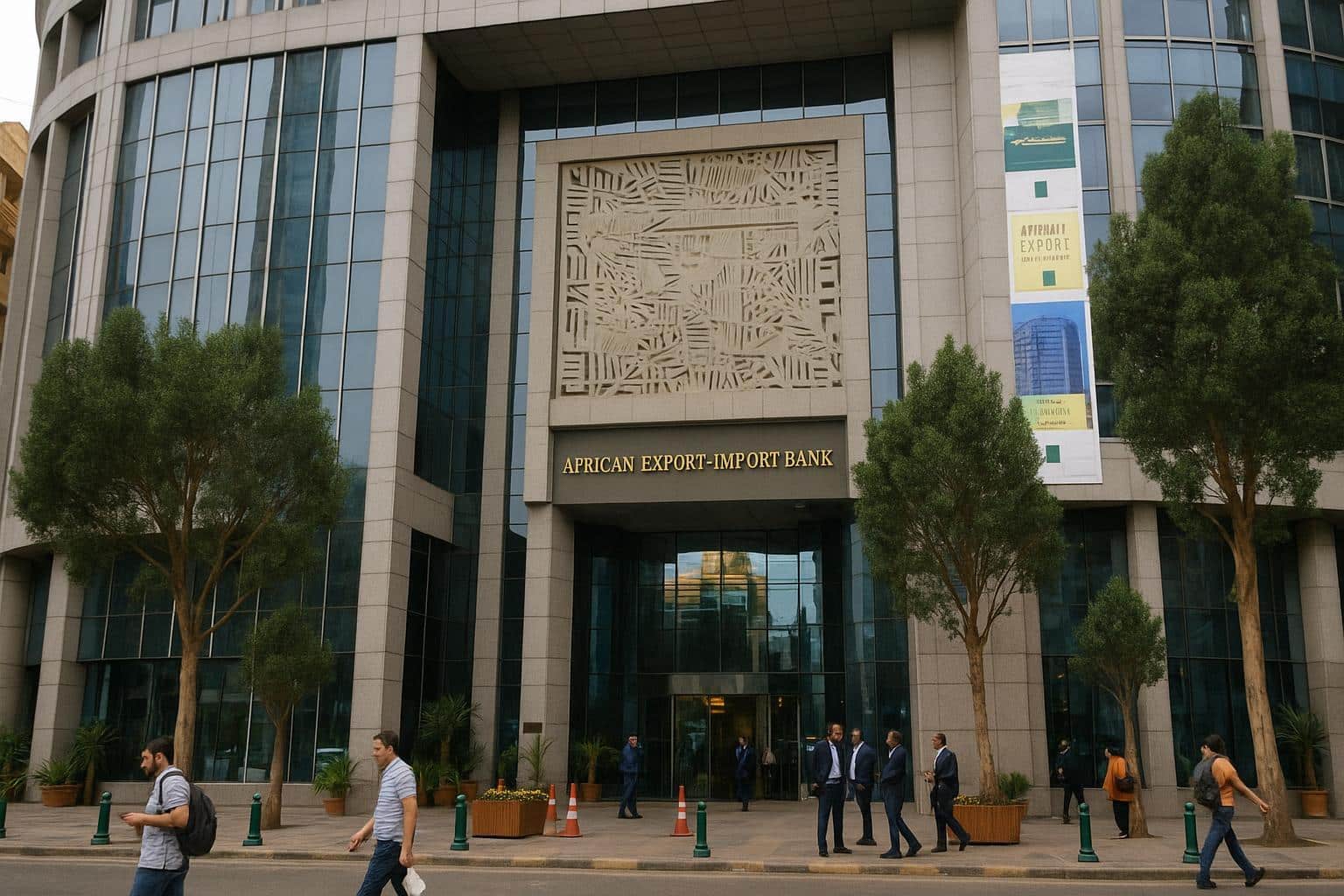
Brazzaville—In a move seen by traders as a potential turning point for Central Africa’s logistics bottlenecks, the African Export-Import Bank has appointed Business Facilities Corporation Group as the exclusive local agent of its digital Africa Trade Gateway across the six-nation CEMAC bloc.
Digital leap to ease CEMAC trade costs
Announced on 25 November 2025, the open-ended mandate places the Congolese-rooted project developer at the centre of a platform that promises streamlined customs, transparent payments and real-time cargo tracking—persistent pain points that currently inflate regional logistics bills and erode the competitiveness of smaller exporters.
Laurice Serge Eteki, a Cameroonian innovation analyst, believes the partnership could unlock an “interconnected and competitive business community capable of lifting intra-African trade well beyond today’s 15 percent share of continental commerce”, provided local firms adopt the technology at scale and border agencies follow suit.
Importers in Congo and neighbours often cite multiple checkpoints, paper-based manifests and inconsistent valuation rules as reasons trucks crawl between Douala, Brazzaville, Libreville and Bangui. By routing transactions through a single digital window, ATG aims to shave days off clearance times and reduce informal fees.
Inside the Africa Trade Gateway toolbox
Rolled out by Afreximbank in 2023, the Gateway bundles six services on one login: cross-border payment settlement, regulatory compliance checks, end-to-end shipment visibility, a business-to-business marketplace, a secure networking layer and direct access to the Bank’s tailored financing instruments.
Crucially, the platform integrates with the Pan-African Payment and Settlement System, allowing a Brazzaville-based buyer to pay a supplier in Malabo in local currency while Afreximbank handles hard-currency clearing in the background, shielding small firms from exchange-rate swings and limited predictable cash planning.
Compliance modules draw on continental and national databases to run automated sanctions screening and product-standard verification. According to Afreximbank developers, these checks take minutes instead of days, reducing the room for manual discretion that traders say often leads to arbitrary penalties at local border posts.
What BFC Group is expected to deliver
Under the agreement, BFC Group will mobilise chambers of commerce, freight forwarder unions and port authorities in all six capitals, train focal points, and translate the interface into French, Spanish and key local languages. Its teams will also collect user feedback for monthly updates to Afreximbank’s developers.
The company’s logistics pedigree stems from projects in rail rehabilitation and inland dry-port design. Executives argue this ground experience will help them map cargo flows and identify where digital checkpoints can replace costly weighbridges or paper clearance stamps without disrupting revenue collection for customs administrations.
Beyond technical tasks, BFC Group must mount a sustained outreach campaign. Billboards in Pointe-Noire, webinars for start-ups in Yaoundé, and roadshows along the Douala-Ndjamena corridor are envisaged to demonstrate tangible savings and reassure family-owned firms wary of migrating sensitive data to cloud servers across national borders.
Regional reaction and early expectations
In Brazzaville, the Chamber of Commerce welcomed the news, calling it “another proof that Congo can be a digital hub for Central Africa”. Port of Pointe-Noire officials said smoother documentation could attract additional feeder lines seeking alternatives to congested Gulf of Guinea terminals in future.
Cameroon’s shippers’ council sounded cautiously optimistic, noting that past single-window projects stumbled once grant funding expired. An executive said the indefinite nature of BFC’s mandate and Afreximbank’s balance-sheet backing “changes the risk calculus” but urged authorities to harmonise data standards across CEMAC customs codes without extra delays.
Bankers in Libreville believe digitised documentation could unlock structured trade-finance products for forestry and cocoa exporters that currently struggle to present uniform paperwork. They nevertheless stress that smallholder co-operatives will need affordable onboarding, otherwise the gateway risks serving only corporates already familiar with electronic platforms today.
Economic analysts across the region argue the initiative dovetails with the African Continental Free Trade Area timeline, which envisions full tariff elimination for 90 percent of goods by 2030. A functioning digital backbone now, they say, will prevent a rush to reinvent processes later from scratch.
Implications for Congo’s economic agenda
For Congo-Brazzaville, smoother transit could reinforce its ambition to position Pointe-Noire as the Atlantic gateway for landlocked Chad and Central African Republic. Faster border procedures align with government plans to attract light-manufacturing investors seeking to cut time-to-market between factory floors and growing urban consumer bases regionally.
The presidency’s special adviser on digital economy, contacted by phone, commended Afreximbank for “matching rhetoric with resources”. He added that Congo’s ongoing fibre-backbone rollout gives the country a head start in hosting mirror servers once traffic scales, ensuring data sovereignty remains within CEMAC jurisdictions for years to come.
While the timetable for full deployment is still being finetuned, stakeholders appear aligned on one principle: the digital gateway succeeds only if merchants actually log in. Over the coming quarters, adoption rates, rather than press releases, will reveal whether CEMAC’s trade modernisation has finally found traction.