
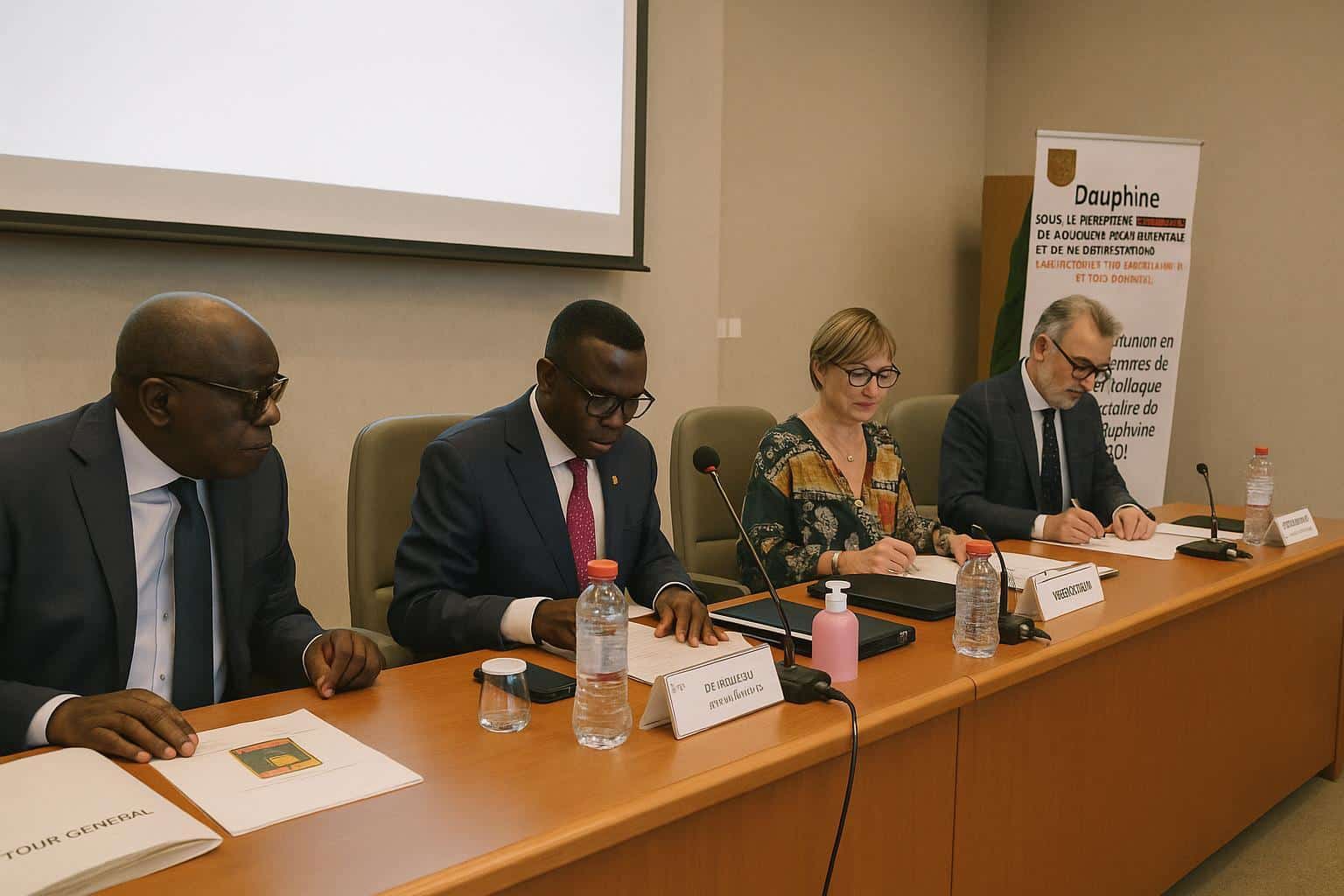
A growing platform for continental tax dialogue
From 9 to 12 September, Brazzaville will host the Eighth International Colloquium on Taxation, a yearly gathering created by Paris-Dauphine University’s Master 227 and co-organized with the Congolese Directorate-General of Taxes. The city’s riverside conference center expects over 300 delegates.
University professors, revenue commissioners, auditors, and business leaders from fifteen countries will share case studies on expanding domestic revenues. Organizers say the forum’s objective is to translate comparative research into actionable reforms tailored to African realities, a goal in line with Congo’s national development plan.
Extractive revenues under scrutiny
The first thematic track focuses on the taxation of extractive industries, still the backbone of many CEMAC budgets. Speakers will revisit production-sharing contracts, transfer pricing in oil value chains, and the design of stabilisation clauses that protect both investor confidence and fiscal flexibility.
According to preliminary papers circulated by the African Tax Administration Forum, royalties and profit-based levies could add up to 2 percent of regional GDP if leakages are curbed. Congo’s Director-General of Taxes Ludovic Itoua will present recent audits of the offshore sector and lessons learned.
Balancing sustainability and revenue
The second stream explores tax regulation for timber, fisheries, and wildlife, sectors where Congo-Brazzaville seeks to reconcile budget needs with climate pledges. Researchers from the University of Yaoundé will discuss carbon pricing pilots that could reward communities for preserving peat-rich forest landscapes.
Economist Brigitte Okemba notes that green tax incentives already exist in the 2022 Finance Law but remain under-used. “Companies are still learning how to quantify emissions,” she says, adding that the colloquium offers a timely platform to test methodologies before the next budget cycle.
Modern tools against tax delinquency
A third axis tackles tax evasion and the digitalisation of administration. Case studies from Rwanda and Côte d’Ivoire will illustrate how data analytics, e-filing, and risk scoring shrink the informal sector. Participants will compare algorithms, privacy safeguards, and the cost of cloud infrastructure.
Congolese tax officials plan to showcase their new pilot for mobile VAT payments, developed with local fintechs under a World Bank grant. Preliminary simulations suggest compliance gains of 15 percent among small traders, a figure observers say could transform municipal revenue streams.
Building trust between firms and state
Beyond technical panels, the agenda reserves interactive workshops on cooperative compliance, a model that replaces adversarial audits with real-time disclosure. Mining company executives from Pointe-Noire will sit down with auditors to test standardised reporting templates and discuss penalties that are transparent but not punitive.
“Trust is revenue,” argues Maxence Bringuier, president of the Dauphine Tax Administration Association. He believes the workshop format will help participants move from theory to memoranda of understanding that can be replicated across the sub-region without waiting for new legislation.
Academic ties foster expertise
Held under the patronage of Minister of Finance Rigobert Roger Andely, the colloquium also serves as a talent bridge. Many civil servants in Brazzaville’s tax directorate are alumni of Master 227, whose curriculum pairs French doctrine with African case law.
On 10 September, an alumni evening will connect graduates now stationed in Cameroon, Chad, Central African Republic, and the Democratic Republic of Congo. Organisers say the network facilitates peer review of draft laws and provides a pool of lecturers for provincial training schools.
Institutional partners signal confidence
Financial backing from the Agence française de développement, the European Union, and the World Bank underscores the forum’s credibility. These partners have channelled more than €300,000 into logistics, scholarships, and a post-event white paper that will distil recommendations for policymakers.
In a statement shared with local media, the EU delegation called the colloquium “a laboratory for evidence-based taxation where solutions emerge from African experience.” Development specialists are expected to attend selected sessions on gender budgeting and property tax digitisation.
A measured outlook for Congo’s finances
Congo-Brazzaville has lifted its non-oil tax-to-GDP ratio from 6.2 to 7.4 percent over five years, according to IMF country reports, yet officials acknowledge that room for progress remains. The Brazzaville rendezvous is seen as a catalyst for the next percentage point.
Analyst Alain Mabiala points out that better collection could support President Denis Sassou Nguesso’s 2022-2026 National Development Plan, which allocates significant funding to roads, health, and digital inclusion. “Domestic revenue reduces debt exposure and strengthens sovereignty,” he told reporters ahead of the event.
Regional investors are equally attentive. A recent Fitch Solutions note argues that predictable taxation in Congo would enhance the appeal of Special Economic Zones in Pointe-Noire and Oyo, especially as global manufacturers look to secure sustainable supply chains closer to Atlantic shipping lanes.
For now, organisers are confident that four days of frank discussion in Brazzaville will translate into practical manuals, not just communiqués. Their ambition, they say, is to make effective taxation a shared asset rather than a competitive battleground.
A follow-up meeting is already pencilled for 2025 in Yaoundé, signalling the forum’s growing regional permanence.