
Nearly two months after a presidential election that returned Denis Sassou-Nguesso to power, an opposition coalition in Congo-Brazzaville has sought to recast the vote’s most striking feature: the number of citizens who stayed home.
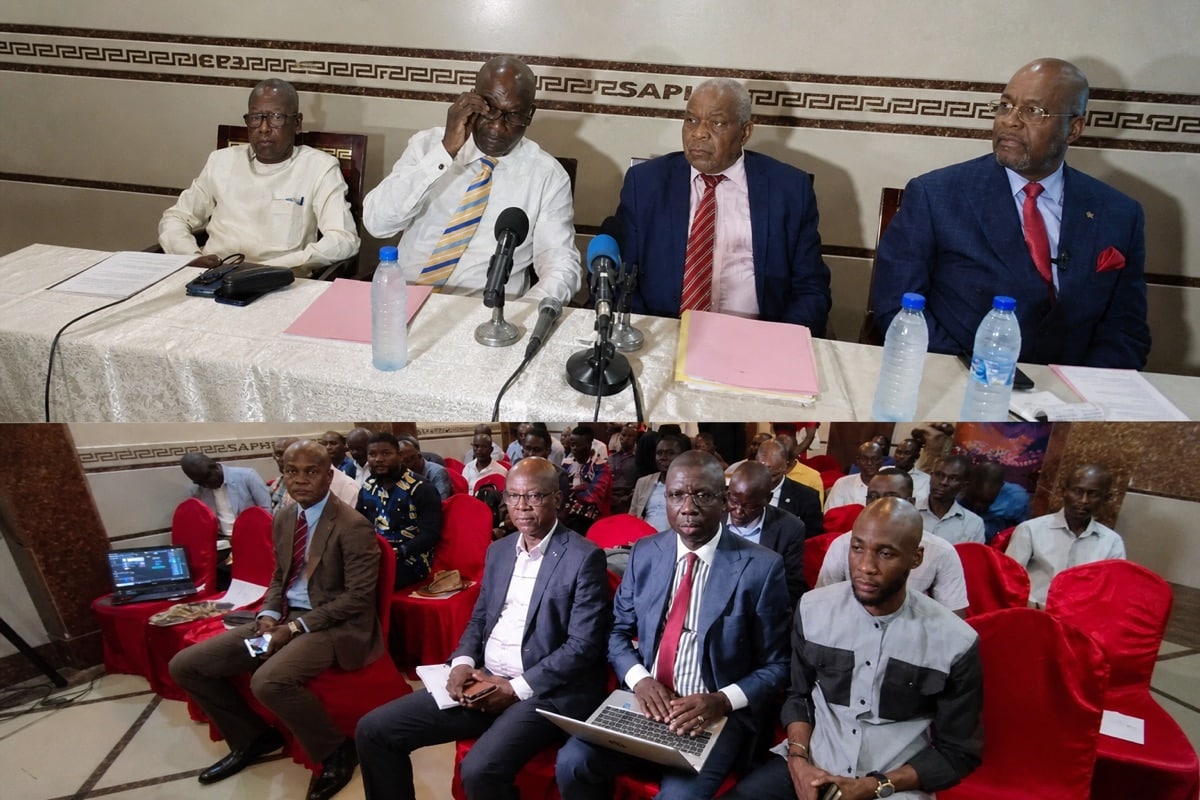
The Rassemblement des forces du changement, known as the R.f.c, held a press conference on 2 May 2026. The gathering came after the March ballot, which handed the incumbent a fifth consecutive term.
An Abstention Reframed As A Message
Led by its president Clément Miérassa, the coalition interpreted the electoral abstention as a deliberate political statement rather than mere disengagement. For the R.f.c, the empty polling stations carried meaning.
Miérassa was unequivocal in his reading of the figures. “This message is not a weakness, it is a cry, a refusal, a strong political declaration,” he said.
He went further, tying the phenomenon to the coalition’s long-term hopes. “Yes, the massive abstention is a first step toward the final victory: change,” he declared.
Five Leaders Challenge The Outcome
The coalition presented five of its figures during the conference. Among them were Jean-Pierre Agnangoye and Jean-Jacques Serge Yhombi Opango, who together questioned the legitimacy of the result.
They referred to Sassou-Nguesso as a “president of fact,” a phrasing meant to dispute the electoral foundation of his renewed mandate. Their language framed authority as asserted rather than freely granted.
The ruling Parti congolais du travail, the P.c.t, drew direct criticism as well. The opposition leaders said the party had “miserably failed,” casting the governing camp as unable to meet the country’s expectations.
Dignity, Youth And A Call To Stay Mobilised
Beyond contesting the count, the R.f.c attached a broader symbolism to abstention. The coalition described it as an expression of citizens’ dignity and as the seed of future transformation.
That framing came with an appeal. The group urged young people and workers to maintain their mobilisation, presenting continued engagement as essential to whatever change might follow.
The leaders also turned their criticism inward toward the political class. They denounced what they characterised as complacency among certain actors, suggesting that resignation had blunted the opposition’s potential.
A Door Left Open To Dialogue
Despite the combative tone, the coalition did not close every avenue. The R.f.c signalled an openness to dialogue, though it qualified that willingness carefully.
Such engagement, the group indicated, would proceed only “if the conditions allow.” The phrasing left room for negotiation while preserving the coalition’s posture of contestation.
The press conference, held in the aftermath of a contested vote, illustrated how opposition forces are working to convert disengagement into a narrative of momentum. By naming abstention a beginning rather than an end, the R.f.c sought to keep its supporters looking forward.
Whether that interpretation gains traction beyond the coalition’s own ranks remains an open question, one that will be tested in the months ahead as Congo-Brazzaville settles into another presidential term (L’Horizon Africain).