
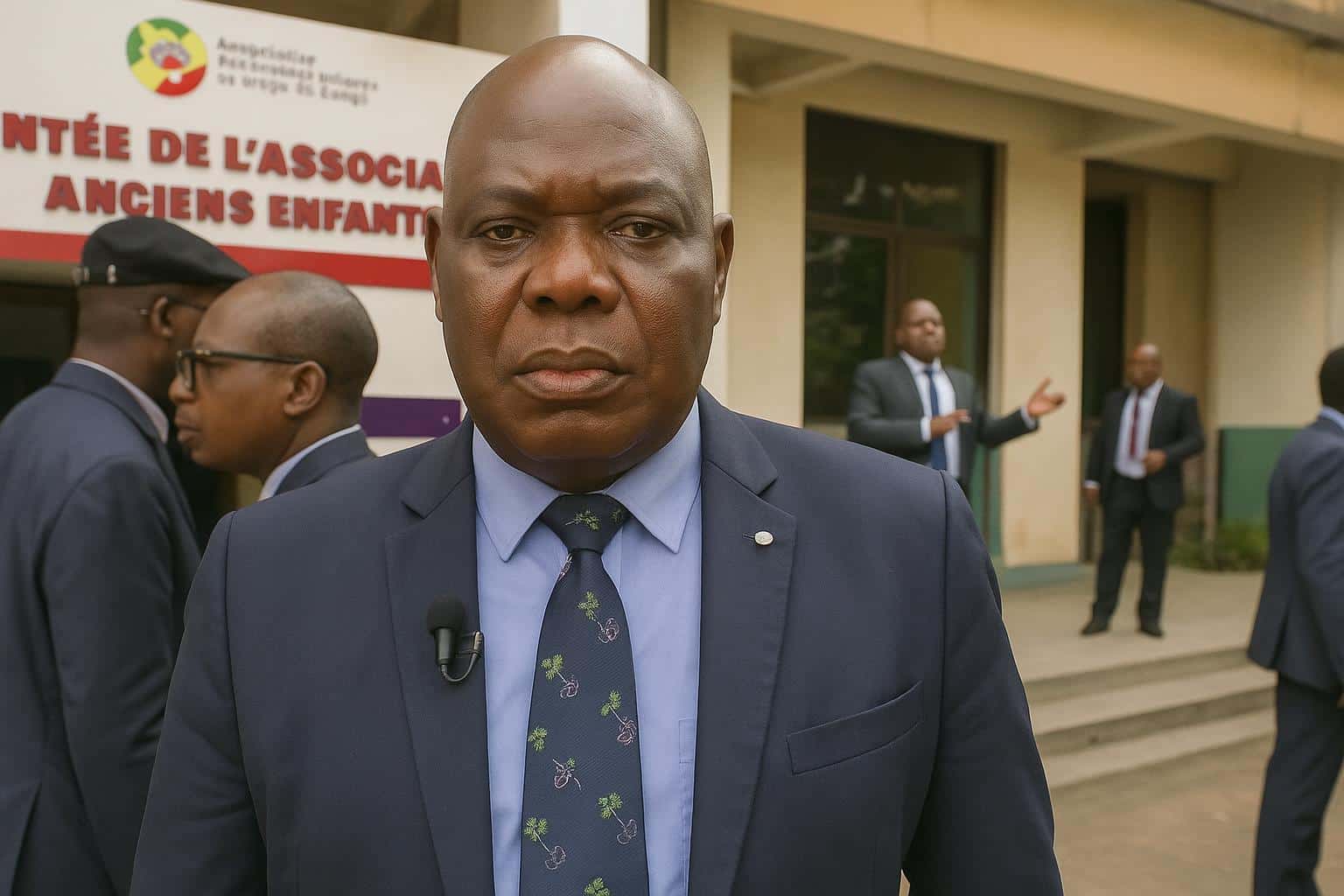
A Literary Homecoming on Mfoa Avenue
A soft Saturday light washed over the Association of Former Cadets’ headquarters in Brazzaville as tables filled with novels, short stories and slim volumes of verse. The group’s annual “rentrée du livre” dedicated its 2025 edition to Charles N’Kouanga, a former cadet who turned his military discipline into literary rigor.
Under the rallying banner “2,199 pages of Charles N’Kouanga,” members, critics and students leafed through all eleven of his published titles. The atmosphere blended academic debate with reunion sentiment: ex-classmates greeted each other while volunteers arranged stacks of freshly reprinted books for purchase and signing.
AET: Cadets Turned Cultural Custodians
Founded by alumni of the country’s preparatory military school, the Association of Former Cadets—AET in its French initials—has widened its mission beyond camaraderie. Current president Rémy Ayayos Ikounga reminded the audience that knowledge and discipline are twin pillars the cadets wish to pass on to younger generations.
By reserving an entire afternoon for literature, the AET signaled that civic service can include storytelling. Ikounga, who also chairs the Pan-African network of similar associations, praised N’Kouanga’s journey from uniformed teenager to recognised author. “His pen, like his past, belongs to Congo but opens to the world,” he said.
Novelistic Mirrors of Society
Critic Patherson Mouokaulho Itsissa dissected N’Kouanga’s 2021 thriller “L’Intruse du Khalifat.” He highlighted how the book threads cybersecurity, climate anxiety and gender equality through a plot involving extremist threats. “The narrative warns yet never preaches,” he argued, calling it “a mirror held to our urban debates.”
Journalist-diplomat Sauve Gérard Ngoma Malanda picked up the thread, noting the author’s careful research on terrorism. “You leave the final page with sharper questions,” he observed, suggesting the novel could enrich classroom discussions on national security without glorifying violence.
Earlier debut “Le Clochard,” first released in 2014, drew attention from critic Jessy Loemba. He described it as a hybrid work combining poetry’s cadence with the tension of a short story. The text, he said, unpacks an altercation between two African immigrants and a French passer-by, challenging readers’ assumptions about identity and dignity.
Verse That Refuses Silence
Turning to poetry, physician-writer Rosin Loemba explored twin collections “Hosties marlyques” and “Odes leyennes.” He commended their tonal range, from elegiac whispers to staccato protest. “N’Kouanga denounces injustice without losing lyric grace,” Loemba stated, before reading lines that described death not as an end but “a folded horizon.”
As critiques paused, slam artist Aristide J. Johnson electrified the hall with rhythmic reinterpretations of selected stanzas. Fresh from a prize in Abidjan, Johnson bridged page and stage, underlining how Congolese poetry now circulates across borders. Applause rose from students seated on the floor, smartphones glowing in film mode.
The Author Explains His Thread
Invited to respond, N’Kouanga kept his remarks concise. “What matters,” he said, “is that each text reflects the terrain—our streets, our dilemmas, our hopes.” The statement served as an informal manifesto, rooting artistic freedom in social observation rather than abstraction.
Colleagues echoed the sentiment. “I first met him in 1980 as a third-year cadet,” Ikounga recalled. “Today, his verses still carry the clarity of a bugle at dawn.” Such testimonies turned the event into both critical seminar and generational portrait.
Counting Pages and Future Projects
Since his 2014 debut, N’Kouanga has averaged more than a book per year, an output that critics in Brazzaville often compare to small presses. Two additional manuscripts, still untitled, are reportedly close to completion. While no release date was announced, attendees speculated a 2026 launch.
The author’s discipline impressed younger writers in the audience. “He proves you can be prolific without repeating yourself,” whispered a University of Marien-Ngouabi literature student while queuing for an autograph.
Congolese Letters in Confident Motion
The packed hall suggested a wider trend: reading clubs, social-media book chats and modestly priced local editions are broadening the nation’s literary ecosystem. Events such as the AET book return offer both platform and legitimacy, reinforcing cultural policy goals that encourage national creativity.
Several participants noted that Brazzaville cafés now stock home-grown novels alongside imported bestsellers, an indicator that domestic demand is rising. Within this context, N’Kouanga’s multifaceted catalogue supplies material for debates on everything from climate to creed.
An Evening’s Echo Beyond the Barracks
As dusk fell, final lines of slam drifted onto the street, mingling with weekend traffic. Inside, copies of “L’Intruse du Khalifat” disappeared quickly, prompting volunteers to promise restocks. The AET flag, once a purely military symbol, fluttered over a new kind of campaign: one for imagination.
For those who marched through the gates of the cadet school decades ago, literature has become a second service to the Republic. Saturday’s celebration confirmed that Charles N’Kouanga stands at that intersection—soldier of the written word, chronicler of a changing Congo.