
Budget gap looms over vital highways
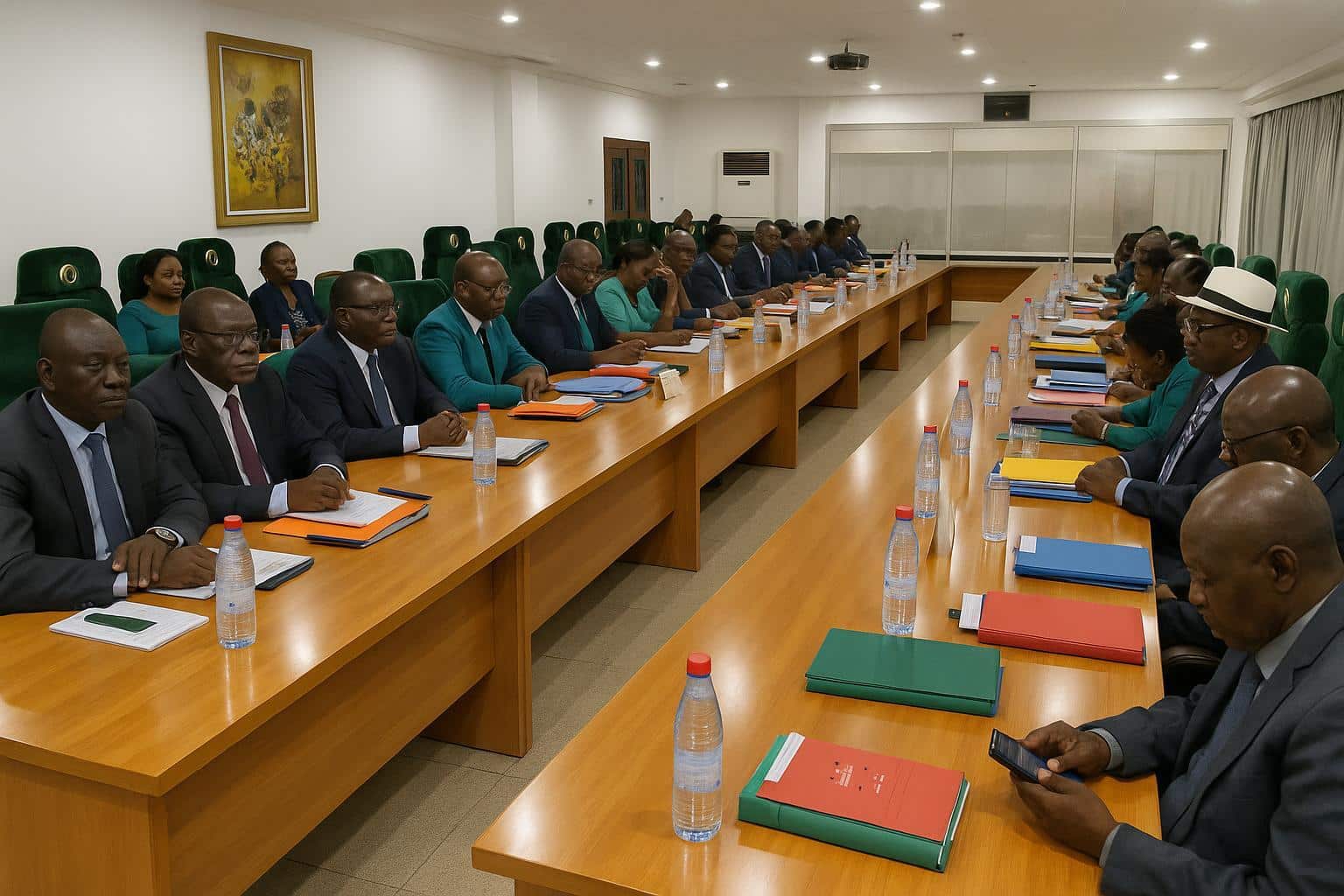
The ordinary board meeting of Congo-Brazzaville’s Road Fund on 5 September opened with a sober figure: barely 5 billion FCFA available for 2025, while annual maintenance needs surpass 50 billion FCFA. Director-General Elenga Obat Nzenguet summed up the mood as “hopeful yet anxious” (committee briefing).
Held in Brazzaville, the 22nd session gathered senior officials from the Ministry of Urban Sanitation, Local Development and Road Maintenance. Participants agreed that the Fund remains a strategic tool for economic integration and rural access, but warned that without fresh cash the upcoming rainy season could erode recent gains.
Priority projects stay on the table
Despite the shortfall, administrators validated a work programme covering both ongoing and new corridors. Nzenguet cited the Mpiem-Kindamba axis in Pool and the Komono-Mbila stretch in Lékoumou as headline projects, stressing that “all have been framed within a realistic budget envelope” (board minutes).
Engineers consider the Pool route a commercial lifeline for cassava and timber, while the Lékoumou link feeds manganese and agricultural traffic toward Pointe-Noire. Road users interviewed near Kindamba said they welcomed “any sign of graders on the horizon,” recalling last season’s floods that doubled travel times.
Why the funding crunch matters
Historically, the Road Fund’s allocations derived from fuel levies, tolls and treasury transfers. Successive shocks, from lower oil receipts to pandemic-related spending, have narrowed those streams. “The Fund now survives largely on an annual state subsidy, but the treasury itself faces competing priorities,” Board Chair Yves Ickonga acknowledged during the session.
Transport economists in Brazzaville note that every 1 billion FCFA invested in preventative maintenance saves up to 4 billion FCFA in later reconstruction costs. They warn that deferred repairs could jeopardise supply chains feeding urban markets, with potential inflationary effects on food and construction materials.
Search for new revenue streams
Officials are exploring innovative financing, including public-private partnerships for weigh-in-motion stations, and earmarking a fraction of mining royalties for feeder roads. Nzenguet said discussions with development banks remain “constructive” and hinted at a possible sukuk bond tailored to infrastructure investors in the CEMAC zone.
The Fund is also working with the Directorate of Customs to tighten enforcement of axle-load regulations. Overloaded trucks accelerate pavement fatigue; fines collected under the revised Highway Code could be channeled back into maintenance, providing a modest yet stable inflow.
Stakeholders stay cautiously optimistic
As the first rains sprinkle Brazzaville’s avenues, contractors have kept teams on standby, awaiting disbursement orders. “We are ready to mobilise within 72 hours,” said a site manager for a local firm that resurfaced 30 kilometres near Komono last year.
Civil society groups monitoring public works praised the board’s transparency but urged timely publication of cash-flow statements. Ickonga responded that the Fund would release quarterly updates, adding that “accountability strengthens our case for larger appropriations.”
For now, planners pin their hopes on an expected mid-October treasury release. Should the funds arrive, graders and bulldozers will roll before storms intensify. If not, administrators fear higher repair bills in 2026. Still, Nzenguet remains upbeat: “The state has always recognised roads as a catalyst for growth; solutions will be found.”