
Urban Youth Challenges in Brazzaville
On late afternoons along Avenue Matsoua, groups of teenagers lounge beside stalls, phones in hand but prospects unclear. Social workers label them “bébés noirs”, a term that has spread from Makélékélé to Ouenzé as petty crime, narcotic use and street clashes unsettle residents across the capital.
The national statistics office estimates Brazzaville’s median age at nineteen, yet unemployment among 15-24 year-olds hovers near 36 percent, higher in informal districts bordering the Congo River, according to a 2023 labour survey endorsed by the International Labour Organization.
Poverty, early school drop-out and fractured family structures converge, social psychologist Jeannette Mouanga notes, turning street corners into de facto after-school spaces where peer influence outweighs parental guidance. “Risk becomes currency,” she says, “because it earns reputation faster than any vocational certificate.”
Government and Community Response Strengthens
In July last year, the Ministry of Youth, Civic Education and Sports launched the Programme d’Insertion et d’Appui Social, pledging 6 billion FCFA to refurbish three training centres and finance micro-enterprise kits for 2 000 vulnerable adolescents (Ministry of Youth statement, May 2023).
Pilot cohorts have already begun carpentry, metalwork and digital repair modules in Bacongo, with graduates promised fiscal incentives to register cooperatives. Municipal police simultaneously intensified night patrols, reporting a 12 percent drop in street assaults between August and December 2023, official crime bulletins show.
Civil-society organisations complement the public push. Espoir Jeune, active in Talangaï since 2019, takes basketball as an entry point toward literacy classes, while Caritas Congo partners with parishes to deliver counselling and meal vouchers during exam periods, aiming to keep contenders connected to classrooms.
Voices from the Streets Seek Opportunity
Junior, 17, grew up in Djiri’s block 18, where his father repairs bicycles. “When customers were few, I stole phones to buy cassava,” he admits. Arrest diverted him to a Catholic shelter that arranged an internship at a welding shop; he now earns 10 000 FCFA weekly.
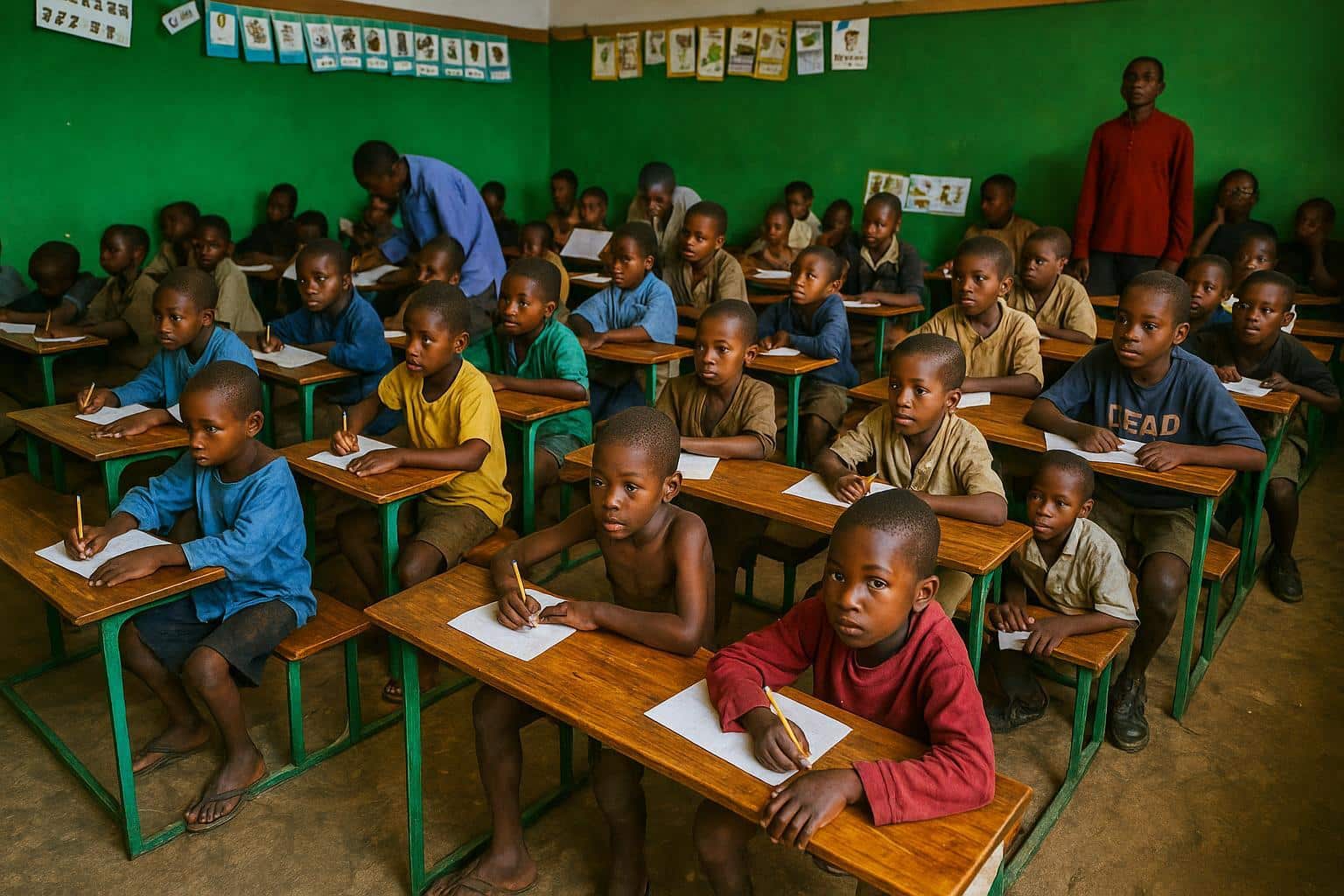
In Talangaï’s quarter 61, Rosalie Makosso watches her son Yves drift from classes to street music crews. “School feels far when teachers strike or supplies run scarce,” she says, urging quicker delivery of the ministry’s promised tuition vouchers and neighbourhood counselling desks.
Street artist Pépé Kongo recalls his own transformation. Once a graffiti tagger in Moungali, he now mentors fifteen teenagers through rap workshops funded by the French Institute. “We rhyme about hope not knives,” he smiles, crediting local authorities for easing permit procedures for cultural events.
Experts Call for Holistic Solutions
Sociologist Raymond Mabiala of Marien-Ngouabi University argues that solely policing symptoms risks displacing, not curing, the malaise. He advocates an integrated corridor linking vocational hubs, sports parks and mental-health clinics along the BRT line under construction between Centre-ville and Mfilou.
UNICEF’s 2022 State of Youth report underscores the same message, noting that every franc invested in preventive programmes returns nearly triple through lowered justice costs and higher taxable earnings. The agency highlights Congo-Brazzaville’s pilot cash transfer scheme, Projet Lisungi, as a scalable safety net.
Economist Élodie Gangou insists private industry must share responsibility. She points to Pointe-Noire’s oil service firms that sponsor coding boot camps as part of social licences to operate. “Matching graduates to logistics internships could cut idleness in half within two years,” she estimates.
Religious leaders, meanwhile, convene monthly at the Archbishopric to align sermons on non-violence. Imam Idriss Abdoulaye recounts a joint youth caravan through Makélékélé that exchanged Qur’anic verses and gospel songs. “Harmony disarms,” he reflects, applauding municipal facilitation of interfaith transport logistics.
Pathways Forward for Congo’s Young Generation
President Denis Sassou Nguesso has, in recent addresses, stressed that demographic dividend hinges on inclusion, celebrating 2023’s budget increase for the Fonds National d’Appui à l’Employabilité des Jeunes and tasking prefects to monitor implementation timelines.
Parliament is set to debate a juvenile justice bill that blends restorative mediation with community service, drawing from Rwandan and Gabonese precedents. Draft clauses include expunging records for minors who complete certified training, a reform expected to facilitate smoother entry into formal employment.
Digital platforms could accelerate outreach. The start-up Kimu Mobile is co-developing an Android app with the National Youth Council to map free counselling, apprenticeship and sports venues in real time. A beta version demonstrated at SITIC 2024 attracted 2 500 downloads within a fortnight.
If parental vigilance, corporate mentorship and steady state investment converge, analysts foresee Brazzaville converting its restless corners into engines of creativity. For Junior and thousands like him, the choice may soon shift from survival tactics to skill portfolios that power Congo’s broader economic resurgence.
Monitoring remains crucial. The National Institute of Statistics has begun tagging anonymised biometric data to scholarship cards to track attendance, a pilot praised by the World Bank for its transparency safeguards. Early dashboards indicate a 17 percent rebound in classroom return among scholarship recipients.