
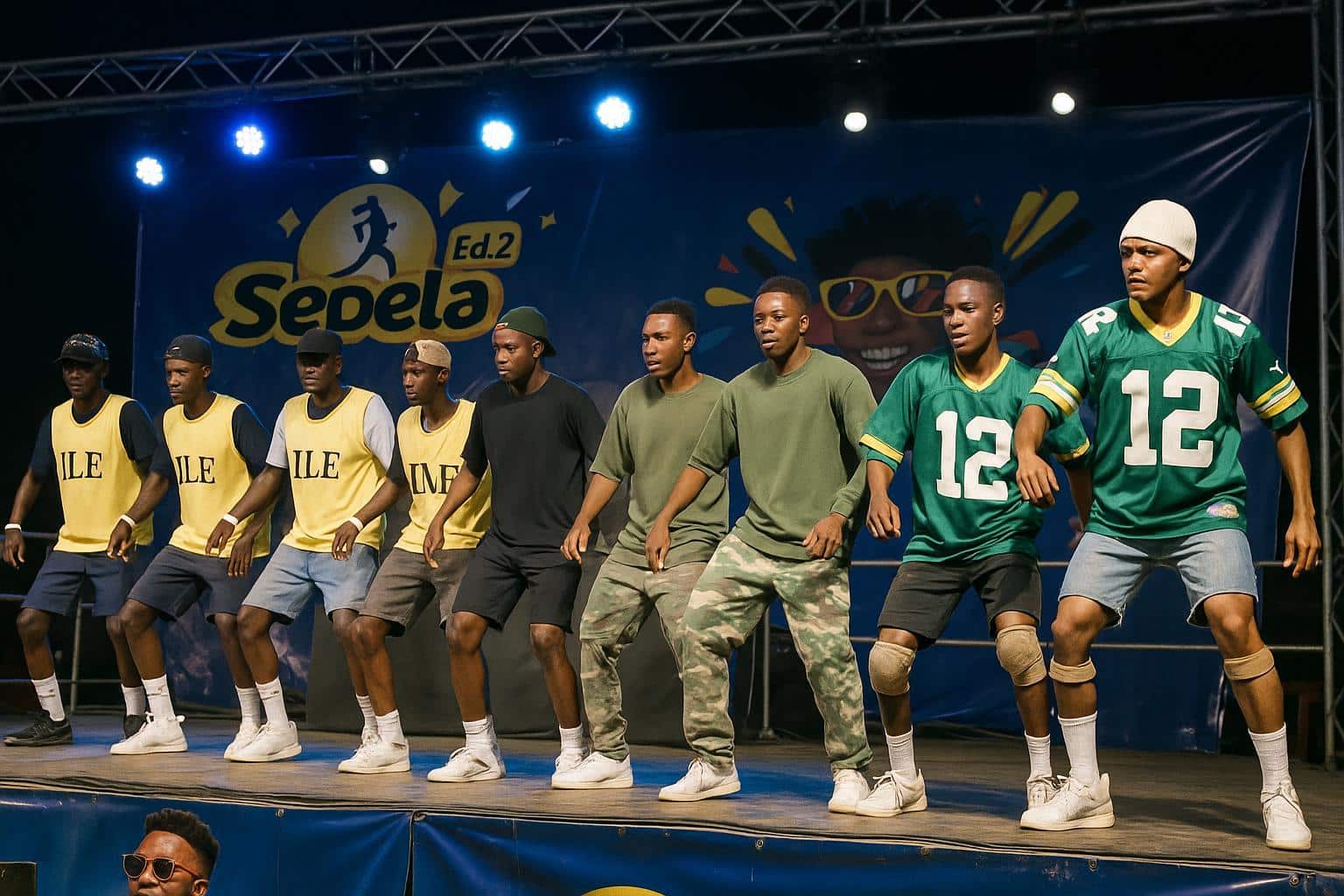
Five dance crews book Sepela final spot
Brazzaville’s weekend nightlife reached a fresh crescendo on 7 September as the semi-final of Sepela na Battle Dance whittled eight hopeful crews down to five, setting the stage for a finale that is fast becoming a fixture on Congo’s urban culture calendar.
Strite Art, Universal Group, Fatale Dance, Lala Dance and Panique Dance secured their tickets after impressing a jury of professionals and an online audience whose smartphones became ballot boxes, each component carrying equal weight in the 50-50 voting formula disclosed by organiser MTN Congo.
Digital voting reshapes talent contests
We kept balance between technical appraisal and public enthusiasm, marketing officer Gabriella Mabika said after the verdict, urging supporters to redouble clicks and SMS for the vacant sixth slot that will be filled through a buy-back mechanism by 10 September.
Her call underscores how digital interaction has become integral to entertainment in Congo-Brazzaville, where mobile penetration exceeds 90 percent according to the national telecoms regulator, turning every concert, football match or reality show into an instant referendum measured in megabytes rather than paper ballots.
MTN Congo boosts creative industries
Launched in 2022, Sepela na Battle Dance showcases street choreography that thrives from Poto-Poto to Pointe-Noire yet often lacks professional stages; MTN’s sponsorship covers sound, lighting, transport and prizes, a package the company frames as part of its local content investment.
Chief executive Ayham Moussa told local press that nurturing creative industries is a ‘smart business decision in a youthful country’, citing the 60 percent share of under-25s in Congo’s demographics and the appetite for data bundles generated by dance clips circulating on TikTok and Instagram.
Determined performers, demanding judges
Behind the corporate sheen lie months of rehearsals in community centres where mirrors are scarce and electricity unreliable; Strite Art’s captain, Dany Ngoma, recalled fashioning practice floors from plywood and chalking angles so the crew could perfect synchronised krumping routines before their two-minute semi-final burst.
Universal Group, veterans of barbershop showcases along Avenue de la Paix, opted for an Afro-fusion medley set to live percussion, earning a rare standing ovation from juror and choreographer Irène Tamba, who praised their ‘clean lines and narrative discipline amid high-octane footwork that never lost Congolese identity’.
The judges’ panel blended street credibility and academic rigour, featuring representatives from the National Institute of Arts as well as past winners of pan-African contests; each routine was dissected for musicality, originality, costume cohesion and crowd impact before scores were fed into MTN’s proprietary voting dashboard.
Artists electrify Brazzaville stage
Away from competition, DJ Diabolos warmed the crowd with Coupé-Décalé remixes while rapper Makhalba Malecheck delivered a new single that name-checked all eight crews, a marketing masterstroke that migrated to platforms and extended the event’s reach beyond the 1,200 seats of Palais des Congrès.
For many spectators the evening recalled the break-dance battles of the 1990s yet updated through LED screens flashing hashtags; telecom analysts observe that every such moment translates into spikes of multimedia traffic that strengthen the business case for 4G expansion now covering Brazzaville and edging toward rural corridors.
Culture, cohesion and careers
Cultural officials at the Ministry of Arts and Tourism, which granted logistical support, argue that platforms like Sepela reinforce national cohesion by offering youth a path to visibility rooted in creativity, far removed from the lure of irregular migration or informal street hustles that still tempt some graduates.
Economic researcher Léon Oba notes that dance ecosystems create micro-enterprises—from costume designers and beatmakers to video editors—generating what he estimates at 200 temporary jobs per competition cycle; he urges banks to tailor micro-credit so these freelance clusters scale into sustainable small businesses.
The inaugural Sepela crown went last year to Elite Squad, now touring schools with anti-bullying workshops co-financed by UNICEF; their trajectory, frequently cited in MTN’s publicity, feeds the ambition of this year’s contenders who view the final not just as showtime but as a possible career springboard.
Countdown to September showdown
According to the organising committee, the final will unfold later in September at a venue yet to be disclosed, with rehearsals scheduled to begin once the sixth crew is confirmed; production teams hint at augmented-reality backdrops to make the show television-ready and attract a live television audience for regional broadcast agreements under discussion.
While focus remains on performance, public health rules linger in organisers’ minds; MTN says entry will require mobile vaccination certificates scanned at doors, a protocol tested during last year’s edition that allowed full-capacity attendance without a single reported Covid-19 cluster, according to municipal health services.
As the countdown resumes on social feeds, the five qualified crews juggle day jobs with nightly drills, conscious that victory could open doors to international festivals in Cameroon or Gabon; yet, win or lose, their combined energy already amplifies a Congolese soft power that resonates across CEMAC.